
Ed Yong in The Atlantic:

In 1909, the Japanese scientist Kuniomi Ishimori collected spinal fluid from sleep-deprived dogs and injected it into active, rested pooches. Within hours, the latter fell into a deep sleep. By coincidence, a pair of French researchers did the same experiments a few years later and got the same results. These studies, and others like them, suggested that the blood of sleepy animals contains some kind of soporific secret sauce of chemicals. Ishimori called these “hypogenic substances.” Others labeled them “somnogens.”
The sources of these sleep-inducing chemicals have proved surprisingly elusive, and scientists have found only a few that fit the bill. Now Hirofumi Toda from the University of Pennsylvania has discovered another—a gene called nemuri that triggers sleep, at least in fruit flies. Unexpectedly, it alsobecomes active during infections and acts to kill incoming microbes. It seems to be part of a self-regulating system, analogous enough to an internal thermostat that we might call it a sleep-o-stat. It can send animals to sleep when they most need shut-eye, whether because they’re sick or because they just haven’t slept enough.
This sleep-o-stat works separately from the daily body clocks that make us feel more tired at night.
More here.
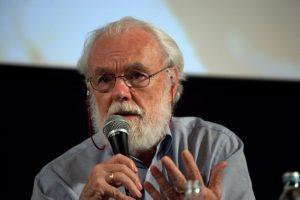 British scholar David Harvey is one of the most renowned Marxist scholars in the world today. His course on Karl Marx’s Capital is highly popular and has even been turned into a series on YouTube. Harvey is known for his support of student activism, community and labour movements.
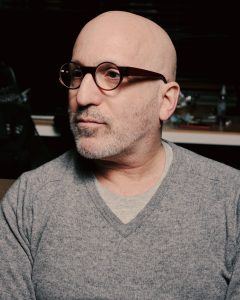 With his finely tuned editing ear, Benjamin Dreyer often encounters things so personally horrifying that they register as a kind of torture, the way you might feel if you were an epicure and saw someone standing over the sink, slurping mayonnaise directly from the jar.
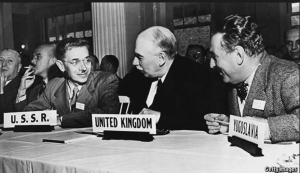 Davos 2019 was a downbeat affair. That at least is how regulars
  Donald Trump campaigned for the presidency and continues to govern as a man who is anti-intellectual, as well as anti-fact and anti-truth. “The experts are terrible,” Trump said while discussing foreign policy during the 2016 campaign. “Look at the mess we’re in with all these experts that we have.” But Trump belongs to a long U.S. tradition of skepticism about the role and motivations of intellectuals in political life. And his particularly toxic version of this tradition raises provocative and difficult questions: Are there occasions when anti-intellectualism is defensible or justified? Should we always dismiss charges that intellectuals are out of touch or too protective of established ways of thinking? In 1963 the historian Richard Hofstadter published Anti-Intellectualism in American Life, in which he traced a recurring mode of thought prevalent, as he saw it, in U.S. religion, business, education, and politics. “There has always been in our national experience a type of mind which elevates hatred to a kind of creed,” he wrote. “[F]or this mind, group hatreds take a place in politics similar to the class struggle in some other modern societies.” On the list of widely hated groups were Masons, abolitionists, Catholics, Mormons, Jews, black Americans, immigrants, international bankers—and intellectuals.
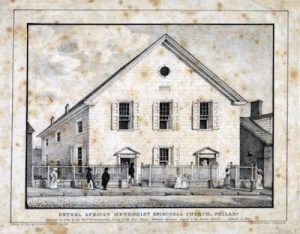 In January 1817 nearly 3,000 African American men met at the Bethel A.M.E. Church (popularly known as Mother Bethel AME) in Philadelphia and denounced the American Colonization Society’s plan to resettle free blacks in West Africa. This gathering was the first black mass protest meeting in the United States. The black leaders who summoned the men to the church endorsed the ACS scheme and fully expected the black men who gathered there to follow their leadership. Instead they rejected the scheme and forced the black leaders to embrace their position.
 If you don’t speak Japanese but would like, momentarily, to feel like a linguistic genius, take a look at the following words. Try to guess their meaning from the two available options:
 Introduction — John P. Wright, Ph.D.
 I’m talking about loudness as a measure of sound within a particular recording. Our ears perceive loudness in an environment by reflexively noting the dynamic range — the difference between the softest and loudest sounds (in this case, the environment is the recording itself, not the room you are playing it in). A blaring television commercial may make us turn down the volume of our sets, but its sonic peaks are no higher than the regular programming preceding it. The commercial just hits those peaks more often. A radio station playing classical music may be broadcasting a signal with the same maximum strength as one playing hip-hop, but the classical station broadcast will hit that peak perhaps once every few minutes, while the hip-hop station’s signal may peak several times per second.
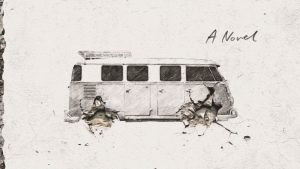 “If you really want to erase or distort a story,” Khaled Khalifa declares in his astonishing new novel “Death Is Hard Work,” “you should turn it into several different stories with different endings and plenty of incidental details.” He’s referring to the salutary comforts of narrative. This — or so we like to reassure ourselves — is one reason we turn to literature: as a balm, an expression of the bonds that bring us together, rather than the divisions that tear us apart.
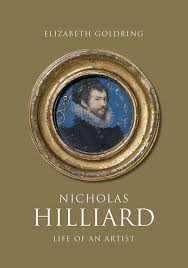 According to Elizabeth Goldring in this engrossing biography, the earliest recorded use of the term ‘miniature’ in English literature comes in Sir Philip Sidney’s prose romance The New Arcadia, written in the early 1580s. Four ladies bathe and splash playfully in the River Ladon, personified as male, and he responds delightedly by making numerous bubbles, as if ‘he would in each of those bubbles set forth the miniature of them’. It’s a pleasing image, calling to mind the delicacy and radiance of the works of Nicholas Hilliard, the leading miniaturist (or ‘limner’) of the Elizabethan age, whom Sidney knew and with whom he discussed emerging ideas about the theory and practice of art. In some ways, a miniature had the ephemerality of a bubble, capturing an individual at a fleeting moment in time, often recorded in an inscription noting the date and the sitter’s age. Yet it also made that moment last for posterity, as shown in this sumptuous book, where Hilliard’s subjects gaze back at us piercingly from many of the 250 colour illustrations.
 When we meet Julie Yip-Williams at the beginning of “The Unwinding of the Miracle,” her eloquent, gutting and at times disarmingly funny memoir, she has already died, having succumbed to colon cancer in March 2018 at the age of 42, leaving behind her husband and two young daughters. And so she joins the recent spate of debuts from dead authors, including Paul Kalanithi and Nina Riggs, who also documented their early demises. We might be tempted to assume that these books were written mostly for the writers themselves, as a way to make sense of a frightening diagnosis and uncertain future; or for their families, as a legacy of sorts, in order to be known more fully while alive and kept in mind once they were gone.
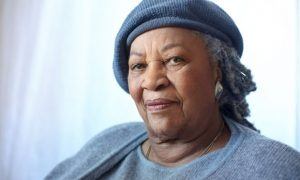 A writer’s life and work are not a gift to mankind; they are its necessity,” says
  Unlikely as it might sound, one of the most electric political meetings I have ever attended was a lecture on the Finnish educational system given by