Christopher J. Lee in Africa is a country:
I t is time to shift the geography of political tribalism in order to recognize the United States as a tribal society. This was the essence of the keynote speech given by Kwame Anthony Appiah at “A Night of Philosophy and Ideas” held at the Brooklyn Public Library on February 2, 2019. Though reading from a tablet, with his voice barely rising above the din of people still entering through the front doors, Appiah’s message was clear: the terminology frequently, and often gratuitously, applied to politics in Africa and more specifically Ghana, his childhood home, should now be applied to his home in the US. His perspective wasn’t entirely original—commentators as different as Steven Pinker, David Brooks and Amy Chua have also denounced recent American politics for devolving into tribalism. But Appiah’s views carried far more weight. Not only was this an instance of an African philosopher irreverently turning the tables of where tribalism exists in the world today, but here was an intellectual who could ground the issue in history. Tribalism in his lecture wasn’t simply generic western-speak for the absence of political civility. Appiah drew from firsthand experience.
As Appiah explained in his opening remarks, “tribes” and “tribalism” are ordinary terms with common usage in Ghanaian English, unlike their pejorative—and frequently racist—meanings in American English. To invoke “tribal” identity is to signal an investment in cultural and historical affiliations that preceded modern Ghana, with language, region, and other facets defining what counts as tribal. Appiah went further to describe how his father, Joe Appiah, during the 1950s promoted a national Ghanaian identity over ethnic ones—in his case, an Asante heritage—in the buildup to and aftermath of Ghana’s independence. Though this principle of national over tribal identity was never entirely fulfilled, it remained an ideal, even when pride was taken in ethnic affiliation, as Anthony Appiah readily admitted to embracing. Put simply, tribal identity still matters.
But there is a difference between “tribe” and “tribalism.” The problem isn’t with tribe itself; the problem is when it is mobilized into the charged, confrontational and self-interested practice of tribalism. It is this antagonism that his father struggled against, and it is through this distinction that Appiah called upon the audience to do better in the present, to draw upon, in his words, “the better angels of our identities.” Appiah, it can be said, has never been part of a tradition of radical thought. His consistent emphasis throughout a number of books on individual choice in matters of identity and moral philosophy can be faulted for not taking full account of systemic hierarchies that inform civic identities and limit political agency. In this sense, his case against tribalism, when taken too narrowly, neglects the ways in which such practices have been institutionalized over time. Mahmood Mamdani has argued that ethnic conflict in postcolonial Africa can partly be attributed to the enduring structural legacies of indirect rule.
More here. (Note: Throughout February, we will publish at least one post dedicated to Black History Month)

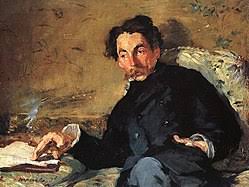 Mallarmé’s emphasis on the “instantaneous and voluntary” character of Impressionist painting, its “rapid execution,” “effects of simplification,” attraction to “subjects close to home,” its “shifting glimmer of light and shadow,” and notion of “see[ing] … for the first time” corresponds to many contemporary and subsequent accounts of it.10 Edmund Duranty’s “The New Painting: Concerning the Group of Artists Exhibiting at Durand-Ruel,” for example, was a long, supportive pamphlet published at the time of the second Impressionist exhibition in April 1876, preceding Mallarmé’s publication the following September. Duranty outlines a number of features that would commonly be identified with Impressionism: the use of bright color; the observation of movement and rendering of passing effects of light and sensations of luminosity; plein air painting on site; the model of Japanese prints; the rejection of traditional rules and conventions; unusual and cropped compositions; lack of finish; originality and individual means of expression; artistic independence and freedom; and subjects of contemporary, everyday life.11 However, unlike Mallarmé, Duranty’s understanding of Impressionism is rooted in Realist and Naturalist ideas and commitments: he emphasizes individuality, Mallarmé impersonality; he stresses Impressionism’s response to contemporary life, Mallarmé the artist’s relation to Nature; his understanding of the “truth” of Impressionism depends upon the representation of modern life that Mallarmé’s text complicates.
 When composers die prematurely, it’s tempting to imagine what they might have produced had they lived to a riper age. For some musicians, like Mozart or Schubert, the question is moot—each was a mature artist in the full bloom of youth, producing a lifetime’s worth of masterpieces in an astonishingly brief period. But when composers happen to die just when they’re getting started, the question becomes more tantalizing. Consider, for example, the life of Charles Tomlinson Griffes, a man largely—and unjustly—forgotten by the general public today.
 Globally, the burden of depression and other mental-health conditions is on the rise. In North America and Europe alone, mental illness accounts for up to 40% of all years lost to disability. And molecular medicine, which has seen huge success in treating diseases such as cancer, has failed to stem the tide. Into that alarming context enters the thought-provoking Good Reasons for Bad Feelings, in which evolutionary psychiatrist Randolph Nesse offers insights that radically reframe psychiatric conditions. In his view, the roots of mental illnesses, such as anxiety and depression, lie in essential functions that evolved as building blocks of adaptive behavioural and cognitive function. Furthermore, like the legs of thoroughbred racehorses — selected for length, but tending towards weakness — some dysfunctional aspects of mental function might have originated with selection for unrelated traits, such as cognitive capacity. Intrinsic vulnerabilities in the human mind could be a trade-off for optimizing unrelated features.
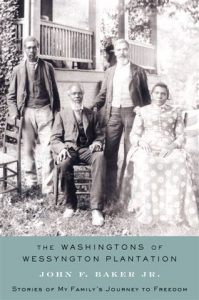 When I was in the seventh grade, I spotted a photograph of four former slaves in my social studies textbook. Although the photograph was entitled Black Tennesseans, I noticed a strong family resemblance between them and my family members. When my grandmother told me that two of them were actually her grandparents, I began the lifelong research project that became The Washingtons of Wessyngton Plantation: Stories of My Family’s Journey to Freedom.
 Most female flies take a low-rent approach to parenthood, depositing scores of seed-sized eggs in the trash or on pet scat to hatch, leaving the larvae to fend for themselves. Not so the female tsetse fly. She gestates her young internally, one at a time, and gives birth to them live. When each extravagantly pampered offspring pulls free of her uterus after nine days, fly mother and child are pretty much the same size. “It’s the equivalent of giving birth to an 18-year-old,” said Geoffrey Attardo, an entomologist who studies tsetse flies at the University of California, Davis. The newborn tsetse fly looks like a hand grenade and moves like a Slinky, and if you squeeze it too hard the source of its plumpness becomes clear — or rather a telltale white. The larva, it seems, is just a big bag of milk. “Rupture the gut,” Dr. Attardo said, “and the milk comes spilling out.”
 A man is
  In his 2008
  The dystopia George Orwell conjured up in “1984” wasn’t a prediction. It was, instead, a reflection. Newspeak, the Ministry of Truth, the Inner Party, the Outer Party — that novel sampled and remixed a reality that Nazi and Soviet totalitarianism had already made apparent. Scary stuff, certainly, but maybe the more frightening dystopia is the one no one warned you about, the one you wake up one morning to realize you’re living inside.


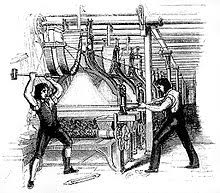 “Luddite” is a word that is thrown around a lot these days. It signifies someone who is opposed to technological progress, or who is at least not climbing on board the technological bandwagon. 21st century luddites tend to eschew social media, prefer presentations without PowerPoint, still write cheques, and may even, in extreme cases, get by without a cell phone. When used in the first person, “luddite” is often a badge of honour. “I’m a bit of a luddite,” usually means “I see through and am unimpressed by the false promise of constant technological novelty.” Used in the third person, though, it typically suggests criticism. “So-and-so’s a bit of a luddite,” is likely to imply that So-and-so finds the latest technology confusing and has failed to keep up with it, probably due to intellectual limitations.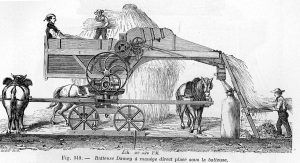
 The traffic had been slow all day but by four pm, it was reduced to a trickle. Those cars that passed him on the street did so in two and threes as if they were sticking together for safety like lumbering animals caught out in a storm. It was, in fact, a very harsh winter day. The afternoon temperatures dipped well below zero: one of the coldest days ever recorded in Chicago. The only sounds now were from an occasional plane passing overhead, and from distant cackling from those venturesome neighbors who had left snug homes to experience the cold. He could hear the sound of his feet crunching through the snow.
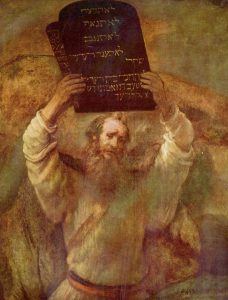 One of the biggest early 20th century philosophical challenges to the belief in God stemmed from the doctrine of verificationism.
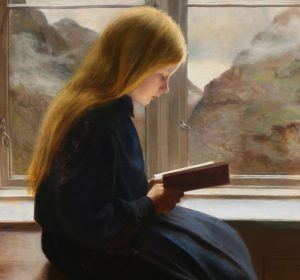 “I read books to read myself,” Sven Birkerts wrote in The Gutenberg Elegies: The Fate of Reading in an Electronic Age. Birkerts’s book, which turns twenty-five this year, is composed of fifteen essays on reading, the self, the convergence of the two, and the ways both are threatened by the encroachment of modern technology. As the culture around him underwent the sea change of the internet’s arrival, Birkerts feared that qualities long safeguarded and elevated by print were in danger of erosion: among them privacy, the valuation of individual consciousness, and an awareness of history—not merely the facts of it, but a sense of its continuity, of our place among the centuries and cosmos. “Literature holds meaning not as a content that can be abstracted and summarized, but as experience,” he wrote. “It is a participatory arena. Through the process of reading we slip out of our customary time orientation, marked by distractedness and surficiality, into the realm of duration.”