
Rachel Wetzler in The Baffler:
 SATIRES OF THE ART WORLD written by incredulous outsiders are often damned before they begin: there’s virtually no absurdist caricature a screenwriter could invent that could suitably exaggerate its pretentiousness or barely concealed venality—these character flaws are played out daily in earnest. In 2015, a mentally ill attendee at Art Basel Miami Beach stabbed another visitor with an X-Acto knife; it took onlookers a few minutes to realize that the blood was real. At the ARCO Madrid art fair in 2007, members of the more-or-less uncategorizable art organization e-flux—under the heading unitednationsplaza—gathered an international gang of artists, curators, and critics to participate in a self-flagellating mock trial whose charges included colluding with the “new” bourgeoisie. The artist Santiago Sierra has, on several occasions, paid drug addicts and sex workers to tattoo black lines across their backs; Damien Hirst sold a skull encrusted with fourteen million British pounds’ worth of diamonds for fifty million pounds to a consortium of buyers that included himself; Tracey Emin transplanted her unmade bed into the Tate Modern. Art-world satire, in other words, tends to feel ham-fisted because it’s all such low-hanging fruit: it doesn’t take much effort to make contemporary art sound dumb—it’s already dumb, and no inflection is needed.
The newest entry into the canon of bad art-world satires is director Dan Gilroy’s Velvet Buzzsaw, which premiered on Netflix last weekend. All the familiar grotesques are here: greedy gallerists, ruthlessly ambitious assistants, tax-dodging collectors, a critic so accustomed to churning out self-serving aesthetic pronouncements that he can’t help but bitchily opine about a dead colleague’s casket. There are also architectural black outfits, Tom Ford eyeglasses, and capital-h Haircuts marching through sterile white galleries and pristine midcentury houses; people airkiss, backstab, and mistake a pile of trash on the floor for a revolutionary new artwork.
But Gilroy adds a genre twist: in Velvet Buzzsaw, the art bites back, taking supernatural revenge on those who would debase it for profit.
More here.
 And during the few moments that we have left, we want to have just an off-the-cuff chat between you and me — us. We want to talk right down to earth in a language that everybody here can easily understand. We all agree tonight, all of the speakers have agreed, that America has a very serious problem. Not only does America have a very serious problem, but our people have a very serious problem. America’s problem is us. We’re her problem. The only reason she has a problem is she doesn’t want us here. And every time you look at yourself, be you black, brown, red, or yellow — a so-called Negro — you represent a person who poses such a serious problem for America because you’re not wanted. Once you face this as a fact, then you can start plotting a course that will make you appear intelligent, instead of unintelligent.
 As a teenager in Maryland in the 1950s, Mary Allen Wilkes had no plans to become a software pioneer — she dreamed of being a litigator. One day in junior high in 1950, though, her geography teacher surprised her with a comment: “Mary Allen, when you grow up, you should be a computer programmer!” Wilkes had no idea what a programmer was; she wasn’t even sure what a computer was. Relatively few Americans were. The first digital computers had been built barely a decade earlier at universities and in government labs.
 In keeping with a mathematical concept known as the pigeonhole principle, roosting pigeons have to cram together if there are more pigeons than spots available, with some birds sharing holes. But
  How would you describe 2018?
 NOW THAT SHE IS NO LONGER
  The history of the Frankfurt School in America is usually told as a story of one-way traffic. The question being: What did America get from the Frankfurt School? The answer usually offered: a lot! We got Marcuse, Neumann, Lowenthal, Fromm, and, for a time, Horkheimer and Adorno (who ultimately went back to Germany after the war)—the whole array of émigré culture that helped transform the United States from a provincial outpost of arts and letters into a polyglot Parnassus of the world.
 Imagine if Don Mclean’s song American Pie was written about Christian mysticism instead of rock-n-roll. That’s my elevator pitch/description of the Portuguese writer, Maria Gabriela Llansol’s, English language debut: The Geography of Rebels Trilogy. Originally published as three separate books—The Book of Communities, The Remaining Life, and In the House of July and August—it has been painstakingly translated by Audrey Young and released by the Texas indie publisher Deep Vellum in a single volume.
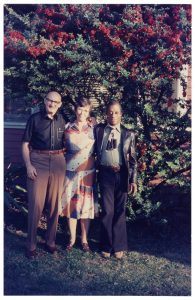 Skipping along those tones mentally and emotionally, we’ve left the world of biography, in fact, and we enter the universe of pure metaphor. Growing up and as an artist, Baldwin had a great interest in masks, specifically the masks of blackness and maleness, the various roles we appropriate or condemn the better to define ourselves. In one of his last pieces of writing, he talked about the various projections that Michael Jackson, for instance, had to withstand and survive if he did not internalize what America deemed ugly, which is to say his blackness and his maleness. In Anthony Barboza’s extraordinary image from 1980, we have Jackson’s real pre–Michael Jackson face, the face God made for him and he did not make for himself. His internal life disfigured his body and his face in order to find some approximation of it in front of the camera and in front of the world, and it’s such a gift to have Barboza’s portrait before those decisions were made, and to see his extraordinary vulnerability and the beauty of his real face.
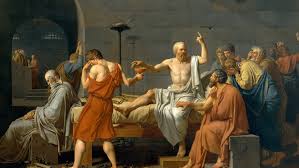 Here I put forward my own unabashedly partisan view of philosophy, cribbed from Plato’s cave: philosophy does not put sight into blind eyes; rather, it turns the soul around to face the light. A soul will not turn except under painful exposure to all the questions it forgot to ask, and it will quickly turn back again unless it is pressured to acknowledge the meaninglessness of a life in which it does not continue to ask them. Philosophy doesn’t jazz up the life you were living—it snatches that life out of your grip. It doesn’t make you feel smarter, it makes you feel stupider: doing philosophy, you discover you don’t even know the most basic things.
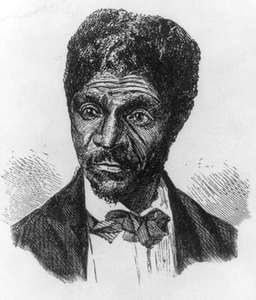 On March 6, 1857, the U.S.
  Dan Mallory, a book editor turned novelist, is tall, good-looking, and clever. His novel, “
 “We’re the United States’ only proverb laboratory. Our mission is to stress-test the nation’s proverbs. To provide rigorous backing for the good ones, and weed out the bad ones.”