
Jeff Bursey at The Quarterly Conversation:
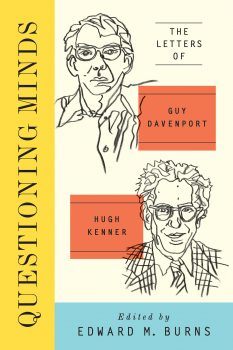 Questioning Minds deserves an audience because it allows readers the privilege of immersion in examinations of Modernist writing, in witnessing earnest and, at times, witty or humorous exchanges, and in seeing how academic (Kenner) and creative (Davenport) projects arise from chance remarks, are worked out (or abandoned), and, now and then, collaborated on, as with Kenner’s book on Flaubert, Joyce and Beckett, The Stoic Comedians(1962), that features Davenport’s illustrations. Both writers urge or hector the other to read, or write, this or that article or book. Kenner encourages Davenport to do extensive translations of the poetry of a particular Greek lyric poet, and this later became Carmina Archilochi: The Fragments of Archilochos (1964). Both interceded to help the other give paid talks or find university positions.
The bulk of the letters were written in the 1960s and early 1970s. Kenner lived in California, Davenport in Pennsylvania (eventually both moved to other states), and they wrote each other several times a week, sometimes twice on the same day. An important joint meeting place, of a sort, proved to be William F. Buckley Jr.’s conservative-libertarian publication National Review, a home for Kenner’s writing since 1957.
more here.
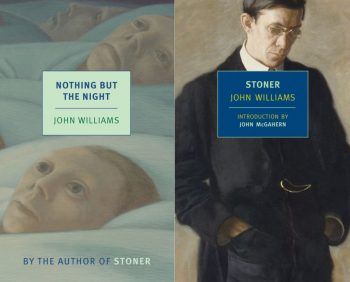 Nancy Gardner Williams, John Williams’s widow, lives in a small bungalow in Pueblo, Colorado, close to the desert. This town near the Rocky Mountains was once known for its steel industry. Nancy, a tall woman who holds herself straight, is attentive and observant, friendly yet somewhat reserved. She is not decisively talkative, but you realize immediately that she and her husband must have been on equal terms. “No bluster, no fashion, no pomp,” as Dan Wakefield once remarked about John Williams. That seems to be true for her as well. Nancy studied English literature at the University of Denver. One of her lecturers was John Williams.
 The forty-five-year-old investigative journalist Jiang Xue is one of the most influential members of a group of journalists who came of age in the early 2000s, taking advantage of new—if temporary—freedoms created by the Internet to investigate pressing social issues. She worked at Chinese Business View (Huashangbao) until 2014, when she quit as its opinion-page editor over censorship. Since then, she has kept writing to an ever-shrinking audience on social media, most notably
 In the spring of 1890, Albion Tourgée, who had fought for the Union in the United States Army and then against the Ku Klux Klan as a Reconstruction judge, received an invitation to address a conference in upstate New York on the “Negro Question” hosted by the Quaker philanthropist Albert Smiley. Tourgée was an ideal choice: He had remained engaged in the struggle for equality long after many white people had lost interest. But as Steve Luxenberg shows in “Separate: The Story of Plessy v. Ferguson, and America’s Journey From Slavery to Segregation,” Tourgée was tempted to stay home. Longtime allies were boycotting the conference, with the encouragement of black newspaper editors and activists. Their complaint was simple: Not a single “Negro” had been invited. Yet in response to the protest, organizers doubled down. “A patient is not invited to the consultation of the doctors on his case,” Lyman Abbott wrote in The Christian Union.
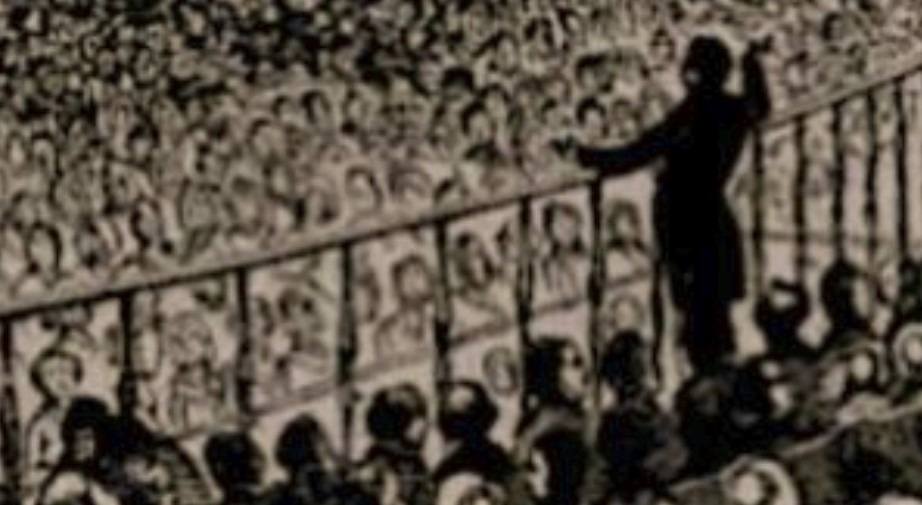 POPULISM AND DEMOCRACY are an odd couple. The first, populism, rejects the pejorative connotation that its name represents for the second, democracy, which it in turn criticizes for being hypocritical. The second declares itself the sole form of legitimate existence. Both of them claim to be supremely popular. Their virulent opposition in the current discourse is matched only by the indecision that hangs over their respective meanings. What “people” are they talking about, both together and separately?
 On February 19, 1855, Charles Sumner, the Massachusetts senator, wrote his supporters about an enslaved 7-year-old girl whose freedom he had helped to secure. She would be joining him onstage at an abolitionist lecture that spring. “I think her presence among us (in Boston) will be a great deal more effective than any speech I could make,” the noted orator wrote. He said her name was Mary, but he also referred to her, significantly, as “another Ida May.” Sumner enclosed a daguerreotype of Mary standing next to a small table with a notebook at her elbow. She is neatly outfitted in a plaid dress, with a solemn expression on her face, and looks for all the world like a white girl from a well-to-do family.
 In 1985, the chemist Steven A. Benner sat down with some colleagues and a notebook and sketched out a way to expand the alphabet of DNA. He has been trying to make those sketches real ever since.
 One evening in 2016, a twenty-five-year-old community-college student named Alex Gutiérrez was waiting tables at La Piazza Ristorante Italiano, an upscale restaurant in Tulare, in California’s San Joaquin Valley. Gutiérrez spotted Yorai Benzeevi, a physician who ran the local hospital, sitting at a table with Parmod Kumar, a member of the hospital board. They seemed to be in a celebratory mood, drinking expensive bottles of wine and laughing. This irritated Gutiérrez. The kingpins, he thought with disgust.
 Lynn Nottage is the only living American playwright to have won the Pulitzer Prize multiple times. Her first one came in 2009 for Ruined, a drama about a small bar in a mining town in the Congo that serves soldiers from both sides of that country’s civil war. She received her second Pulitzer in 2017 for Sweat, a drama about the downfall of Reading, Pennsylvania, that largely takes place in a bar frequented by union workers as they find themselves caught between solidarity and trying to make rent.
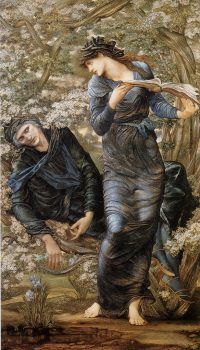 The
The Over the course of the more than half-century of relentless experimentation that followed, Ryman radically expanded the possibilities of abstract painting, continuously rethinking how it could be made and what it could look like, even while seeming to confine himself to a single color: white. His death on Friday, in New York, at the age of 88, brings to a close one of the singular careers in postwar America art.
 Yet one cluster of texts never entered public discourse in the same way. For eight months after these texts were released online — an eon, in internet time — no one wrote about them. The sleaziest gossip outlets, which enthusiastically published other dirty details about Manafort (including his membership in BDSM sex clubs), wouldn’t touch it. Deep transparency conspiracy theorists didn’t Tweet about it. A
 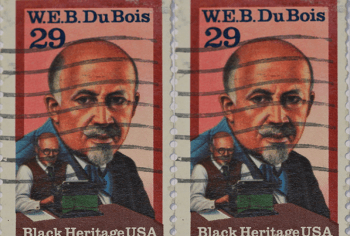 February 1951 was a busy month for W. E. B. Du Bois, who turned eighty-three and threw himself a huge birthday party to raise funds for African decolonization. He also married his second wife, the leftist writer Shirley Graham, in what the Baltimore Afro-American newspaper called the wedding of the year. And he was indicted, arrested, and arraigned in federal court as an agent of the Soviet Union because he had circulated a petition protesting nuclear weapons. The Justice Department saw Du Bois’s petition as a threat to national security. They thought it was communist propaganda meant to encourage American pacifism in the face of Soviet aggression. They put Du Bois on trial in order to brand him as “un-American,” to use the language of Joe McCarthy’s House Un-American Activities Committee. Du Bois was not in fact a Soviet agent. He was an American citizen using his First Amendment rights to protest nuclear weapons on his own behalf. A federal judge acquitted him because prosecutors failed to present any evidence.
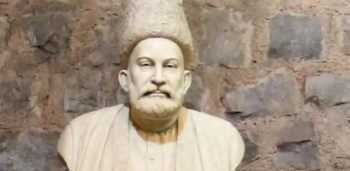 One thing is common among all the good and great writers: a deep sympathy with man; an ability to view and understand the various aspects of his character and the complex situations of his psychology; and a desire to see life as elegant, pure and pretty, fruit-laden and blooming. Humans do work of various kinds to maintain their personal and social life and for the satisfaction of their desires and instincts; and establish mutual bonds and relationships. They make things, provisions and tools, different laws for their use, ownership and distribution, and principles and codes of conduct.
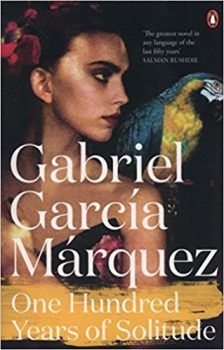 I remember One Hundred Years of Solitude on my parents’ bookshelf when I was a child: it was the “one hundred years” that put me off: it sounded like it must be something to do with history, very boring history; “solitude” didn’t sound like much fun either. I imagined it was about a man being alone for a hundred years, talking endlessly to himself in the manner of “To be or not to be?” There was also Love in the Time of Cholera, which I assumed must be about cholera. (There were many medical textbooks in the house, both my parents being doctors. I had often leafed through The Handbook of Tropical Infectious Diseases, and knew all about cholera.)
 In the near future, we will be in possession of genetic engineering technology which allows us to move genes precisely and massively from one species to another. Careless or commercially driven use of this technology could make the concept of species meaningless, mixing up populations and mating systems so that much of the individuality of species would be lost. Cultural evolution gave us the power to do this. To preserve our wildlife as nature evolved it, the machinery of biological evolution must be protected from the homogenizing effects of cultural evolution.