Lizzie Wade in Science:
 In the 14th century, the Black Death swept across Europe, Asia, and North Africa, killing up to 50% of the population in some cities. But archaeologists and historians have assumed that the plague bacterium Yersinia pestis, carried by fleas infesting rodents, didn’t make it across the Sahara Desert. Medieval sub-Saharan Africa’s few written records make no mention of plague, and the region lacks mass graves resembling the “plague pits” of Europe. Nor did European explorers of the 15th and 16th centuries record any sign of the disease, even though outbreaks continued to beset Europe. Now, some researchers point to new evidence from archaeology, history, and genetics to argue that the Black Death likely did sow devastation in medieval sub-Saharan Africa. “It’s entirely possible that [plague] would have headed south,” says Anne Stone, an anthropological geneticist who studies ancient pathogens at Arizona State University (ASU) in Tempe. If proved, the presence of plague would put renewed attention on the medieval trade routes that linked sub-Saharan Africa to other continents. But Stone and others caution that the evidence so far is circumstantial; researchers need ancient DNA from Africa to clinch their case. The new finds, to be presented this week at a conference at the University of Paris, may spur more scientists to search for it.
Plague is endemic in parts of Africa now; most historians have assumed it arrived in the 19th century from India or China. But Gérard Chouin, an archaeologist and historian at the College of William & Mary in Williamsburg, Virginia, and a team leader in the French National Research Agency’s GLOBAFRICA research program, first started to wonder whether plague had a longer history in sub-Saharan Africa while excavating the site of Akrokrowa in Ghana. Founded around 700 C.E., Akrokrowa was a farming community surrounded by an elliptical ditch and high earthen banks, one of dozens of similar “earthwork” settlements in southern Ghana at the time. But sometime in the late 1300s, Akrokrowa and all the other earthwork settlements were abandoned. “There was a deep, structural change in settlement patterns,” Chouin says, just as the Black Death ravaged Eurasia and North Africa. With GLOBAFRICA funding, he has since documented a similar 14th century abandonment of Ife, Nigeria, the homeland of the Yoruba people, although that site was later reoccupied.
More here.

 Once upon a time, the task of scientists was to understand nature. “Merchants of Light,” Francis Bacon called them. They were a community of knowledge-seekers who subjected hypotheses to experimental test, using what we now simply call “the scientific method.” Understanding nature, so the idea, would both satisfy human curiosity and better our lives.
 Now that policies made famous by Bernie Sanders, like Medicare for All and free college, and newer ones like the
 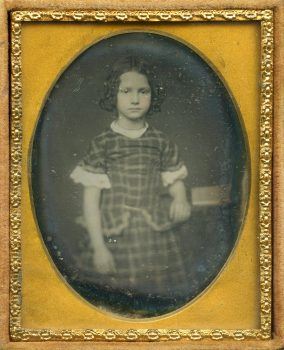 The daguerreotype shows a 7-year old girl. Her face is pale, her expression somber. Her elegant plaid dress, trimmed in lace, and the notebook on the cloth-covered table behind her, suggest that she comes from a prosperous family.
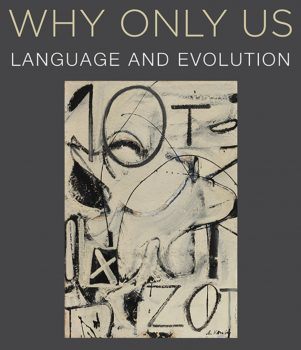
 What was the driving force that made us human, akin to but separate from other apes and our evolutionary cousins such as the Neanderthals? In The Goodness Paradox, the anthropologist Richard Wrangham approvingly quotes Frederick the Great in pointing to “the wild beast” within each man: our nature, he argues, is rooted in an animal violence that morphed over time to become uniquely human. When male human ancestors began to plot together to execute aggressive men in their communities, indeed to carry out such killings through what Wrangham calls “coalitionary proactive aggression”, they were launched towards full humanity.
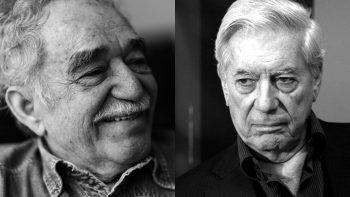 It was about eleven or twelve in the morning and I was in my house in Colonia Nápoles, where I had an office, a big house with an editorial office in one part, and in the other part I lived with my girlfriend and my two children. There’s a knock at the door and it’s Gabo and Mercedes. I was very happy and very surprised to see him. Gabo was already a friend of mine, but there are hierarchies in friendships. It was a friendship of guarded proportions. I was a newspaper photographer and he was what he is. Back then I didn’t presume to call him Gabo. Calling him Gabito was for me like calling Cervantes “Miguelito.” For me, he’s Gabriel García Márquez. They came for the photographs. He told me, “I want you to take some pictures of my black eye.” They came to my house because they trust me.
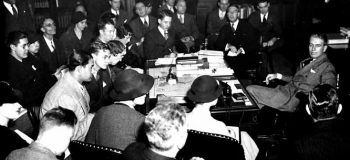 Donald Trump campaigned for the presidency and continues to govern as a man who is anti-intellectual, as well as anti-fact and anti-truth. “The experts are terrible,” Trump said while discussing foreign policy during the 2016 campaign. “Look at the mess we’re in with all these experts that we have.” But Trump belongs to a long U.S. tradition of skepticism about the role and motivations of intellectuals in political life. And his particularly toxic version of this tradition raises provocative and difficult questions: Are there occasions when anti-intellectualism is defensible or justified? Should we always dismiss charges that intellectuals are out of touch or too protective of established ways of thinking?
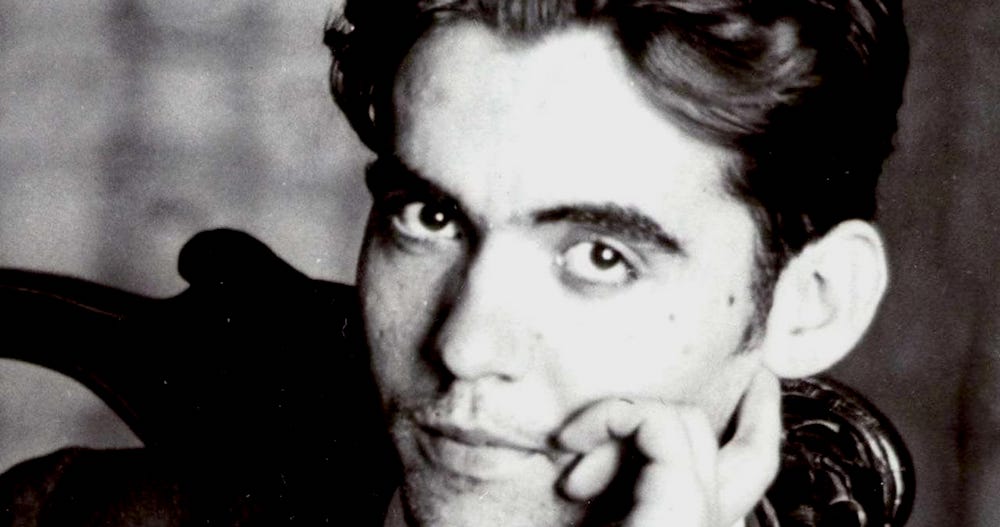 Before dawn on August 17th, 1936, a man dressed in white pajamas and a blazer stepped out of a car onto the dirt road connecting the towns of Víznar and Alfacar in the foothills outside Granada, Spain. He had thick, arching eyebrows, a widow’s peak sharpened by a tar-black receding hairline, and a slight gut that looked good on his 38-year-old frame.
 In
In It should be “okay” for Americans who want their country to have a close alliance with a foreign power to form political organizations that advance their views. The problem with AIPAC is not that it pushes American lawmakers to show deference to the interests of another country. The problem is that it pushes them to
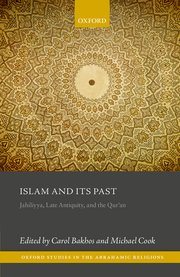 C
C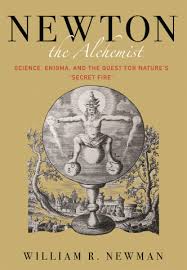 The discovery of Newton’s alchemical manuscripts – containing no fewer than a million words, some of the pages mutilated by the acids used during his quest for the philosopher’s stone – led to a flurry of scholarly activity. This culminated in the 1980s in the work of Richard Westfall, still Newton’s greatest biographer, and Betty Jo Teeter Dobbs. In a spectacular rejection of Butterfield’s dismissiveness, they argued that alchemy underpinned Newton’s whole world-view. Newton’s belief in transmutation, Dobbs claimed, was akin to a religious quest, with the ‘philosophic mercury’, believed to be ableto break down metals into their constituent parts, acting as a spirit mediating between the physical and divine realms. Westfall suggested that it was assumptions born in Newton’s alchemical researches about invisible forces acting at a distance that allowed him to develop his greatest theory: that of universal gravitation, which he announced to the world in his Principia of 1687.
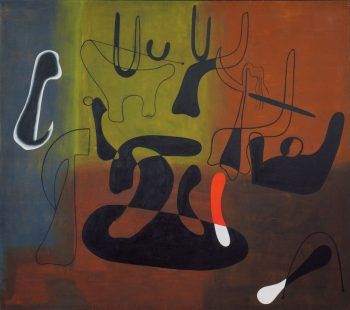 “Painting,” painted by Joan Miró in 1933, in Barcelona, is a composition of black, red, and white blobby shapes and linear glyphs on a ground of bleeding and blending greens and browns. It hangs in “Joan Miró: Birth of the World,” an enchanting show at the Museum of Modern Art that draws on the museum’s immense holdings of Miró’s work, along with a few loans. “Painting” is a bit sombre, for him, but it has the ineffably friendly air of nearly all his art: adventurous but easy-looking, an eager gift to vision and imagination. It invokes a word inevitably applied to Miró: “poetic,” redolent of the magic, residual in us, of childhood rhymes, with or without figurative elements. Never unsettling in the ways of, say, Matisse or, for heaven’s sake, Picasso, Miró is a modernist for everybody. (He died in 1983, at the age of ninety.) This has given him a peculiar trajectory in the modern-art canon: he was considered majestic at points in the past, in ways that feel somewhat flimsy now. Looking at “Painting” helps me think about the art world’s shifting estimation of the “international Catalan,” as Miró termed himself. It stirs a personal memory.
 What do little girls like? As a child, I preferred Lego to dolls and, if asked what I wanted to be when I grew up, was apt to reply: a detective, or a reporter. My parents were scientists, so our household was in some ways less obviously gendered than most (though I went on to do an arts degree, two of my sisters read biochemistry and maths at university). Nevertheless, it was always in the air: the way girls should be, and therefore are. By the time I was a teenager, I’d learned to feel quite odd about certain of my tastes and aptitudes. I’d also internalised various stereotypes. I took great pride, for instance, in my map-reading – not because map-reading is intrinsically difficult, but because some small part of me accepted that women are not supposed to be any good at it.
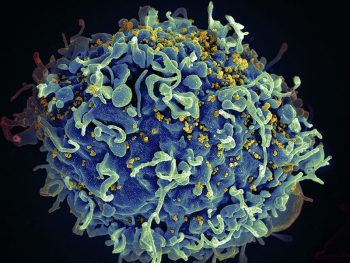 A person with HIV seems to be free of the virus after receiving a stem-cell transplant that replaced their white blood cells with HIV-resistant versions. The patient is only the second person ever reported to have been cleared of the virus using this method. But researchers warn that it is too early to say that they have been cured. The patient — whose identity hasn’t been disclosed — was able to stop taking antiretroviral drugs, with no sign of the virus returning 18 months later. The stem-cell technique was
 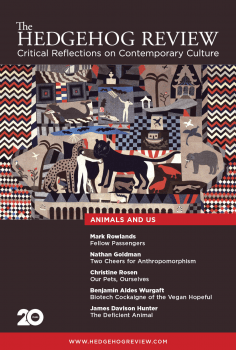 Imagine you are on a bus ride to an unknown destination. The road is little more than a dirt track, littered with potholes, and you are constantly bounced around in your seat. There is no air conditioning. Sweat is dripping down your back and you are starting to smell. The same is true of your fellow travelers. Some of them have brought livestock and other animals on board. Kids are screaming; the bathrooms are blocked and overflowing. It is clear that no one on the bus has any idea where you are going, and only the haziest idea of where you are coming from. Nevertheless, all around you people are making up stories—ungrounded in logic and untethered to evidence—about where they are going to alight and what their prospects will be once they get there.