
Morgan Meis in Image:
 A little old man came out of a fabric store and lit a stick of incense. He had a pronounced lower lip, which dangled more than a foot from the bottom of his face. He shook and brandished his wondrous lip and the young men around him trembled and approached. He held his left hand low and made a gesture with his palm toward the ground and shook his lip once more. The young men scattered back into the store. Then he spoke some kind of offering, a prayer to the sky above. Then he blew his nose and went back inside.
+
The one dog was chasing the other dog. Both dogs were a mangy wreck, ribs visible beneath taut skin, yellow eyes. But the one dog was chasing the other dog … then he stopped … and the other dog looked back at him with suddenly sad eyes like, “hey, why’d you stop, man? … that was incredible … that was the best thing we’ve done in years … that was a dream.”
+
He was crossing the street, expertly dodging a series of crazed Tuk Tuk drivers and just missing a large, dusty bus. His sweater was amazing, bold horizontal lines of green and orange. He was not wearing any pants, but his sweater was fucking amazing.
More here.
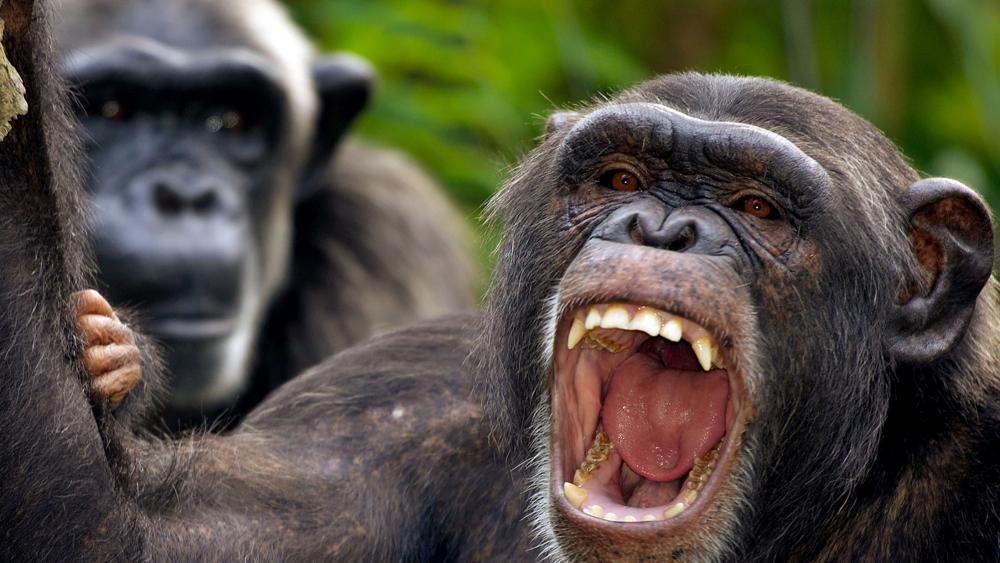 He never stood a chance. His first mistake was looking for food alone; perhaps things would have turned out differently if he’d been with someone else. The second, bigger mistake was wandering too far up the valley into a dangerous wooded area. This was where he risked running into the Others, the ones from the ridge above the valley. At first, there were two of them, and he tried to fight, but another four crept up behind him and he was surrounded. They left him there to bleed to death and later returned to mutilate his body. Eventually, nearly 20 such killings took place, until there was no one left, and the Others took over the whole valley.
 So, I ask fellow non-supernaturalists, will the irascible attacks and mean-spirited memes “preach” to anyone but those caught in the echo chamber or the bubble of unbelief? Seriously, who are people talking to, if anyone other than the online “atheist crowd”? Who’s even hearing MY voice right now? A select group of Patheists (Patheos readers)?
 No other item of religious clothing has ignited passions and prejudice among politicians and media commentators as much as the burqa, worn by a minority of Muslim women. In 2006, then leader of the House of Commons Jack Straw wrote of his “concerns” after a meeting with a veiled Muslim woman in his Blackburn constituency – he later apologised. Tony Blair, who was then prime minister, said the wearing of veils was a “mark of separation”. More than a decade later,
  In 1972 Thomas Kuhn hurled an ashtray at Errol Morris. Already renowned for The Structure of Scientific Revolutions, published a decade earlier, Kuhn was at the Institute for Advanced Study in Princeton, and Morris was his graduate student in history and philosophy of science. During a meeting in Kuhn’s office, Morris questioned Kuhn’s views on paradigms, the webs of conscious and unconscious assumptions that underpin, say, Aristotle’s, Newton’s or Einstein’s physics. You cannot say one paradigm is truer than another, according to Kuhn, because there is no objective standard by which to judge them. Paradigms are incomparable, or “incommensurable.” If that were true, Morris asked, wouldn’t history of science be impossible? Wouldn’t the past be inaccessible–except, Morris added, for “someone who imagines himself to be God?” Kuhn realized his student had just insulted him. He muttered, “He’s trying to kill me. He’s trying to kill me.” Then he threw the ashtray at Morris and threw him out of the program.
 Lawrence Ferlinghetti
 Consciousness has many aspects, from experience to wakefulness to self-awareness. One aspect is imagination: our minds can conjure up multiple hypothetical futures to help us decide which choices we should make. Where did that ability come from? Today’s guest, Malcolm MacIver, pinpoints an important transition in the evolution of consciousness to when fish first climbed on to land, and could suddenly see much farther, which in turn made it advantageous to plan further in advance. If this idea is true, it might help us understand some of the abilities and limitations of our cognitive capacities, with potentially important ramifications for our future as a species.
 Over the weekend, the Times tried to soften the emotional blow for the millions of Americans trained in these years to place hopes for the overturn of the Trump presidency in Mueller. As with most press coverage, there was little pretense that the Mueller probe was supposed to be a neutral fact-finding mission, as apposed to religious allegory, with Mueller cast as the hero sent to slay the monster.
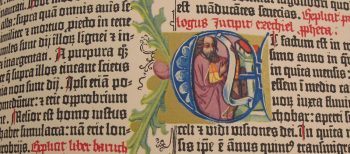 A wooden box containing one of the most valuable books in the world arrives in Los Angeles on October 14, 1950, with little more fanfare—or security—than a Sears catalog. Code-named “the commode,” it was flown from London via regular parcel post, and while it is being delivered locally by Tice and Lynch, a high-end customs broker and shipping company, its agents have no idea what they are carrying and take no special precautions.
 There are a handful of niche artists whom I love to play for friends who have never heard them before. Music critics are infamous for these sorts of overbearing displays—smugly dropping a needle to a record and then staring, expectantly. It’s awful! Yet the first time that a person hears the singer Scott Walker—who died on Friday, in London, at the age of seventy-six—a palpable transformation occurs, and it’s extraordinary to witness. At first,
 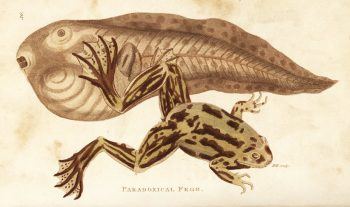 As a child growing up in the Netherlands, Hanna ten Brink spent many days lingering by a pond in her family’s garden, fascinated by metamorphosis. Tadpoles hatched from eggs in the pond and swam about, sucking tiny particles of food into their mouths. After a few weeks, the tadpoles lost their tails, sprouted legs and hopped onto land, where they could catch insects with their new tongues. Eventually Dr. ten Brink became an evolutionary biologist. Now science has brought her back to that childhood fascination. Eighty percent of all animal species experience metamorphosis — from frogs to flatfish to butterflies to jellyfish. Scientists are deeply puzzled as to how it became so common.
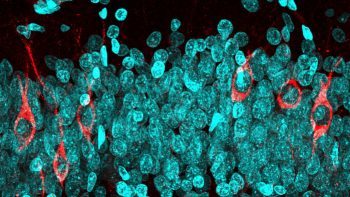 One of the thorniest debates in neuroscience is whether people can make new neurons after their brains stop developing in adolescence—a process known as neurogenesis. Now, a new study finds that even people long past middle age can make fresh brain cells, and that past studies that failed to spot these newcomers may have used flawed methods. The work “provides clear, definitive evidence that neurogenesis persists throughout life,” says Paul Frankland, a neuroscientist at the Hospital for Sick Children in Toronto, Canada. “For me, this puts the issue to bed.” Researchers have long hoped that neurogenesis could help treat brain disorders like depression and Alzheimer’s disease. But last year, a study in Nature reported that
 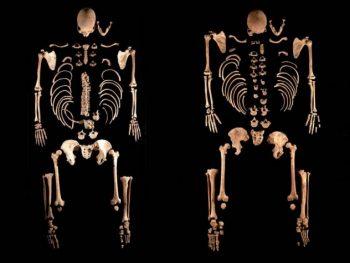 WHAT SECRETS DO THE EAR BONES
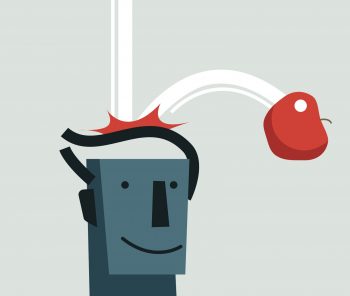 Every wild species on the planet knows to eat the diet to which it is adapted. Carnivores know to eat meat; herbivores know to eat leaves and grass; koalas know to eat eucalyptus, and giant pandas know to eat bamboo. We, too, are animals; we too, once knew what to eat based on that same blend of cultural experience and instinct. Science should only have served to enhance our native understanding. Instead, we have so abused the applications of science to nutrition that while pandas keep eating bamboo, humans are being bamboozled.
 Capitalism, like the United States itself, has a mythology, and for five decades one of its central characters has been the nineteenth-century maverick cigarette entrepreneur, James B. Duke. Duke’s risk-taking investment in the newfangled machine-made cigarette, so the story goes, displaced the pricey, hand-rolled variety offered by his stodgy competitors. This, in turn, won Duke control of the national, and soon global, cigarette market. Repeated ad nauseam in