
Career Counseling
You can be whatever you set your mind to,
my teachers were fond of saying.
Sit down, son.
The counselor pointed to a chair,
pulling out brochures like a travel agent.
Where are you headed?
As if no destination were outside the realm of possibility;
we just had to plug it into the computer,
check flights,
book tickets far enough in advance.
You can be whatever you wish,
my father said — meaning, lawyer, teacher, engineer, MD,
RN, CPA — speaking in that voice
parents use, knowing
they’re being more understanding
than their parents were. Tell me,
what do you really want to do?
What could I say? I want to be a boy
adopted by vultures. Or a blind girl
who lives in a cave.
Or a hermit who speaks to lizards.
I wanted to be washed up,
a castaway searching
for the crew I’d been separated from,
shipwrecked on this planet,
marooned in a human body.
Maybe that was why I touched myself so often —
to see if I could feel a fragment
of who I really was, a piece of light
buried in me, broken off from the star
I spent so much energy trying to get back to.
Maybe that’s why I lit matches
and pressed the flames into my palms,
as if pain held the answer
folded up in its petals.
Maybe the only way back
was to hurt, to rub against broken glass.
What’s on your mind?
asked the doctor. Don’t be afraid. You can
tell me anything. I was thinking
of what I’d have to give up,
what every young man or woman
serious about making a living has to give up:
gazing at leaves, those elegant distractions,
or the creek’s long, run-on sentences,
its exclamations, its
parentheses, its tireless questions.
What if we made graduation a little more honest,
held a ceremony
where every eighteen-year-old dragged onto the field
all he’d hidden in his closets,
all that could prove embarrassing,
all she loved but had no excuse to hold on to anymore?
Final exams would require every student
to write down the idle thoughts
she’d promised never
to think again, every word
it excited a boy just to write:
wastrel, changeling, maelstrom, cataclysm, galaxy,
alien, naked, vampire, crucible, relic.
Fire would grade the papers,
and everybody would get the same mark,
flames correcting the notebooks
filled with spaceships
or Greek gods
or the names of sweethearts written over
and over in different scripts
or drawings of horses —
all a girl had to do was look at them, then close her eyes,
to feel the power ripping
under her, carrying her into the sky —
or pictures of dogs too important to die,
of movie stars or rock bands
into whose faces a young man or woman gazes
till afternoons open like doors
they’d thought shut tight.
You can be whatever you set your mind to.
But at what cost?
Sit down, son.
Tell me what you want to do with the rest of your life.
by Chris Bursk
from The Sun Magazine
September 1996
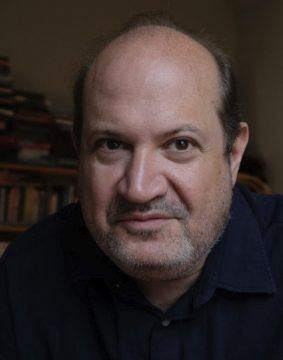 For many writers, Sam Lipsyte’s readerly eyes are the most coveted. Hordes flock to the Columbia MFA Writing Program for the chance to take his fiction workshop, where he and I first met. On campus, revved up egos struggled under the weight of our grandiose dreams. We students all crossed our fingers in hopes that we’d be one of the lucky ones to gain access to The Great Lipsyte’s secrets.
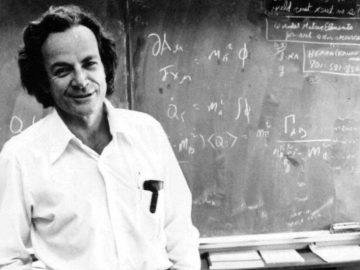 One day at lunch in the Caltech cafeteria, I was with two graduate students, Bill Press and Saul Teukolsky, and Feynman. Bill and Saul were talking about a calculation they had just done. It was a theoretical calculation, purely mathematical, where they looked at what happens if you shine light on a rotating black hole. If you shine it at the right angle, the light will bounce off the black hole with more energy than it came in with. The classical analogue is a spinning top. If you throw a marble at the top at the right angle, the marble will bounce off the top with more velocity than it came in with. The top slows down and the energy, the increased energy of the marble, comes from the spin of the top. As Bill and Saul were talking, Feynman was listening.
 What are you looking for in a presidential candidate? I want someone with fresh proposals on health care or the environment, you might say. A track record that testifies to experience and effectiveness. Or you might say: Listen, I’m just looking for anyone who can defeat Donald Trump in 2020. Whatever your position, you’re likely to have already gotten into spirited conversations about it with family and friends. And as the race for the Democratic nomination heats up, the debate has become increasingly acrimonious. In fact, it’s threatening to turn into a search for a savior.
 Attempting to “transport” Emily Dickinson’s poems into Portuguese is a still harder task, because Dickinson’s poetry is notable for its peculiar agrammaticality: unexpected plurals, inverted syntax, and an often complete disregard for gender, person, or agreement between nouns and verbs. As for form, Dickinson uses the structure of hymns, though, as Mutlu Konuk Blasing says, “the metric norm so severely limits the verse it empowers that the verse grows cryptic, crabbed, and idiosyncratic and resists communication itself, thus undermining the religious and social function of hymns that the form alludes to as authorization for her ‘dialect,’ her ‘New Englandly’ tune.” The result is a compact, cryptic language full of ellipses, which translates into texts that challenge the tradition of poetry as communication and gives literary language an autonomy more akin to the aesthetics of modern poetry.
 Shaich is not only a self-described conscious capitalist, but a board member of Mackey’s Conscious Capitalism, Inc. He and other conscious capitalists operate under the assumption that consumers will prefer their businesses because they are doing good. They assert that by publicly taking on charitable initiatives that benefit people beyond their shareholders, they will lower marketing costs and raise profits—because customers will like them and thus be more loyal. But conscious capitalism is a young, largely untested business theory, and its efficacy claims haven’t been well studied. With Eckhardt and Dobscha’s research, that’s beginning to change. Over the course of a few months in 2017, they cased the Panera Cares in Boston and reviewed every single Yelp review of all five Panera Cares locations. They found that the food secure and insecure both had profound “physical, psychological, and philosophical” problems with the restaurant.
 This is like losing the hard drive of medieval Paris. Every inch had meaning — not just the meaning imbued by the carpenter and the stonemason, but the meaning imbued by the student, the monk, the penitent — and then by the emergent French bourgeois society.
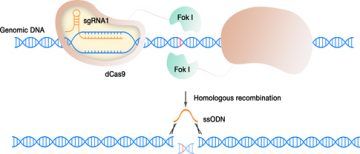 Suitable protein targets are needed to develop new anticancer drug-based treatments. Writing in Nature,
  The video clip, slightly pixelated and shot in black and white, shows two men in the throes of laughter. One, white, leans closer, holding a microphone near his companion’s mouth. The other, Black, who was laughing with his head turned away, exposing a handsome set of teeth, composes himself, facing his interviewer, yet he is unable to hide his boyish smile.
 In 1984, bacteria started showing up in patients’ blood at the University of Wisconsin Hospital and Clinic. Bacteria do not belong in the blood and such infections can quickly escalate into septic shock, a life threatening condition. Ultimately, blood samples revealed the culprit: A microbe that normally lives in the gut called
  The US government’s indictment of
 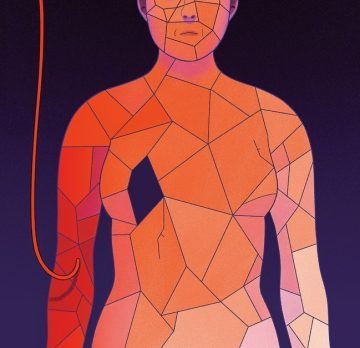 Before I got sick, I’d been making plans for a place for public weeping, hoping to install in major cities a temple where anyone who needed it could get together to cry in good company and with the proper equipment. It would be a precisely imagined architecture of sadness: gargoyles made of night sweat, moldings made of longest minutes, support beams made of I-can’t-go-on-I-must-go-on. When planning the temple, I remembered the existence of people who hate those they call crybabies, and how they might respond with rage to a place full of distraught strangers—a place that exposed suffering as what is shared. It would have been something tremendous to offer those sufferers the exquisite comforts of stately marble troughs in which to collectivize their tears. But I never did this.
 A “call to order” is taking place in political and intellectual life in Europe and abroad. This “rappel à l’ordre” has sounded before, in France after World War I, when it was directed at avant-garde artists, demanding that they put aside their experiments and create reassuring representations for those whose worlds had been torn apart by the war. But now it is directed toward those intellectuals, politicians, and citizens who still cling to the supposedly politically correct culture of postmodernism.
 The brain is a computer’ – this claim is as central to our scientific understanding of the mind as it is baffling to anyone who hears it. We are either told that this claim is just a metaphor or that it is in fact a precise, well-understood hypothesis. But it’s neither. We have clear reasons to think that it’s literally true that the brain is a computer, yet we don’t have any clear understanding of what this means. That’s a common story in science. To get the obvious out of the way: your brain is not made up of silicon chips and transistors. It doesn’t have separable components that are analogous to your computer’s hard drive, random-access memory (RAM) and central processing unit (CPU). But none of these things are essential to something’s being a computer. In fact, we don’t know what is essential for the brain to be a computer. Still, it is almost certainly true that it is one.