
Yohann Koshy in The Baffler:
 TWO YEARS AGO, at a panel discussion held in a crowded theater in Brighton, England, on the fringe of the Labour Party’s annual conference, two thinkers were debating the way out of capitalism. Paul Mason, the journalist and author of Postcapitalism, relayed his book’s thesis: information technology, as seen in digital files that cost nothing to reproduce, “cheapens real things so rapidly that it disrupts capitalism’s normal mechanisms of adaptation and survival,” thus undermining the system from within. David Harvey, the scholar of Marx’s Capital, disagreed:
Every time a new wave of technology comes along, it does indeed seem to suggest some beautiful new future that can be constructed out of it. . . . the answer is, “well, it could be,” but it’s not going to be because the capitalist social relations are dominant . . . they are going to make sure that these new technologies get used to squeeze value out of labor.
It wasn’t exactly the Rumble in the Jungle, but the exchange illustrated two deeply different approaches to post-capitalist strategy: one places its emphasis on technology to light the way, the other on the dynamics of class struggle. Moderating the discussion was Aaron Bastani, co-founder of Novara Media, an outfit that emerged out of the 2010-2011 UK student movement and which has been plugging the gap in Britain’s discursive ecosystem for complex and accessible thinking from the left. Bastani’s first book, Fully Automated Luxury Communism, is something of a bridge between Mason and Harvey, fusing a futurological account of the emancipatory potential of digital technology with a “political project of collective solidarity and individual happiness.” If successful, Bastani argues, the endpoint will be a society “as distinct from our own as that of the twentieth century to feudalism.”
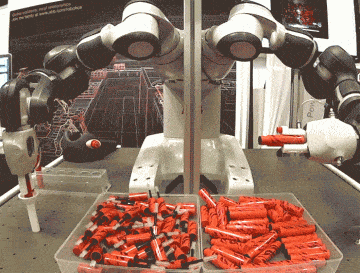
Fully. Automated. Luxury. Communism. It sounds like the future. Or, rather, how the future used to sound, when children read magazines about holidays on the moon. Popularized by Bastani in a 2014 video, the pitch is simple: post-2008 capitalism is in a secular crisis, sustained by an unprecedented amount of cheap money from central banks; automation, now paired with the cognitive capacities of artificial intelligence, is eating away at working and middle-class jobs; this renders a new account of a post-capitalist and post-work society necessary.
More here.
 Instagram launched in 2010, some hundred and twenty years after Oscar Wilde’s The Picture of Dorian Gray. The slender novel is a fable of a new Narcissus, of a beautiful young man whose portrait ages and conforms to the life he has lived while his body does not. Dorian Gray, awakened to the magnificence and fleetingness of his own youth by an aesthete’s words and the glory of his picture, breathes a murmured prayer that his soul might be exchanged for a visage and body never older than that singular summer day they were portrayed. By an unknown magic his prayer is answered, and the accidents of his flesh are somehow severed from his essence so that he may live as he likes, physically untouched and unchanged. But this division of body and soul leads Dorian to ethical dissolution. For by the fixed innocence of his appearance, the link between action and consequence is severed.
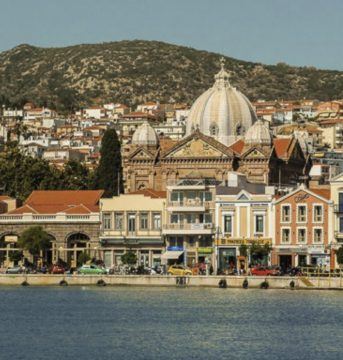 The Spercheios river—which, legend tells us, was dear to the warrior Achilles—marks the southern boundary of the great Thessalian plain in central Greece. I arrived there in late October, but it still felt like summer, and few people were around. Away on the left, the foothills of Mount Oiti were hazed with heat. On my right, at some distance from the road, screened by cotton fields and intermittent olive groves, flowed the Spercheios. At the village of Paliourio, road and river converged, and leaving my car, I wandered down a track that led to a shattered bridge shored with makeshift planking. The river itself was sparkling, picturesquely overhung with oak and wild olive, but on closer inspection I saw machinery and discarded appliances rusting in its shallows.
 In 1996,
  The
The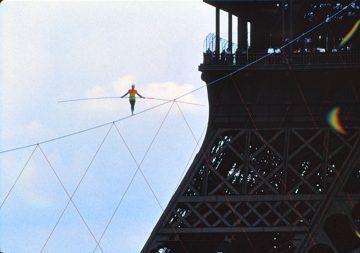 Why did he do it, then? For no other reason, I believe, than to dazzle the world with what he could do. Having seen his stark and haunting juggling performance on the street, I sensed intuitively that his motives were not those of other men—not even those of other artists. With an ambition and an arrogance fit to the measure of the sky, and placing on himself the most stringent internal demands, he wanted, simply, to do what he was capable of doing.
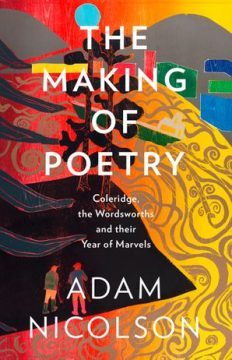 Like most of their generation, Coleridge and Wordsworth had embraced the French Revolution and its ideals of liberty and equality, then lived through the shattering reversals of massacre and war that ensued. By the mid-1790s, many of the poets’ acquaintances were racked by mental and emotional stress. Some of them fled the country; others opted for internal exile, hidden, they hoped, from the spies and informers patrolling the cities. Nicolson argues convincingly that the fragmentary, fierce and strange poetry Wordsworth produced before Lyrical Ballads was composed on the cusp of madness. It was only by going to ground in England’s West Country that Wordsworth was able to cope. We get a rare glimpse of him at that time in Dorothy Wordsworth’s remark that her brother is ‘dextrous with a spade’. Like Heaney, Nicolson’s young Romantics are energised by ‘touching territory’ – digging in to renew themselves and their writing. The idea, Nicolson suggests, ‘that the contented life was the earth-connected life, even that goodness was embeddedness … had its roots in the 1790s’. As furze bloomed brightly on Longstone Hill, Coleridge and Wordsworth began to write poems that would challenge ‘pre-established codes’, change how people thought and so remake the world.
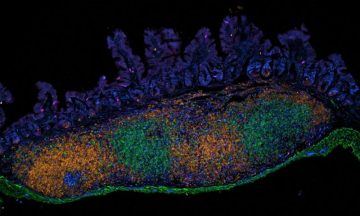 Faecal transplants from young to aged mice can stimulate the gut microbiome and revive the gut immune system, a study by immunologists at the Babraham Institute, Cambridge, has shown. The research is published in the journal Nature Communications today. The gut is one of the organs that is most severely affected by ageing and age-dependent changes to the human
 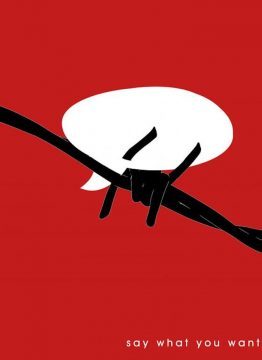 ‘Who has the right to speak?’ It is the key question in debates around free speech. Who should be allowed to speak? What should be permitted to be said? And who makes the decision?
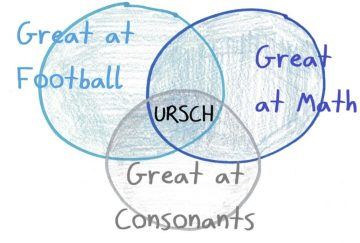 Three seasons in the NFL? Impressive.
 , cowritten with his partner Louisa Thomas—is a good classroom book, a multipurpose tool. His NFL background makes him a role model for the reluctant. His logic puzzles are brain food for the math-hungry. And his dual career is a conversation starter for everyone else.
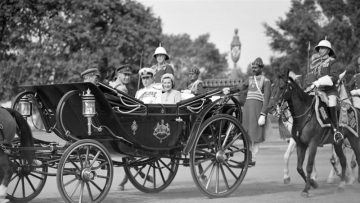 There is a story that is commonly told in Britain that the colonisation of
 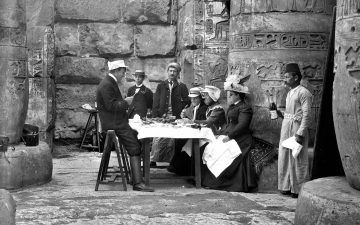 Mosul’s old city lies in ruins. A major section of the third largest city in Iraq has been destroyed by war. Two years after the Iraqi government and the United States-led coalition recaptured it from ISIS, the city is still noticeably scarred. Many residents have fled, or are detained in camps elsewhere in the country. Those who have returned live amid the ruins of their old houses and their old lives. But what is being reconstructed is cultural heritage. UNESCO has worked with the Iraqi government to launch a campaign called ‘Revive the Spirit of Mosul’, focusing on a handful of historic monuments in the city. The United Arab Emirates has pledged $50 million to rebuild the 850-year-old al-Nuri mosque and its minaret, known as al-Hadba (or the hunchback), a symbol of the city.
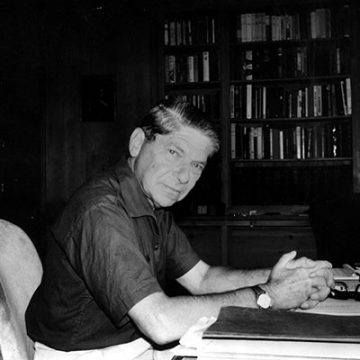 S
S Could a blood test detect cancer in healthy people? Grail, a Menlo Park, Calif.-based company, has raised $1.6 billion in venture capital to prove the answer is yes. And at the world’s largest meeting of cancer doctors, the company is unveiling data that seem designed to assuage the concerns and fears of its doubters and critics. But outside experts emphasize there is still a long way to go. The data, from a pilot study that Grail is using to develop its diagnostic before running it through the gantlet of two much larger clinical trials, are being presented Saturday in several poster sessions at the