
Maria Kouloglou in Quillette:

“Male disposability” describes the tendency to be less concerned about the safety and well-being of men than of women. This night sound surprising given the emphasis in contemporary Western discourse on the oppression of women by men. How is it possible that societies built by men have come to consider their well-being as less important? But embedded in this kind of question are simplistic assumptions that flatten a good deal of complexity.
A 2016 study published in Social Psychological and Personality Science found that people are more willing to sacrifice men than women in a time of crisis and that they are more willing to inflict harm on men than on women. In 2017, an attempt to replicate the Milgram experiment in Poland provided some (inconclusive) evidence that people are more willing to deliver severe electric shocks to men than to women:
“It is worth remarking,” write the authors, “that although the number of people refusing to carry out the commands of the experimenter was three times greater when the student [the person receiving the “shock”] was a woman, the small sample size does not allow us to draw strong conclusions.”
A 2000 study found that among vehicular homicides, drivers who kill women tend to receive longer sentences than drivers who kill men. Another study found that, in Texas in 1991, offenders who victimized females received longer sentences than those who victimized males. There is at least some evidence that “women and children first” is a principle still employed during rescue efforts in natural disaster zones.
More here.
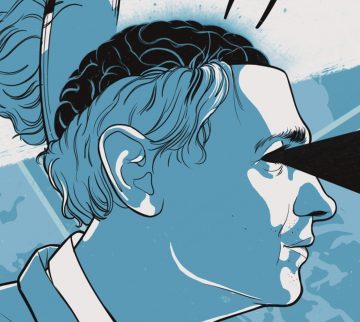 The question of what kinds of physical systems are conscious “is one of the deepest,
  Granted, the U.S. was by this point pretty much dead to me, as I had determined from periodic visits that it was in the interest of my sanity to avoid the country altogether. Frida Kahlo once observed: “I find that Americans completely lack sensibility and good taste. They are boring, and they all have faces like unbaked rolls.”And yet this, perhaps, is the least of the problems.
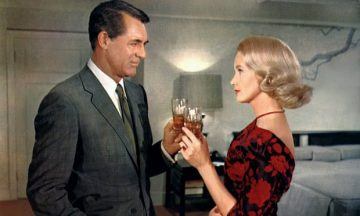 Mistrust all enterprises that require new clothes,” says EM Forster in A Room With a View, adapting a quote from
 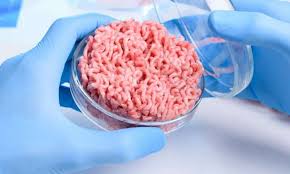 In addition to resources, the advocates of cultured meat have a philosophy ready to hand. Many of them are self-described utilitarians, readers of the works of philosopher Peter Singer, in particular his 1975 book
  The painting made headlines last November for the price it took at auction, though this datum doesn’t interest me. More significant is the return of a too-little-revived film that documents Portrait of an Artist’s charged iterations and the circumstances surrounding them. After watching A Bigger Splash a few weeks before its premiere at Cannes in 1974, Hockney said he was “utterly shattered” by it, his anguish spiked further by a film-director friend who favorably—if somewhat incongruously—likened it to “a real Sunday Bloody Sunday,” John Schlesinger’s astute, London-set, big-studio-backed 1971 drama about a love triangle (two men, one woman). More felicitous comparisons might include Wakefield Poole’s Boys in the Sand (1971), a gay XXX landmark in which a Fire Island natatorium becomes a pleasure palace, not to mention Robert Kramer’s Milestones (1975), an epic dirge on the failed dreams of the New Left in the US, which was also devised as a docufiction. (Hazan and Mingay would return to this genre with 1980’s Rude Boy, centering on the Clash.) But as for movies about making (art) and unmaking (a relationship), I can think of none better, or more sinuous—as serpentine as Hockney’s enunciation of a favorite descriptor.
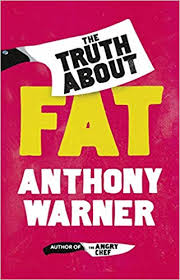 Written in the sharp and irate debunking-of-bad-science mode that has become his stock-in-trade, Warner’s book The Truth About Fat reveals that many of the most widely accepted views on the causes of obesity are simplistic, scientifically unsound or immoral. The book is a thought-provoking corrective to the idea that obesity is simply the result of eating too much and moving too little, which puts the blame squarely on the obese. With verve, mastery of the available data, and a gripping narrative, Warner demonstrates that obesity is a highly complicated problem that requires intricate strategies if it is to be addressed effectively. Books that take a complexity-theory approach are not normally an easy sell, given that they refuse to provide neat solutions to pressing problems, and Warner’s certainly pulls the rug of comforting certainties from under the reader’s feet. Almost all existing strategies in the fight against obesity are flawed and inefficient at best, he says, and may even be making things worse.
 I’m not sure the opinion of your adolescent self is the surest moral polestar. You make most of the biggest decisions in life, the ones that’ll determine its trajectory for the next decades — what you want to do, where you’ll go to college, who you’ll marry — when you have the least amount of data to base them on, and not the vaguest understanding of what their real-life implications will be.
  In 1920, the U.S. introduced a nationwide ban on alcohol by passing the Eighteenth Amendment. It lated reconsidered and repealed the ban in 1933 with the passage of the Twenty-first Amendment.
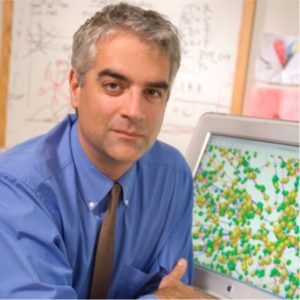 It’s easy to be cynical about humanity’s present state and future prospects. But we have made it this far, and in some ways we’re doing better than we used to be. Today’s guest, Nicholas Christakis, is an interdisciplinary researcher who studies human nature from a variety of perspectives, including biological, historical, and philosophical. His most recent book is
 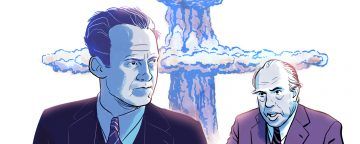 The physicist Werner Heisenberg (1901–1976) won himself a lasting name with a world-altering discovery so startling and influential that it has leaked into popular culture — albeit in a misconceived, bastardized form. Heisenberg’s uncertainty principle is a pillar of quantum physics, and represents the titanic straining of human intelligence to explain phenomena that we really don’t have words to describe. Heisenberg’s achievement rivals Einstein’s — although Einstein found the uncertainty principle to be worse than dubious, a gross violation of the cardinal rules governing scientific truth and an offense against God Himself. Yet for Heisenberg, as he said in
  “NO NEWS IS GOOD NEWS,”
 There is a belief, particularly prevalent among scientists, that science writing is more or less glorified PR – scientists do the intellectual work of discovery and writers port their findings from lab to public – but Silent Spring is a powerful reminder that great science writing can expand our scientific and cultural imaginations. Rarely has the work of a single author – or, indeed, a single book – had such an immediate and profound impact on society. Silent Spring was the first book to persuade a wide audience of the interconnectedness of all life, ushering in the idea that ‘nature’ refers to ecosystems that include humans. It spurred the passage in the United States of the Clean Air Act (1963), the Wilderness Act (1964), the National Environmental Policy Act (1970), the Clean Water Act (1972) and the Endangered Species Act (1973). Perhaps most significant, it showed how human health and well-being ties in with the health of our environment, leading to the establishment of the Environmental Protection Agency in 1970. No wonder, then, that writers, activists and scientists concerned about the ongoing destruction of biodiversity and the catastrophic effects of climate change look to Carson with urgent nostalgia.
 Truly, the older I get, the older are the books I want to read, and the fewer. I creep further and further back into history. I hide in the murk of lost time.
 TWO YEARS AGO
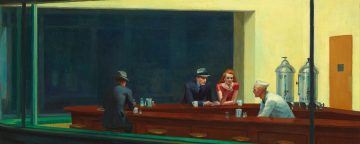 Instagram launched in 2010, some hundred and twenty years after Oscar Wilde’s The Picture of Dorian Gray. The slender novel is a fable of a new Narcissus, of a beautiful young man whose portrait ages and conforms to the life he has lived while his body does not. Dorian Gray, awakened to the magnificence and fleetingness of his own youth by an aesthete’s words and the glory of his picture, breathes a murmured prayer that his soul might be exchanged for a visage and body never older than that singular summer day they were portrayed. By an unknown magic his prayer is answered, and the accidents of his flesh are somehow severed from his essence so that he may live as he likes, physically untouched and unchanged. But this division of body and soul leads Dorian to ethical dissolution. For by the fixed innocence of his appearance, the link between action and consequence is severed.