
John J. Lennon in the New York Review of Books:

On February 10, 2002, in a New York State prison cell, the bestselling author and twice-convicted killer Jack Abbott hanged himself with an improvised noose. That same day, the body of the man I murdered washed ashore on a Brooklyn beach in a nylon laundry bag. My reason for connecting these two events is to try to account for my crime, to understand better why I did it, and to describe what Abbott’s legacy, as a prison writer of an earlier generation, has meant for me as a prison writer in this generation.
Jack Abbott was one of America’s best-known prison writers of the twentieth century, though it can be hard to tell how much this was due to the merits of his work, to the high profile of some of his supporters, who included Susan Sarandon, Christopher Walken, and Norman Mailer, or to the public’s fascination with his propensity for violence. Writing gave Abbott a second chance in life, and in 1981, after serving eighteen years, he was released on parole. Shortly thereafter, he killed again. He never came back from that. His supporters, and even his will to write, deserted him. He died, much as he had lived, alone and angry.
When I started my stretch behind bars in 2002, I had never heard of Abbott. After I read his work, I came to identify with parts of his conflicted character, and I have at times taken inspiration from his writing.
More here.
 In 1978, in
  YOU’VE PROBABLY HEARD
  Boris Johnson was still a backbench Conservative MP and Donald Trump was a property developer and reality television star in the summer that Greetings from Bury Park was published. It was June 2007. I was 36, a journalist and broadcaster living in London. The world I worked in was white, middle-class and metropolitan – a long way from the world in which I had been raised. I had grown up in Luton, the working-class son of Pakistani parents. My father arrived in Britain in 1963 and my mother followed 11 years later with their three children. I was almost three years old. Bury Park was the Asian district of Luton, and my father worked on the production line at the Vauxhall car factory while my mother was a seamstress at home. My childhood was defined by a lack of money and a vivid awareness that my future was limited by my class and my colour. When I managed to get to university and build a career in the media, it became apparent that what I had considered an ordinary upbringing was very different from those of the people I worked among.
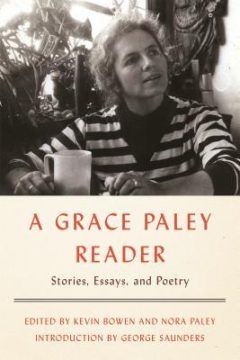 A Grace Paley Reader helps to return the writer to her historical moment, to the specific conditions that shaped her life as an artist and activist. The chronology in the back of the book pairs Paley’s literary publications with her political activities. A sampling: “1959: The Little Disturbances of Man published by Doubleday. Joins in organizing antinuclear protests and with protests against air-raid drills in schools.” “1969: Travels to North Vietnam with a small delegation of peace activists to receive three U.S. prisoners of war. ‘Distances’ is awarded O. Henry Award.” “1978: Arrested in antinuclear demonstration on White House lawn, receives six-month suspended sentence. Publishes ‘Somewhere Else’ in The New Yorker.” In Paley’s life, as in her fiction, the boundaries between the personal and the political, the domestic and the worldly, were remarkably porous. Politics entered her fiction as naturally as a familiar neighbor might step across the threshold of her apartment. For quite some time, critics have heralded Paley because of the compact precision, humor, and idiom of her prose. But equally important to our understanding is her deep engagement with the social and political movements of her time—and how this engagement, this passionate worldliness, defined her fiction.
 Shinto shrine gates (torii) are ubiquitous in western representations of natural Japan. Have we ever wondered why we are fascinated by these images – because of the beauty of this ancient architecture? The natural scenery where they are located? Or are we indeed fascinated by a sense of mystery, the harmony that forms between these human constructions with nature?
 The wonder of Harding is that her performances suggest another language of the face. Her many faces fall between the cracks of recognizable emotions and rarely seem to express turmoil or the felt sentiment buried in the songs. Instead, they supplement the music. She employs her face to present a carefully steered choreography, disjoined from the meanings of words and yet fused to the melodies, driving them into stray and unpredictable emotional registers.
 ‘When I came
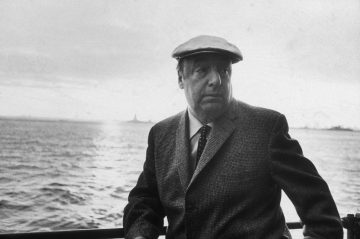 In April 1949, the poet
  In two essays,
 Justin E. H. Smith: I am a historian of philosophy who takes seriously the categories of the people whom I study. That is, I try to understand philosophy the way they understood it, rather than the way we understand it. In particular, this means I take seriously the notion that until sometime in the 18th century—maybe even into the 19th century—there was a category that no longer exists called ‘natural philosophy’, which was supplanted by the category of science over the course of the 19th century.
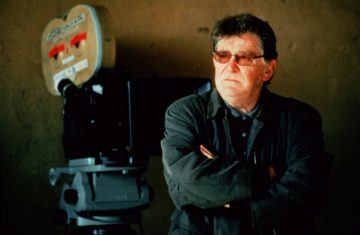 Legend of the Holy Drinker introduces viewers to Olmi’s mature understanding of the economy of grace and the price of salvation. Adapted from a novella by Austrian writer Joseph Roth, the film tells the tragic story of Andreas, a down-and-out middle-aged man living under the bridges of modern Paris. The plot unfolds like a medieval hagiography, replete with chance encounters and sudden (often comical) twists of fortune. Events are set in motion by the unbidden appearance of a kind stranger, a recent convert to Catholicism and devotee of St. Thérèse of Lisieux, who offers Andreas the handsome sum of two hundred francs to help him get back on his feet. There’s a catch, though; the stranger gently requests that Andreas eventually return the money as a holy offering before the saint’s statue, housed in the Church of Sainte-Marie des Batignolles. Andreas, “a man of honor,” readily agrees. But week after week Andreas fails to fulfill his vow, as a series of old acquaintances (and copious carafes of wine) prevent him from making his way to Mass every Sunday.
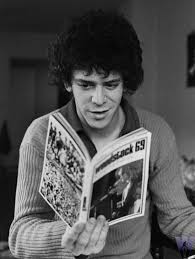 What made Reed’s songs special went beyond his notorious obsession with decadence, his caustic dry wit, and his sneaky romantic vulnerability. He was also one of the most literate of musicians and wasn’t shy about making his literary influences known. As a college kid, he was mentored by the brilliantly mad poet and critic
  Stewart is particularly good on the double-edged quality of the miniature. She grasps that the doll’s house is both paradise and cloister, for example, that it “represents a particular form of interiority, an interiority which the subject experiences as its sanctuary (fantasy) and prison”. She argues that the miniature always presents something that has already been lost, that you can never quite touch: “a world whose anteriority is always absolute, and whose profound interiority is therefore always unrecoverable”. While it can be tempting to focus on miniatures as fulfilments of fantasy, as Garfield does, Stewart asks us to read them as promises that are perpetually broken, as sites of unresolved longing. Miniatures are more like excursions than journeys, she argues, because you always have to come back from the fantasy. You can never stay for good. I’d argue that you can’t even really go in the first place: as with the shrinking man of Bekonscot, entering the miniature landscape means losing the very thing that makes it magical.
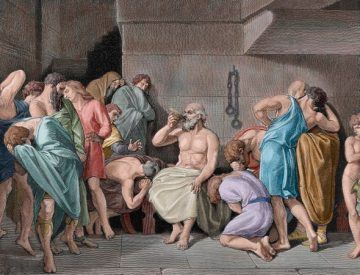 If chocolate
  Today the alkaline desert is quiet. The roar of techno music and flamethrowers has been replaced with the soft clink of rakes and trash cans. Thousands of people put aside their hangovers to methodically clean the desert. After a dedicated communal cleaning, Burning Man, one of the largest arts events in the world, spanning seven days and involving over 70,000 participants, leaves not a single wrapper on the desert. Among the swarm of salt-crusted denizens of this ephemeral city (known as Burners) is us: a scientist who studies cooperation, an industrial designer, and a Silicon Valley security CEO. Among the dismantled rigs, lifeless pyrotechnics, and bowed heads of Burners absorbed in cleaning, we are here trying to answer a simple question: How, after so many years, could Burning Man throw an event of such chaos, and yet leave the desert without a trace? What leads thousands of people in such an extreme environment to consistently engage in cooperative behavior at a scale seldom seen in society?