
Sabine Hossenfelder in Back Reaction:
 It took more than a hundred years, but physicists finally woke up, looked quantum mechanics into the face – and realized with bewilderment they barely know the theory they’ve been married to for so long. Gone are the days of “shut up and calculate”; the foundations of quantum mechanics are en vogue again.
It is not a spontaneous acknowledgement of philosophy that sparked physicists’ rediscovered desire; their sudden search for meaning is driven by technological advances.
With quantum cryptography a reality and quantum computing on the horizon, questions once believed ephemeral are now butter and bread of the research worker. When I was a student, my prof thought it questionable that violations of Bell’s inequality would ever be demonstrated convincingly. Today you can take that as given. We have also seen delayed-choice experiments, marveled over quantum teleportation, witnessed decoherence in action, tracked individual quantum jumps, and cheered when Zeilinger entangled photons over hundreds of kilometers of distance. Well, some of us, anyway.
But while physicists know how to use the mathematics of quantum mechanics to make stunningly accurate predictions, just what this math is about has remained unclear. This is why physicists currently have several “interpretations” of quantum mechanics.
More here.
 “Democracy may not exist, but we’ll miss it when it’s gone” — or so suggests the title of Astra Taylor’s
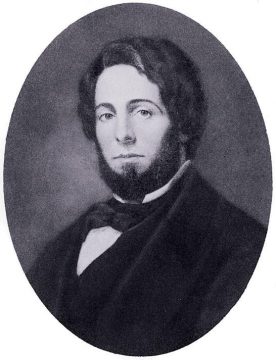 This is the tale of a man who fled from desperate confinement, whirled into Polynesian dreamlands on a plank, sailed back to “civilization,” and then, his genius predictably unremunerated, had to tour the universe in a little room. His biographer calls him “an unfortunate fellow who had come to maturity penniless and poorly educated.” Unfortunate was likewise how he ended. Who could have predicted the greatness that lay before Herman Melville?
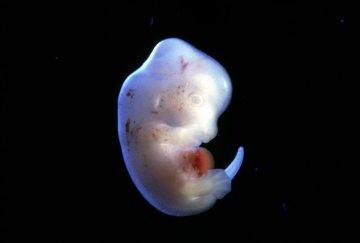 A Japanese stem-cell scientist is the first to receive government support to create animal embryos that contain human cells and transplant them into surrogate animals since a ban on the practice was overturned earlier this year. Hiromitsu Nakauchi, who leads teams at the University of Tokyo and Stanford University in California, plans to grow human cells in mouse and rat embryos and then transplant those embryos into surrogate animals. Nakauchi’s ultimate goal is to produce animals with organs made of human cells that can, eventually, be transplanted into people. Until March, Japan explicitly forbade the growth of animal embryos containing human cells beyond 14 days or the transplant of such embryos into a surrogate uterus. That month, Japan’s education and science ministry
 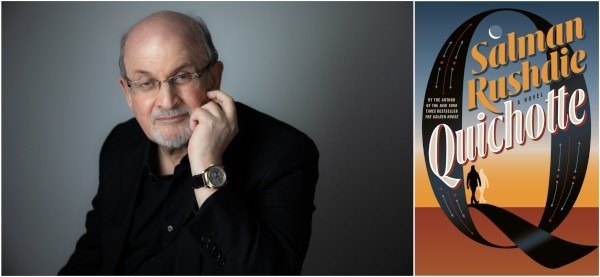 Rushdie takes another journey into unexplored territory in Quichotte, which will be published by Random House in September and was recently long-listed for the Booker. Inspired by Cervantes’s Don Quixote, the novel portrays an elderly traveling salesman “deranged by reality television” who falls in love with the host of a daytime talk show whom he has never met. As Quichotte (the name he takes in letters to his beloved) travels across the country to meet Miss Salma R, a parallel plot concerns the writer who created him; these twin story lines eventually converge in a fantastical ending that tips its hat to some of the science fiction tales Rushdie loved as a boy.
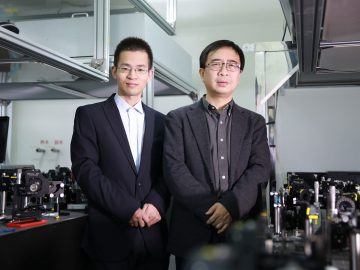 How do quantum probabilities coalesce into the sharp focus of the classical world?
 Psychologists have lots of evidence that implicit social biases—our unconscious, knee-jerk attitudes associated with specific races, sexes and other categories—are widespread, and many assumed they do not evolve. The feelings are just too deep. But a new study finds that over roughly the past decade, both implicit and explicit, or conscious, attitudes toward several social groups have grown warmer.
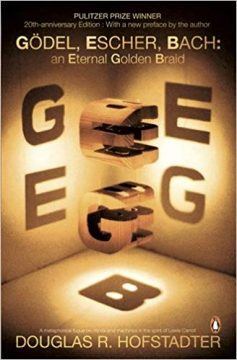 Twenty years ago, in the preface to the 20th-anniversary edition of his classic book, Douglas Hofstadter marvelled at how misunderstood its thesis has been. A treatise on the nature of consciousness, it is often wildly misconstrued as an exploration of how ‘math, art, and music are really all the same’. But one likely source of the confusion is in the name – which is, at the same time, a big reason for the book’s lasting popularity: Gödel, Escher, Bach: An Eternal Golden Braid, or GEB for short, sounds like a promise of just such a dazzling, cosmic counterpoint. Another likely culprit is Hofstadter’s own musings about music. While M C Escher’s artwork elegantly (and literally) illustrates many of the book’s themes, Hofstadter’s attempts at justifying the inclusion of Bach are mostly banal and often badly off the mark.
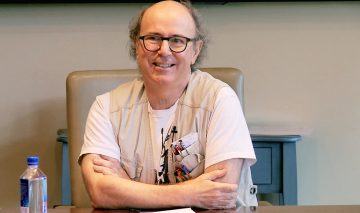 I’m a theoretical physicist, but I’m going to be talking about the future of mind and intelligence. It’s not entirely inappropriate to do that because physical platforms are absolutely a fundamental consideration in the future of mind and intelligence. I would think it’s fair to say that the continued success of Moore’s law has been absolutely central to all of the developments in artificial intelligence and the evolution of machines and machine learning, at least as much as any cleverness in algorithms.
 I used to be pro-science myself. I only became an anti-science activist after I realized how much of my dream-interpretation-based worldview was incompatible with what I was reading in scientific journals. Since then, I have become a fierce activist. I make passionate arguments against the so-called “scientific method” (it’s just making guesses) and the value of peer-reviewed studies (excuse me for wanting to think for myself!). When my children ask me why the sky is blue, I tell them the truth. That there’s no way to find out.
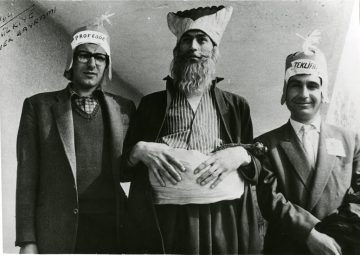 Suzy Hansen in the NYT Magazine:
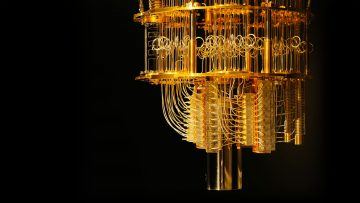 Kevin Hartnett in Nautilus: