
From Be a Recorder
—after Pedro Pietri’s “Puerto Rican Obituary”
they work their fingers
to the soul their bones
to their marrow
they toil in blankness
inside the dead yellow
rectangle of warehouse
windows work fingers
to knots of fires
the young the ancients
the boneless the broken
the warehouse does too
to the bone of the good
bones of the building
every splinter spoken for
she works to the centrifuge
of time the calendar a thorn
into the sole dollar of working
without pause work their mortal
coils into frayed threads until
just tatter they worked their bones
to the soul until there was no
soul left to send worked until
they were dead gone
to heaven or back home
for the dream to have USA
without USA to export
USA to the parts under
the leather sole of the boss
Read more »
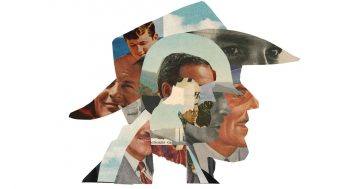 Michigan’s Upper Peninsula encompasses more than 16,000 square miles of northern hardwood forest, broken here and there by hardscrabble towns whose year-round population is slowly bleeding away. In “Hunter’s Moon,”
 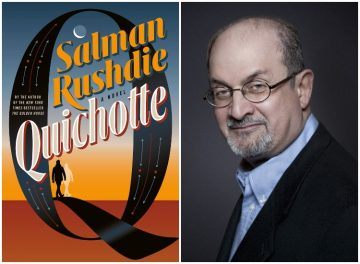 Opening a new Salman Rushdie novel after reading almost any other contemporary writer is like stepping off a plane in Mumbai, or New York in a heatwave: it immediately hits you how much milder and quieter things are back home. Quichotte overwhelms you from the first page with a lightning storm of ideas and a monsoon of exuberant prose. Dissonance, multiplicity, excess: these are Rushdie’s themes and his method. If you happen to experience, along with one of his characters, ‘a certain dizziness brought on by the merging of the real and the fictional, the paranoiac and the actual outlook’ – well, that’s all part of the fun.
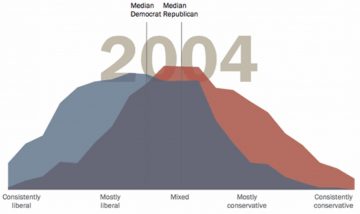 Politicians and pundits from all quarters often lament democracy’s polarized condition.
 Patricia S. Churchland is a key figure in the field of neurophilosophy, which employs a multidisciplinary lens to examine how neurobiology contributes to philosophical and ethical thinking. In her new book,
 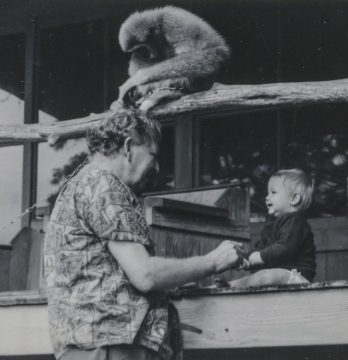 There are times when a dilemma that seems like agony in adolescence can not only provide the basis for a prestigious career, but also lead to a profound shift in the world of ideas. Thus it is that the predicament faced by the 17-year-old Gregory Bateson, following his brother’s suicide in 1922, turns out to be extremely relevant to us today, for it eventually led him to revolutionise the study of anthropology, bring communication theory to psychoanalysis (thus undermining the Freudian model), invent the concept of the ‘double bind’, and make one of the first coherent, scientifically and philosophically argued pleas for a holistic approach to the world’s environmental crisis. Seeking to condense Bateson’s work into one core concept, one can say that, above all, he proposed a paradigm shift in the way we think of ourselves as purposeful, decision-making actors in the world.
 Last Tuesday, the House of Representatives passed a resolution,
 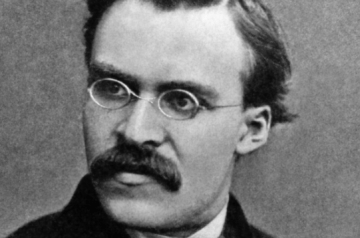 If the fashionable idea of the 1980s was upward mobility, then the buzzword of this decade is authenticity. This ruling ideal of being true to yourself and “keeping it real” is rarely criticised. But what if the message deters individual transformation and encourages everyone to stay in their place? Is the ethic of authenticity in some ways more conservative than the Thatcherite yuppie message it replaced? I think it’s time to consider how authenticity stands in the way of progress and aspiration. We’ll begin with moral philosophy, touch on my journey from working-class kid to university academic, and consider everything from Pride to Boris Johnson and Donald Trump. We’ll even consider why authenticity can lead to problems getting up in the morning. Here we go. Imagine your partner asks “can you drive to Peterborough to pick up my passport?” and you reply, as positively as you can, “I’d be happy to do that.” You’re not really happy about it: you want to help, but you’d much rather come straight home. You could say that in this moment you are being inauthentic. In fact, we can imagine your partner calling you out on it: don’t say you are happy to if you are not. Perhaps an argument ensues.
 For a few months in the first half of 2019, Chris Payze started each morning at home in Queensland, Australia, by jotting down answers to a series of questions. What time did I go to bed? How many times did I wake up? Speaking to The Scientist this April, 71-year-old Payze said she’d gotten “really into the groove” of this daily routine. “It only takes me about five minutes.” She recorded the information for a trial of melatonin, a hormone that regulates sleep-wake cycles and is often taken orally as a sleep aid, although it’s not clear how well it works. Payze has Parkinson’s disease, and for the last couple years, she, like many people with the condition, has been dealing with insomnia. “I just have awful trouble sleeping at night,” she explains. While she doesn’t feel sleep-deprived, the interrupted sleep “is just annoying me. I’d love to sleep through the night one night.”
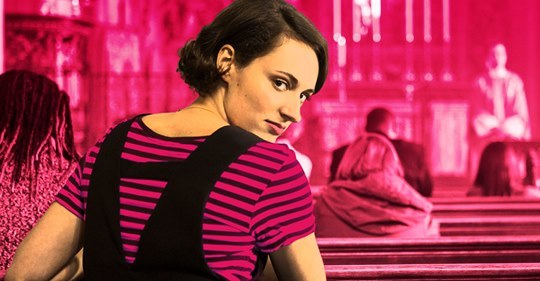 No, but seriously. We considered other very good series for this honor but kept coming back to Fleabag, the same way Fleabag, the character created and played by the magnificent Phoebe Waller-Bridge, keeps going back to the Priest during the perfect second season of this fantastic series. The attraction can’t be denied.
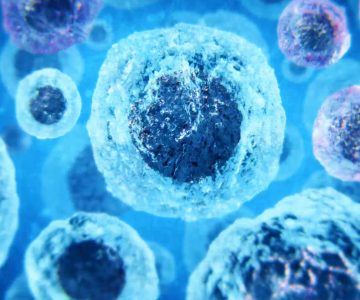 When cells are no longer needed, they die with what can only be called great dignity,” Bill Bryson wrote in A Short History of Nearly Everything. The received wisdom has long been that this march toward oblivion, once sufficiently advanced, cannot be reversed. But as science charts the contours of cellular function in ever-greater detail, a more fluid conception of cellular life and death has begun to gain the upper hand.
 “I can’t imagine him doing anything that’s not good for the country.” In an
  Here’s a thought. Teen angst, once regarded as stubbornly generic, is actually a product of each person’s unique circumstances: gender, race, class, era. Angst is universal, but the content of it is particular. This might explain why Holden Caulfield, once the universal everyteen, does not speak to this generation in the way he’s spoken to young people in the past.
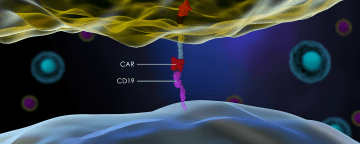 Despite the recent approval of two cancer therapies that use CAR T cells to treat lymphoma, 25 percent of eligible patients still choose to enter clinical trials instead of undergoing the available treatments. That’s according to insurance claims analyzed by health care consulting firm Vizient,
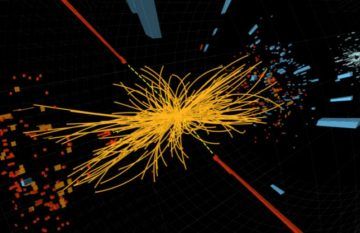 The trickiest part of hunting for new elementary particles is sifting through the massive amounts of data to find telltale patterns, or “signatures,” for those particles—or, ideally, weird patterns that don’t fit any known particle, an indication of new physics beyond the so-called