
Amanda Marcotte in Salon:
 It’s no secret, among political junkies anyway, that Senate Minority Leader Mitch McConnell and much of the Republican elite have been casting around for a way to derail Donald Trump’s bid to be the 2024 GOP presidential nominee. It’s a delicate operation, to be certain. Trump’s allure to the GOP primary voting base isn’t just that he triggers the liberals, but that he ruffles the feathers of the Republican establishment. It makes the deplorables feel powerful, watching people like McConnell and House Minority Leader Kevin McCarthy bow and scrape to the ludicrous reality TV host foisted on them by their own voters. So the strategy is always about trying to find some way to undermine Trump without provoking him to unload personal invective on Truth Social in retaliation.
…Trump’s voters forgive him for being a liar, a criminal, a whiner and a narcissist, but only because they think he’s a “winner” who owns the liberals. The GOP elite is betting the base can be dissuaded from backing Trump if he’s stripped of that “winner” image, so voters can see the insecure loser underneath all the bluster. The NFTs portray Trump as a big, tough guy, but they are just cheesy and worthless crap. In this, they are the perfect symbol of who he is. The only question is whether Republican voters are ready to accept the Trump everyone else sees, the world-class loser whose “winning” exists only in the realm of lies and delusions.
More here.
 T
T To find mirth in the world is to be human.
 Psychically, Geuss argues, liberalism offers “the fantasy of being an entirely sovereign individual” as “a reaction to massive anxiety about real loss of agency in the world.” It offers the false security of “living in a bubble of nostalgia” for the international economic hegemony that the United States began to lose from the mid-1960s onwards, first as other economies recovered from the devastations of World War II and then with increasing globalization, job flight, Trumpism, and Brexit. In this situation, liberalism “responds in a particularly satisfactory way to deep human needs and to the vested interests of powerful economic and social groups.”
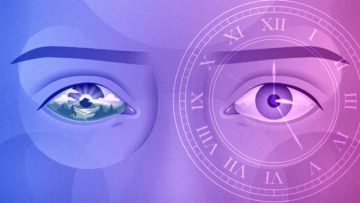 Memory and perception seem like entirely distinct experiences, and neuroscientists used to be confident that the brain produced them differently, too. But in the 1990s neuroimaging studies revealed that parts of the brain that were thought to be active only during sensory perception are also active during the recall of memories.
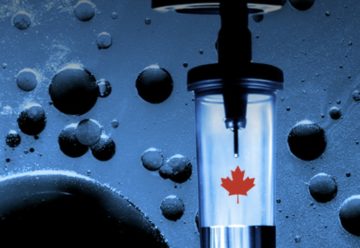 This is the promise of medical assistance in dying: that vulnerable people who want to die for the wrong reasons will be encouraged to live, as they always have been — while people who want to die for the right reasons will have their autonomous decision upheld. If even a single vulnerable person were pushed into assisted death, it would be a scandal to the system. That is why safeguards were put into place.
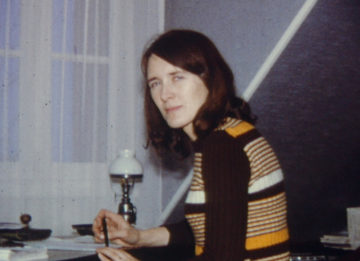 IN THE WINTER OF 1972, around the time Manhattan gallerygoers were immersing themselves in Memory—a sprawling installation comprising over a thousand tiled photographs and several hours of tape-recorded text amassed by the American poet Bernadette Mayer—the French writer of memory Annie Ernaux and her then-husband, Philippe, bought a Bell and Howell Super 8 camera. Mayer, who died this year and who in life seemed ahead of the future, once imagined “a computer or device that could record everything you think or see, even for a single day”—a thought Ernaux would echo across space and time: “Someday, would we be able to see, imprinted on a person’s brain, everything they had done, said, seen and heard?” And even so, would that suffice? Though Mayer shot a roll of film each day for one month, all the while jotting down and revising her exhaustive impressions, it was the gaps in Memory, like the ghostly zones of a photonegative, that stood out: “emotions, thoughts, sex, the relationship between poetry and light, storytelling, walking, and voyaging to name a few.” To name a few! To name everything—everything, that is, worth saving: the so-called empty hours haloing mundane life.
 G
G In voting on Monday to issue a sweeping final report, the Jan. 6 committee has honored its duty and the Constitution. When the full report is released this week, there will be much to review and process for our country, our government and American history. But given the facts that have been revealed, these hearings had to end with criminal referrals against Donald Trump and his minions.
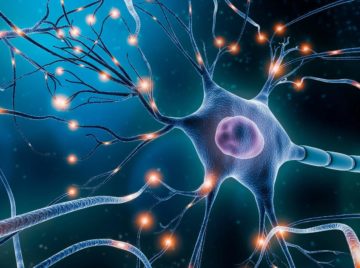 Nerve cells, or neurons, are the basic functional units of the nervous system. Multiple interconnected neurons form a neural circuit and use electrical and chemical signals to quickly transmit information throughout an organism. The nervous system is broadly divided into two sections: the central nervous system (CNS) and the peripheral nervous system (PNS). The CNS consists of the brain and spinal cord whereas the PNS includes neurons that branch off from the CNS and connect to the rest of the body. In general, neurons in the PNS receive and carry signals in the body while neurons in the CNS analyze information.
 We wondered: Were we condensing phrases to terms because we were typing with our thumbs? Had we come to expect listeners and readers to autocomplete and fill in syntax? Had work jargon saturated private life because Americans worked such long hours? Had a generation told by daycare providers that they were good toy-picker-uppers grown up to make a norm of behaviorist verbing? Had the passive constructions by which one avoids assigning blame (or credit) in the workplace made naming who did what seem rude?
 Fortunately, a whole raft of new technologies is being developed that make a system-wide revolution in food production feasible. According to recent research by one of us (Chris), this transformation could meet increased global food demands by a growing human population on
  So, unfortunately, it’s time for another one of these. By which I mean both a “
 A
A  Pick the best moment of the match. It seems impossible. The