The Duty To Forgive Murderers
by Thomas R. Wells There are people living among us who have done terrible things to other human beings – murder and rape, for example – yet who nonetheless deserve society’s forgiveness. They have been convicted for their crimes and punished by the laws we collectively agreed such moral transgressions deserve. Now they deserve something…
Academics Should Not Be Activists
by Thomas R. Wells Academics have a privileged epistemic position in society. They deserve to be listened to, their claims believed, and their recommendations considered seriously. What they say about their subject of expertise is more likely to be true than what anyone else has to say about it. Unfortunately, some academics believe they have…
The Case for Mediocracy
by Thomas R. Wells Suppose a company wants to fill a job. They would advertise it together with the requirements for any successful candidate. HR would screen out all the applicants not good enough to do the job and everyone else’s name would go into a lottery. Do you find this prospect upsetting? Perhaps you…
Moral Laziness
by Thomas Wells Middle age brings sometimes uncomfortable self-reflection. One thing I have realized is that I am not a particularly good person. Not evil, just mediocre. Lots of people are much better at morality than me, including many of my students. On the other hand, I am quite good at the academic subject of ethics.…
Can Corporations be ‘Good Citizens’?
by Thomas R. Wells The idea of ‘good corporate citizenship’ has become popular recently among business ethicists and corporate leaders. You may have noticed its appearance on corporate websites and CEO speeches. But what does it mean and does it matter? Is it any more than a new species of public relations flimflam to set…
Against Culture; For Cosmopolitan Wisdom
by Thomas R. Wells The main job of ‘culture’ in a modern society seems to be shielding people from the demands of morality. In its intellectual role it justifies inequality between citizens. In its national history role it gives citizens a delusional sense of their country’s significance and entitlement, followed by a dangerous sense of…
Privacy Is The Right To Be Mysterious. Democracy Depends On It
by Thomas R. Wells At the heart of liberalism is the idea of personal sovereignty. There is some domain of thought and feeling that is essentially private, for which we are not answerable to others because it is no one else’s proper business. Privacy is the metaright that guarantees this right to think our way…
Tyrants Aren’t Smarter Than Democrats, Just More Evil
by Thomas R. Wells Tyrants like Vladamir Putin and Kim Jong Un seem to win a lot of their geopolitical contests against democratic governments. How do they do it? A common explanation is that these tyrants are better at playing the game. They are strategic geniuses leading governments with decades of experience in foreign affairs…
Almost no one actually believes Fake News. So what’s the problem?
by Thomas R. Wells The statistics are shocking. A Russian troll farm created false anti-Clinton stories and distributed them on platforms like Facebook and Twitter. As many as 126 million Facebook users may have encountered at least one piece of Russian propaganda; Russian tweets received as many as 288 million views. The Russians, just like…
Invisible Hand Ethics
What kind of jobs will the robots leave us?
Why does North Korea really want nukes?
by Thomas R. Wells North Korea’s development of atomic fission bombs and ICBMs is very worrying. Unfortunately the analysis of it in the news media is woeful. Some commentators assume that North Korea works like a normal country (like their country); some clearly don’t understand how war works; some believe the regime’s propaganda; some seem…
(Almost) no natural disasters are natural
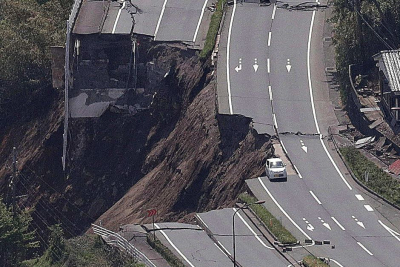
by Thomas R. Wells A natural disaster is a disaster because it involves a lot of human suffering, not because the event itself is especially big or spectacular. The destruction of an uninhabited island by a volcano is not a natural disaster, because it doesn't really matter to humans. A landslide doesn't matter, however enormous,…
The antidotes to populism: stoicism and civil society
by Thomas R. Wells The politics of populist rage are on the ascendant in every democracy, even if thankfully not always triumphant. Authoritarian regimes like China and Russia, and cynics like John Gray, are relishing the collapse of the moral high ground and the return to good honest Machiavellianism. The old calumnies against democracy seem…
There is no such thing as neoliberalism and it is destroying the left
by Thomas R. Wells The left has been at war with neoliberalism since the 1980s. The result has been intellectual, political, and moral collapse. The first problem is that there is no such thing as neoliberalism. It exists entirely as a critique by the left. It thus mirrors the fantasy of political correctness that the…
Liberalism’s Minsky Moment: How decades of peace, justice and prosperity sowed the seeds for populist revolt
by Thomas R. Wells The end of history will be a very sad time. The struggle for recognition, the willingness to risk one's life for a purely abstract goal, the worldwide ideological struggle that called forth daring, courage, imagination, and idealism, will be replaced by economic calculation, the endless solving of technical problems, environmental concerns,…
What is the point of elections and what do they have to do with democracy?
by Thomas R. Wells The relationship between our electoral institutions and our democratic ideals is surprisingly obscure. Many systems rely on counting votes, but only in such a way that each vote does not count equally towards the final outcome (as in America's electoral college or in parliamentary constituency systems such as Britain's). But even…
The European Union used to solve collective problems, now they are killing it
by Thomas R. Wells Collective action problems pit individual selfishness against the collective interest in areas as diverse as pollution, trade, peace, and public roads. The invisible hand of the market can't reach them. Instead we need politics. The European Union used to be good at this. But not any more. An example. Public goods…
Resisting the Security State
by Thomas R Wells Liberalism is a centuries old political project of taming the power of the state so that it works for the ruled not the rulers. Can it survive the security state midwifed by global terrorism? Only if we take back responsibility for managing the dark political emotions of fear and anger that…