
Susana Carmona in MIT Press:
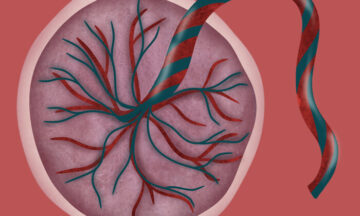 People say it looks like broccoli, a tree, a bowl, a pizza, a crescent moon, a Frisbee, a pancake. Etymologically, “pancake” is closest: Placenta means cake in Latin and comes from the Greek word plakoenta, which means flat cake. Per a Greco-Roman recipe that’s been dated to 160 B.C., in order to make the round, flat dessert called “placenta,” you need thin sheets of dough, cheese, honey, and bay leaves. If you’re trying to make the organ called “placenta,” the recipe is, of course, trickier than that.
Ancient civilizations gave the placenta great symbolic and spiritual importance. In some cultures, it was considered sacred because it protected the baby and represented the original mother-child bond. People often buried or cremated the organ in rituals that persist in some cultures today: For example, members of the Southeast Asian Hmong community bury the placenta at home, under the belief that when a Hmong person dies, their soul returns to its birthplace and reunites with the placenta, which helps it travel to the spirit world.
More here.
Enjoying the content on 3QD? Help keep us going by donating now.