
by Barry Goldman
I and the public know
What all schoolchildren learn
Those to whom evil is done
Do evil in return —W.H. Auden, September 1, 1939Hurt people hurt people. —Abdul El-Sayed, Michigan senator-elect
What Auden and El-Sayed are talking about is not a difficult concept to understand, but it is a very difficult concept to internalize and adopt. What makes it difficult is what psychologists call “fundamental attribution error.” If I am late to our date, it is because my meeting went unexpectedly long and there was unusually bad traffic. If you are late to our date, it is because you are an inconsiderate jerk. My failures are caused by extrinsic circumstances. Your failures are intrinsic to who you are. Consequently, if I do something bad, I just need to explain the whole story. If you do something bad, you need to be punished. Few ideas are so intuitively obvious.
So let’s talk about our old friend Hypothetical Smith. Suppose Smith has been convicted of a horrible crime. No decent person could have done anything so horrific. Obviously, he is a bad person, and he needs to be sentenced to life in prison or even death. Why might we oppose imposition of that sentence? Let’s start with the easy answers.
First, we might oppose the sentence because, although he was convicted of the horrible crime, there is still a chance he didn’t do it. The Innocence Project and others like it have freed hundreds of falsely convicted prisoners. When cases are carefully reviewed and modern forensic methods are brought to bear, it turns out lots of people rotting in prison are there because of a mistake or because of prosecutorial misconduct.
Next, we might oppose the sentence because it was imposed discriminatorily. Black men are sentenced more harshly than white men. The criminal justice system discriminates against black people, brown people, and poor people in jury selection and in providing effective assistance of counsel.
We might oppose the sentence because Smith didn’t know what he was doing. He may be either so cognitively deficient or so floridly insane that he can’t be held morally responsible. We may differ on borderline cases, but if Smith is clearly “incapable of forming the requisite intent,” we are likely to find a harsh sentence to be inappropriate.
Further, we could oppose a long prison sentence or the death penalty simply because they are barbaric. Civilized societies do not execute criminals or lock them in cages for decades for the same reason they do not hold public spectacles where people are torn to pieces by wild animals.
And we might oppose the sentence because people can redeem themselves. Even the worst criminals can age out of it, change their behavior and do something useful and meaningful with their lives. They can turn themselves around.
So far, I don’t think there is much disagreement. Even if you support the death penalty in some cases, you probably don’t support it if the accused is innocent, the trial was unfair, or the defendant is mentally incompetent.
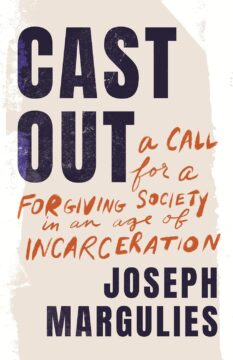
The book under review makes a far more radical claim than any of these. Joe Margulies writes:
Though my book is a collection of stories that show us a different way to think (and feel) about people who have committed horrific crimes, I do not view it as merely another book that rails against mass incarceration. You can read it that way, and if you did, I would not view the book as a failure. But that is not my goal. My goal is much larger. To me, the way we treat people in prison, especially those who have caused the greatest harm, is not only the clearest example of our unforgiving society but also the greatest challenge to those who would undo it. If society cannot cast out those who terrorize a neighborhood, who can it cast out? If those who take an innocent life are not “them,” who is? My answer is no one. And my goal is to prove it.
Margulies does not believe in monsters. He says, “There is no them, there is only us.” This is as radical and as morally challenging an idea as there is.
Perhaps a musical interlude would be helpful. One of my all-time favorite songs is Pancho and Lefty by Townes Van Zandt. My favorite version is this one by Emmylou Harris.
I once heard Van Zandt say at a concert at The Ark in Ann Arbor that he wrote Pancho and Lefty sitting in a chair, and “if you had been sitting in that chair, you would have written it.” What I’m talking about could be called the Pancho and Lefty theory of criminal behavior. If you had the childhood Smith had, you would have committed the same crime he did. We don’t need to master the neuroscience or follow the philosophical debate to understand this, we just have to look around. Because of the parents I had and the neighborhood I grew up in, I became an (adjunct) law professor. Because of the parents he had and the neighborhood he grew up in, Smith became a violent criminal. Consider that he was born with fetal alcohol syndrome, and his first experience of life was crack cocaine withdrawal. Consider that he was violently and sexually abused throughout his childhood. Consider that he was repeatedly subject to violent trauma. (This is my hypothetical and I get to make up the facts, but none of this is uncommon. The childhood experienced by many prison inmates is scarcely imaginable to the rest of us.) It would have been possible for me to become a violent criminal and for Smith to become a law professor, but it would have been a hell of a surprise to both of us and to everyone involved.
Margulies says the question we should ask when we hear about a prisoner is not “What did he do?” but “What happened?” If we learn what happened, what the guy’s life was like leading up to the crime, we may begin to understand it. If we just consider the crime, it is likely to remain inexplicable.
That is not to say that crime should be excused. Margulies doesn’t want us to excuse crimes. He wants us to try to understand how they happen and to put them in the context of the rest of the story. He wants us to treat each person as a person.
To his credit, Margulies does not pull any punches. He does not set up straw men. He does not look away from the details of the crimes he discusses. Some parts of this book are hard to read.
Moreover, he does not pick his subjects so that only the most sympathetic people, only the ones who have turned their lives around, are considered. He thinks we should strive to overcome our fundamental attribution error and approach everyone with a spirit of forgiveness. He thinks we should try to understand our malignant narcissist in chief. He thinks we should try to understand Alex Jones!
Jones was not neglected or abused. He wasn’t a crack baby or a fetal alcohol baby. There is no doubt he committed the reprehensible behavior he is accused of. He did it on camera. We have the tape. There were millions of witnesses. He is not insane. He knew exactly what he was doing and he knew why he was doing it. He did it to get rich and famous. And it worked. If Alex Jones is not a monster, who is?
Margulies says there are no monsters and everyone should be viewed with compassion and in a spirit of forgiveness. It is a heavy lift. Perhaps there is none heavier. And perhaps there is none more consequential.
The alternative is an eye for an eye and a tooth for a tooth. We know where that leads. It makes the whole world brutal, toothless, and blind.
Enjoying the content on 3QD? Help keep us going by donating now.