
by Jonas Gardsby
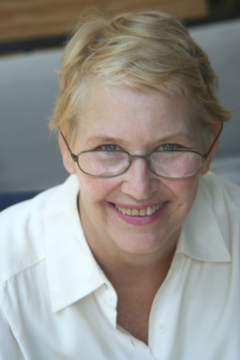
Annie Dillard is now ineligible for the Nobel Prize. The Swedish Academy won’t award it posthumously. In light of her recent passing, however, I think it is worth reflecting on the idea that she should have won the prize. While you could try to make the case solely on the merit of her style, the implications of winning the Nobel warrant something more than great talent fully realized. So, since each reader is their own judge, I offer for your consideration three reasons why Dillard deserved the prize, any one of which should have been enough. But when taken together, it’s truly apparent she was a global class talent.
She deserved the prize, first of all, as the major practitioner of literary nonfiction. The committee has historically overlooked this genre. Many other literary readers do the same. In The New York Times last year, Joseph Bernstein’s article “Why Did the Novel-Reading Man Disappear?” conflated fiction with all of literature and referred to nonfiction merely as informational. And in Sweden, where local culture incubates the committee that chooses the prize, essayist Nina Burton complained that “fictional prose is hijacking the term ‘literary arts’ and … essayists are confused with critics.” She wondered, “Have we squandered Montaigne’s legacy, and does anyone know how great it was?”
The Nobel laureates who are known for nonfiction tend not to have pursued it as art. Bertrand Russell and Winston Churchill turned clever phrases but lacked artistic structures. Two exceptions are Svetlana Alexievich who ghostwrites memoir, and Annie Ernaux who writes sociological memoir. But memoir is only one part of a much larger, overlooked pie. By contrast, Dillard’s nonfiction was influenced more by the structures of the long poem than by the narrative devices of fiction. The meaning is created not through argumentation or character development but through artistic structure, the relation of parts. Thus you have Pilgrim at Tinker Creek with its bilateral paired chapters, “An Expedition to the Pole” which invented the now popular braided essay, “Total Eclipse” which tells the same story four times through different levels of consciousness, and the nonfiction collage For the Time Being. She reinvented the form each time she wrote it, carving a trail that others then followed and developed in their own ways. Essayist and editor Brian Doyle said her work “changed the direction of American writing.” And she continues to influence younger innovative writers like Ocean Vuong, who repeatedly comments on her importance to his artistic development.
The second reason she deserved the prize? Her dogged pursuit of the spiritual. While the West moves toward secularization, it’s also true that 80% of the global population is religious. And Dillard somehow spoke to both sides, with writing that “hails thinkers for their lights, and pays scant heed to their stripes.” In this time of divergence, there is convergence in her readership. Some of her books have at their core complex theological concepts that even most religious people have not considered: concepts like the via negativa, holy the firm, pan-entheism, and nixing the idea of omnipotence. And yet, Mark O’Connell named For the Time Being as his favorite book. “I can’t make myself believe in any kind of personal god,” he wrote, but this book drove him “straight to the wild reality of things.” When Ted Chiang was asked about a religious text he loved, he said, “I can’t really point to a conventional religious text as an atheist” and instead named Pilgrim at Tinker Creek. “Reading that book gave me maybe the closest that I’m likely to get to understanding a kind of religious ecstasy.”
She does not offer God as a convenient explanation for the unexplained. If anything, it’s the reverse. Her Portuguese publisher says her work is “an exercise in humility.” Her intense, even relentless questioning demands fidelity to truth, but the bigger the question the less likely a final answer. Instead, she finds provisional answers, workable answers that “furrow deeper into the mystery.”
Turning to the third prong of this argument trident, we encounter her international scope. Horace Engdahl, former permanent secretary of the Nobel committee, said, “The U.S. is too isolated, too insular. They don’t translate enough and don’t really participate in the big dialogue of literature. That ignorance is restraining.” By contrast, Dillard’s influences were international from the beginning. Shortly out of college, she reviewed books semi-regularly for the local paper. Long before you could go online and find out in two seconds what people are reading on the other side of the world, she reviewed not only British and Canadian books, but also Norwegian, Argentinian, and a translation of a ninth-century Chinese poet. Her interest in the rest of the globe, and its authors, showed ever more as her career progressed. Despite being known for the nature she could access from her backyard, two of her books take place largely in China, and parts of her work have been set in Yemen, Tahiti, Ecuador, Antarctica, and other far-flung locations. If we listed all her other international references, along with the countries she visited and didn’t write about, we’d be here all day.
Couple this international scope with her focus on deep time, and you get one of the most complete portraits of our species that appears in any literary body of work, a portrait stretching from early hominids millions of years ago up to the present, inducing readers to feel the profound reality that each of these billions of souls is or was as real and important as you the reader. As a literary historian who teaches essays from around the world and throughout time, I believe she came as close as any writer has to capturing, in her words, “the infinite fabric of time that eternity shoots through, and time’s soft-skinned people working and dying under slowly shifting stars.”
This vast scope gave her an international audience from the beginning. Within a year of her first book’s publication, before her writing had been translated, she began receiving letters from Switzerland, Guatemala, India, and Japan. Now, behind me as I write, are shelves filled with her books in other languages. Her work has influenced French and Japanese ecocriticism. In China, where her name is “synonymous with excellent writing,” a reviewer said, “She opened a window for human existence.” A Mexican translator said her writing “transports us into the realm of an almost inexpressible mystery.” Her Persian translator said, “Dillard taps into the bottomless ocean and gives us the slippery fish that escape our grasp, which only literature can help us lay hold of.” A French reviewer rejoiced that “her infinite attention,” now translated, “can be ours.” Her Swedish publisher told me in his office, at what he calls “the other, more progressive literary academy in Stockholm,” that work like hers is the reason he became a publisher.
One publisher told me he had hoped part of the effect of publishing her work in translation would be to attract the attention of the Nobel committee. There are rumors that she was indeed nominated, and another international publisher even stated this online. Perhaps the nominator(s) tipped them off—but nominations can’t be confirmed until fifty years after they are made.
*
After my visit to Sweden last year, I started reading Swedish newspapers’ reporting on what the prize selection entails. The committee reads nominees’ books with Agatha Christie dust jackets to thwart spying reporters. More germane to my argument here, I also learned what the committee is looking for, which is this: “experiences we may never have encountered,” “conventions turned on their head,” “using artistic language to approach fundamental questions of history and the present,” and “laying bare uncomfortable truths,” all with “a distinctive personal voice that makes us sit up and listen.” All of this is how deep readers of Dillard would describe her work.
Perhaps the Academy could recognize it made a category error, withdraw the prize from Bob Dylan, and retroactively give it to Annie Dillard. But in some ways, it helps that Dylan won. I think back to my first year of college when, having just learned to truly understand poetry, I walk into the office of the professor who taught it to me. Half a wall is lined with CDs and LPs. He notes my vinyl silver pants and puts on the Velvet Underground. I tell him I’ve started reading the liner notes to all my favorite songs, stripping away the music and just reading them as poetry and . . . it doesn’t work. My professor sighs and says, “Disappointing, right? That may be the one downside to learning poetry.” Lyrics don’t hold up on their own. They’re not literature. They need the music to imbue them with feeling and meaning. Evidently Dillard thought the same. Twenty years before he won the award, she said, “Is Dylan a poet? No. You do something that sort of sounds like it, but it’s not really . . . .” So maybe, if she ever thought of the Nobel—and I suspect it did not often cross her mind—Dylan’s win discounted the judgment of the committee for her, too.
And yet the prize matters. Because we have all decided, for some reason, that the Nobel is the top literary prize in the world, a good many people for a good many years will give hours of their lives to reading an author they had never heard of before. And beyond that, the laureates as a collective in some way shape our understanding of what literature is. A win for Dillard would have been a win for literary nonfiction. This is not only a lamentable oversight, but a missed opportunity. The committee has largely left on the table the genre Dillard said is dedicated to “mak[ing] sense of actual experience.” And while certainly not alone as a brilliant, innovative writer, Dillard was peerless in the path she pursued in this genre and helped restore its literary heights.
While nothing would truly make up for Dillard not winning, as great writers are not simply interchangeable, the one writer whose potential win would, I think, go some way toward the committee making restitution is Anne Carson. Dillard helped Carson’s career early on, selecting “Kinds of Water” for The Best American Essays 1988 which she guest edited, one of the first editors in that series—a job she took seriously not only for selecting the greatest essays from the previous year, but specifically selecting those that worked as art. She hoped to shape the public’s perception of the genre, to give writers working in this vein a boost, and to shape the literary imaginations of young writers. In this, she succeeded.
***
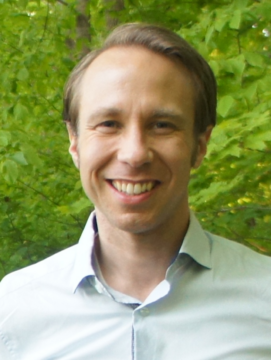 Jonas Gardsby is a writer and scholar of literary nonfiction. He is an Assistant Professor of English and Creative Writing at the University of Wisconsin-Green Bay. An earlier essay on Annie Dillard appeared in Matter and a career assessment of her husband Robert D. Richardson appeared in Lit Hub. He created and regularly updates The Annie Dillard Log website, the most extensive scholarly resource for researching her work and career.
***
Enjoying the content on 3QD? Help keep us going by donating now.