
by Robert Jensen
 Do universities need to foster more intellectual diversity among professors? Should there be affirmative action for conservative thinkers in disciplines such as sociology and social work? Asked less often, but just as relevant: Should business schools and economics departments hire a few socialists?
This long-running debate intensified in Trump’s second term, as MAGA forces ramped up attacks on any challenge to right-wing populist politics. Unfortunately, a principled question about the appropriate mix of ideologies in a faculty has been twisted to advance political goals.
Rather than offer policy recommendations for institutions coping with this mess (because I don’t have any), I want to speak in favor of intellectual diversity for individuals (because we all need to remember to keep an open mind). In my three decades in academia, I saw too many professors hang on too tightly to the conventional wisdom of their intellectual gang rather than entertain new ways of thinking.
My teaching career provides several examples of the dangers of dogma, on all sides.
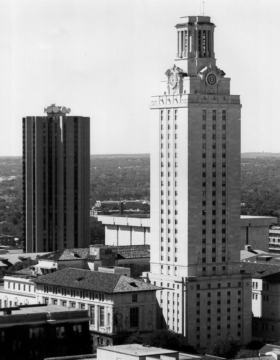
For seven years I was a Faculty Fellow in the Division of Diversity and Community Engagement, which was the DEI unit (Diversity, Equity, and Inclusion) of the University of Texas at Austin until a state law eliminated it in 2024. “Faculty Fellow” just meant that on top of my day job (teaching in the School of Journalism), I received a bit of funding for local projects, primarily to help launch a community center.
I enjoyed the community work but found that lots of people assumed, incorrectly, that they could predict my political positions from my association with the division. But I never fit comfortably on either side in the culture wars in higher education, a status not unique to me. I’m not suggesting I was a model professor but rather that reactions to my work show the dangers of dogma.
The politics of teaching
The first task is to clarify the relationship between intellectual work and political advocacy. Avoiding subjects with political implications is impossible in the social sciences and humanities. (Journalism departments are trade schools that include scholars drawing on both traditions; I taught about media law, ethics, and politics.) By political I don’t mean partisan battles but competing claims about human nature, a good society, and the distribution of wealth and power—questions that can’t be resolved by evidence and logic alone. Teaching is not merely politics, but there’s always an underlying politics to teaching about human affairs, whether acknowledged or not.
Second, while scholars in the natural sciences strive to identify laws of nature, there are no laws of human affairs. We search for patterns in a complex world, looking for clues about people and societies, but we shouldn’t pretend to be laying down the law of anything—people are more complex than particles. In my teaching about journalism and society, I offered what I thought were the best analyses of those patterns and explained my reasons. I tried to be upfront with students about my politics, the moral principles behind my political commitments, and how they influenced my intellectual inquiry.
When professors follow the conventional wisdom of the dominant culture—“U.S. foreign policy supports democracy abroad,” for example—the political dimensions of a course might seem invisible. When my teaching challenged those conventions, as it often did, I was never surprised that many people thought I was imposing my politics on students. My focus here: Why did people so often guess wrong about the political positions I advocated outside the classroom?
Intellectual life shouldn’t be about choosing sides, but too often people defend their team without question. I was a left-leaning DEI guy and critiqued the dominant culture and many conservative claims, but I tried to avoid the dogma of the left or DEI. During my 26 years at UT, I annoyed people of every political persuasion, not to be a gadfly but by striving for intellectual honesty. How well did I do? As a teacher, students are the best judges of my performance. As a citizen, I offered arguments in extensive public writing that anyone can evaluate.
My politics
I’ll start with my approach to human affairs. Our behavior is unpredictably complex because individual variation (the product of genes and early experience) plays out in social systems that shape behavior (often in ways we can’t see or don’t understand in the moment), within the parameters set by human nature (which is universal, despite cultural differences). It’s hard to argue with that statement at that level of abstraction. Disagreements come from how we weigh those three aspects of human experience.
Race: In the late 1990s, I started writing about white privilege, the unearned advantages that we white people have in contemporary U.S. society. The brutal white supremacy behind genocide, slavery, and legal segregation eventually morphed into today’s kindler-and-gentler white dominance, which isn’t always kind or gentle. I have tried to articulate an analysis in plain language rather than academic jargon, but my politics on race are in line with DEI principles. Yet I have long bristled at the counterproductive nature of many DEI trainings, which often are weighed down by that jargon and a tone of moral superiority.
Sex/Gender: My intellectual and political foundations are in feminism, but not today’s most common feminism that leans liberal and sounds postmodern. My writing on pornography, prostitution, and the sexual-exploitation industries is rooted in radical feminism, which rejects fashionable liberal/left rationalizations for “sex work.” For more than a decade I have also critiqued the ideology of the transgender movement, again from a radical feminist perspective. That put me in conflict with DEI advocates and institutions, both in my university and in liberal/left political circles.
Global affairs: There is much talk today of the threats by countries such as Russia to the rules-based international order created after World War II under U.S. leadership. Russian politicians and oligarchs are, indeed, a threat to that order, as well as to their own people. But U.S. politicians and oligarchs—Republicans and Democrats—typically act as if the United States is exempt from most of those rules, and if some people don’t have to follow the rules then rules aren’t really rules. My writing and organizing activities, especially after the U.S. military response to the 9/11 terrorist attacks, argued that U.S. citizens should hold our government accountable for violations of international law and war crimes. That work, which led the university’s president to condemn me publicly, is squarely in the leftie camp.
Economic inequality: People have the capacity to be both cooperative and competitive. Critics of capitalism point out, appropriately, that designing an economy to intensify competition guarantees inequality. Harnessing our capacity for greed and self-interest may increase the gross national product, but the outcomes will be grotesque, a society of billionaires and homeless. I am one of those critics, but I don’t think that transcending capitalism is the answer. That would be a good start, but in societies with millions of people, the cooperative aspects of human nature are a thin reed on which to lean. I remain a critic of capitalism but don’t think democratic socialism can solve problems at the scale we face today.
Ecological crises: Climate change may be today’s most dramatic environmental challenge, but other threats to ecosystems are no less vexing: soil erosion and degradation from agriculture, chemical contamination from industry, and biodiversity loss from human exploitation of land and water. The problem is not just fossil fuels but overshoot—humans drawing down the ecological capital of the planet beyond replacement levels. Consumption is not equally distributed, of course, but too many people are consuming too much in the aggregate. Eight billion people living in high-energy/high-technology societies—no matter what the economic system or energy sources—is unsustainable. Because almost no one—left, right, or center—endorses collectively imposed limits on consumption, my writing on ecology gets me labeled a “doomer” by people across the political spectrum.
Summing up: On race and international affairs, I support positions that are common on the left. On sex/gender issues, I am a feminist but reject the current liberal/postmodern dogma on so-called sex work and transgenderism. I critique capitalism but am wary of naïve celebrations of socialism. And when it comes to the multiple cascading ecological crises, I argue that no contemporary political project adequately confronts our predicament.
Coping with complexity, living within limits
I reject the MAGA movement’s anti-intellectual attacks on universities, but I think people’s annoyance with intellectual elitism is justified. I favor confronting inequality but find some DEI training to be tone-deaf to the complexity of everyday life. Much of my work is rooted in feminism, but by the time I retired in 2018 I wasn’t welcome in most women’s studies spaces. I critique capitalism and imperialism but think anti-capitalist and anti-imperialistic rhetoric is sometimes as simplistic as defenses of those systems. And on the most daunting challenge of our time—the ecological viability of a large-scale human presence on Earth—I think almost everyone denies or ignores harsh realities.
If I were still teaching, I likely would have trouble navigating the political struggles on campus. I would resist the threats to faculty independence but urge professors to recognize our collective failure to be accountable to the public. I would want professors to stand firm in analyzing oppressive systems but also to self-reflect on how that commitment can calcify and become counterproductive. And I would continue to ask all of us to face economic and ecological problems that have no easy solutions, perhaps no solutions at all if we refuse to turn away from modern techno-industrial society.
The more I know, the more I am aware of what I don’t know. Intellectual humility is more important than ever—for everyone. If any of my arguments are off base, I invite critique to improve our understanding of the world—I don’t assume I have the correct analysis of every issue. Professors need to challenge society but also challenge each other to meet intellectual standards and live up to moral principles that we claim to embrace. That doesn’t eliminate conflict but at least can make conflict more productive.
My three decades in academia taught me that it’s hard to be critically self-reflective about that conflict. As a young professor, I was too sure of my conclusions and not self-critical enough of my ideology. These days I hope I’m less self-righteous and more open to challenges. We all need to strive for the higher ground that higher education promises.