
Richard Stone in Science Magazine:
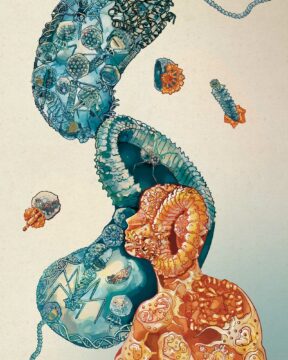 When Philip Kranzusch puzzled out the structure of an enzyme from the cholera bacterium in 2013, the biochemist got a jolt. The folds, the active site, the overall architecture were unmistakable: This was a bacterial cousin of a human protein that acts as a sentry for invading viruses.
“A lightning bolt ran through my mind,” says Kranzusch, then a young postdoc in the laboratory of structural biologist Jennifer Doudna at the University of California (UC), Berkeley. “Immune proteins in human cells could be far more ancient than we’d thought.”
That idea was heretical, says Rotem Sorek, a microbial genomicist at the Weizmann Institute of Science. After all, “Antibodies, a superimportant aspect of our immunity, were invented in vertebrates.” At the same time, bacteria’s own defenses against the viruses that plague them—bacteriophages—appeared to have no counterparts in higher organisms. Absent in animals and plants, for example, are CRISPR—an antiphage system that Doudna and others harnessed as a gene editor—and restriction enzymes, which chop up DNA of invading phages.
More here.
Enjoying the content on 3QD? Help keep us going by donating now.