
Ashawnta Jackson in JSTOR Daily:
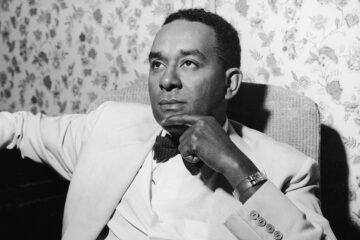 While bedridden with dysentery, Wright picked up a volume of haiku—a Japanese poetic form containing three unrhymed lines with a 5/7/5 syllabic pattern—and fell in love with the form. As Iadonisi writes, Wright “began composing in August 1959 and, within a few months, he had written four thousand haiku.” He prepared just over 800 of his poems for publication, but when he submitted them to a publisher in 1960, the manuscript was rejected. His haiku wouldn’t see publication until 1998. So what was it about the form that captivated him?
…As he wrote in his 1957 essay collection, White Man, Listen, “If the expression of the American Negro should take a sharp turn toward strictly racial themes, then you will know by that token that we are suffering our old and ancient agonies at the hands of our white American neighbors. If, however, our expression broadens, assumes the common themes and burdens of literary expression which are the heritage of all men, then by that token you will know that a humane attitude prevails in America towards us.” But this may all be as simply put as American literature scholar Abraham Chapman’s explanation in a 1967 article, “What is important is the Negro writer’s right to full freedom of choice in subject matter and in artistic voice.”
More here. (Note: Throughout February, at least one post will be devoted to Black History Month: A century of Black History Commemorations)
Enjoying the content on 3QD? Help keep us going by donating now.