
Andrea Lius in The Scientist:
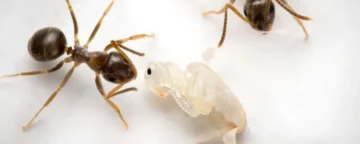 Adult ants that have been infected with deadly pathogens often leave the colony to die so as not to infect others. But, “like infected cells in tissue, [young ants] are largely immobile and lack this option,” said Sylvia Cremer, a researcher at the Institute of Science and Technology Austria (ISTA) who studies how social insects such as ants fight diseases collectively as superorganisms, in a statement. Cremer’s team previously found that invasive garden ant pupae that have been infected with a deadly fungal pathogen produced chemicals that induced worker ants to unpack their cocoons and kill them, preventing the disease from spreading to the rest of the colony.1 However, the researchers did not know if the chemicals were simply a result of the fungal infection or if the sick pupae specifically released them to call for their own demise.
In a new study, Cremer and her colleagues discovered that the infected pupae only released chemicals when there were workers nearby, suggesting that the sick young ants put these events in motion.2 The researchers’ findings, published in Nature Communications, are the first evidence of altruistic disease signaling in a social insects and share similarities with how sick and dying cells send a “find me and eat me” signal to the immune system.
More here.
Enjoying the content on 3QD? Help keep us going by donating now.