
Shelby Bradford in TheScientist:
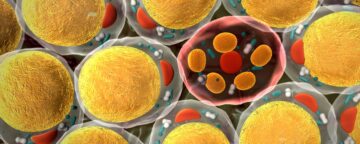 Patients with triple-negative breast cancer (TNBC) have more aggressive, invasive tumors and fewer treatment options than other kinds of breast cancers. TNBC tumors use fatty acid oxidation as a key part of their metabolism.1 Coupled with studies that showed people with higher body mass indexes are more likely to develop TNBC, researchers suspected that adipose tissue influenced tumor growth.2 However, the mechanism underlying this relationship was unclear.
In a study published in Nature Communications, Andrei Goga, a cancer biologist at the University of California, San Francisco, and his team showed that TNBC cells form bridges to nearby fat cells and activate lipolysis in adipocytes to release fatty acids.3 The researchers showed that blocking this process halted tumor growth in mice. “This is a golden opportunity for us to develop effective strategies to treat the most aggressive forms of breast cancer,” Goga said in a press release.
More here.
Enjoying the content on 3QD? Help keep us going by donating now.