The Birth of Electronic Communication

by Jason S. Bardi

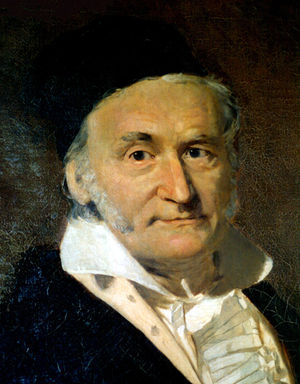
Gauss The holiday season is upon us, and spending the weekend at the relatively unconnected house of a close relative makes me long for all those modern conveniences I take for granted: cell phones, PDAs, digital cable, and high-speed wireless. Lack of wireless is going to force me to find an internet café in a little while, as soon as I am done writing this. Meanwhile, being cut off from the Web is the perfect entry into telling the story of how our modern era of electronic communication came to be — its ancient origins — a story that I recount in my latest book “The Fifth Postulate,” which is hitting store shelves this month (published by John Wiley & Sons).

This year, 2008, is the 175th anniversary of electronic communication, though the anniversary passed quietly and went, to my knowledge, unnoticed. It was born 175 years ago thanks to a clever invention by the great mathematician Carl Friedrich Gauss, who in the 1830s invented an early working telegraph. Though he was never able to develop the technology further, he clearly saw its potential. A single tap, he would write, would enable instantaneous communication between distant cities.

Like many of the great discoveries Gauss made in his life, Gauss's telegraph was not appreciated until after his death. Neither was non-Euclidean geometry, another one of Gauss's great inventions. Both developments are featured in my new book.

Now here's the story:

The Sunday churchgoers in the town of Göttingen discovered a new feature adorning the steeple of their beloved St. John’s Church in 1833. Two lines of curved wires, one up to the top of the church and one down again on the other side, had been installed at the orders of the local celebrity scientist, Carl Friedrich Gauss, a man who in some depictions bears a strangely strikingly similar resemblance to Ebenezer Scrooge. He was, by all accounts, extremely un-Scrooge like as a scientist, and this was most apparent in his collaborations with those in his life with whom he shared scientific or mathematical interest. He devoted himself generously to such collaborations at various times in his life.

You have to understand that Gauss devoted himself to these collaborations despite the fact that he may not have had much to gain from any of them. There were none in his day and very few in the history of mathematics who could have taught him much of anything. Gauss is often grouped with Isaac Newton and Archimedes as one of the three greatest mathematicians in history. Gauss was, like those other two, a solitary genius who made his greatest discoveries while working alone, without ever consulting anyone else. While it is hard to know how Archimedes treated his collaborative peers, if indeed he had any, Isaac Newton struggled to maintain civility in the collaborations throughout his life. At times, his collaborations erupted into nasty disputes.

Somehow, though, Gauss managed to have several very fruitful collaborations, and one of the most fruitful was his work with a twenty-four-year-old scholar named William Weber, who arrived at Göttingen to be a professor of physics when gauss was in his 50s. Gauss was a patron of sorts for Weber. The death of a Göttingen professor had created a vacancy at the university, and the government bureaucrat in charge of filling it wisely asked Gauss whom he should hire. Gauss had met Weber four years earlier at a conference in Berlin, and he enthusiastically supported the young scholar for the position. Weber's arrival sparked the final period of great productivity in Gauss’s career.

Though Weber was half Gauss's age, their relationship quickly grew close. They became fast friends and were often dinner guests in each other’s homes. More than that, they had countless scientific discussions, performed experiments together, and started a journal to publish their results.

Read more »

Monday, December 15, 2008

Monday Poem

///
Where Buddha Was
Jim Culleny

I thumb down the pile of books:

Paper Dance, 55 Latin Poets

Wislawa Szymborska, Poems
New and Collected

Poetry Like Bread (maybe the way
my mother made), Poets of the
Political Imagination

And Billy Collins Sailing Alone Around the
Room

which is pretty much what we all
do to a great extent

until, at the bottom: Precise V5,

which is not a book at all
but the label on the black pen

that lies there in
incandescent light at the
bottom of the ziggurat of books,
its axis aligned with their stepped spines
upon the golden oak table so perfectly. There

for a moment Buddha was.

“See,” he says, “I'm not so far-fetched
as you'd hoped.”
.

If The Beats Had the Internet – or, A Place in Digital Space

In the forties and fifties the Beats created a geography of the American imagination that continues to attract new generations. At the same time, a group of Soviet researchers wanted to re-engineer society with computers and communications. It remains to be seen whether either group’s intellectual heirs will shape our digital future, or whether real change will come from somewhere else altogether – like the Islamic world.

Fifty years ago Soviet and American cyberneticists were creating the theoretical framework for the Internet – or something like it – as an engine of social design. At the same time, the Beat writers were challenging the entire concept of social engineering in favor of more spontaneous ways of living.

So, a thought experiment: Would the Beats – those old American freethinkers – have taken to the Internet as a new medium of expression or rejected it as too dehumanizing? Would they have been bloggers?

Yeah, I know. It sounds like the set-up for a satirical piece: “Beatnik Blogs.” Or better yet, Beat Twitter. The 140-character limit might have attracted them the way that haiku did:

DULUOZ is watching his friends burn burn like fabulous yellow Roman candles exploding like spiders

POETGUY is wondering how many windows Moloch has for eyes. Am figuring a thousand, give or take.

Blogs? They're linear, static. They're old lit. Twitter is new lit.

But these are questions of form. What about content? The Beats were drawn to geography – the road, the mountains, the rivers, and the cities.And there may never have been a time in history when it was possible to feel less connected to your actual geographic location than you can today. You can live large chunks of your life without it much mattering whether you’re in Los Angeles, Dubuque, or Teheran. Virtual “worlds” like Second Life and massively multiplayer games like World of Warcraft, are total immersion environments that absorb large amounts of time, money, and energy for their participants.

If aliens wanted to reprogram humanity for extraterrestrial slavery, they might have created something like the Internet. It severs us from daily interaction with the Earth, releases us from the need for face-to-face social contact. So, doesn't that make it dehumanizing? Wouldn’t the Beats have rejected it?

Read more »

Bogomil

by Maniza Naqvi

The nurse steps back after she finishes wrapping Danis’s head in a bandage of fresh white gauze. Danis is dying of brain cancer. He is dying gracefully despite the horrible pain. She takes a look at her handiwork and smiles as she strokes his head and thinks back to the thick mane of snowy white hair the kind that the men of his generation sport and which she had shaved off months ago at the time of Danis’s brain surgery. She sees the pain in his clouded blue eyes—which once must have sparkled before she knew him. There now you look like a Prince she says—from the Arabian nights! He winces and suppresses crying out in pain. She tells him that he has courage. He tells her that he has nothing of the sort, he has nothing to fear. Only those who fear need courage! He is confidant that God is waiting for him. She looks around her to see if the coast is clear—puts a finger to her lips conspiratorially, pulls a pack of cigarettes from her pocket. Then lights one and sticks it between his lips—letting him take a few puffs, while she readies the injection. Before each terrifyingly long needle he requests the nurse to say 'Bismillah' before administering the shot. He shuts his eyes as the nurse taps his vein on his wrist or his hand or in the crock of his elbow. Just as the needle punctures skin and moves further in a peaceful expression smoothens his yellowing and weathered pain-beaten face. For him God’s presence is evident in everything in his whole life—his birth, his health, his chances of survival—everything is based on God. For Danis, God is love and God is hope and against all odds God is present when there is nothing else to hold on to. Danis clings to hope. Reason, he says dismissively makes you want to die. Faith keeps you alive. Danis says this often. But then when the nurse leaves him to tend to others, he is quite capable of muttering that he is an atheist. He has to talk about God to the nurse—he tells others, so as not to make her lose her will for keeping him alive. Danis knows that hope is the most important and essential ingredient to human will and so it is he figures for those who are trying to save him. The least he can do in this worthy struggle is to do his bit of playing along. Atheists after all, respect above all, the human will.

Danis thinks back to the pain and hurt and struggles of his life so that he can cast upon everyone who has played a leading role in his life, a gaze of compassion. All those, who, with their absences and their cruelties made the presence of God an absolute necessity in his life when he was just a small child. Danis tells the nurse these discoveries that he is making while lying in this hospital with its smell of antiseptic and its gleaming pale yellow and white walls. We are all people of faith in the Balkans, he tells her. Loved by God. From time to time we’ve changed teams but never lost love. Bogomils—the Bulgar eastern Christian church—the heresy they may have converted to Islam perhaps as a rebellion against the Vatican but maybe because of the Ottomans—who-ever, what ever the reason, love, spite, or oppression, no one ever betrayed God here. Betrayed each other, betrayed Tito, a wife, a husband, a lover, but never God. Danis, was a communist, but was always a true believer in the purpose of God. When there seemed none at all he believed completely in love and hope. And by his own description by all accounts he should have been a delinquent destined for a madhouse had it not been his deep instinct for survival and his constant companionship with Allah. Fortified, so, he chronicles what he has endured and overcome. All the cruelty: the last war, the illness, the death of family. And none of it—not the daily ups and downs with all the surgery—nor the war and its aftermath, none can surpass the cruelty and ever present pain that he suffered in his childhood at the hands of his parents. His father left him, for the love of another woman. Left Danis, his mother and a baby sister. What followed in the aftermath was the agony of suffering and of misplaced resentments the beatings that Danis endured from his parents. Danis was separated from his father by a social worker and a system that insisted on rules and not feelings. Danis remembered as though it was a fresh memory, how his mother’s new husband had beaten him when his mother was away during the day. How he had run away from home to his father’s house only streets away and how he had banged on the window with his tiny fists his face red and swollen from the beating and begged his father to take him back. How his father had kept Danis with him and fought against the social workers and his ex-wife and had finally prevailed in keeping his son. And then how his father’s successive wives came through Danis’ life wreaking havoc. His father sank into silence and a sadness interchangeable with unpredictable bouts of sudden rage and more beatings for Danis. Beatings for Danis, by women, for whom, he was never a good enough child. Danis had been a five year old for whom war had begun early in life. And for whom the horror of ethnic cleansing and war at the age of sixty years would not be as cruel or as memorable as the pain suffered in childhood. Now lying in his hospital bed he forgave his parents because they were young and had suffered cruelty in their own childhoods.

Read more »

The Crisis and American Economists: The Re-Entry of Liberals and the Rediscovery of Keynes

by Michael Blim

In Washington, D.C., liberals are back, and so is J.M. Keynes. As financial panic has swept through the American economy, economists on the center-left who had drifted toward the doctrinaire neoliberalism of de-regulated markets and a state apparatus friendly to capitalist expansion have made a big course correction. Regulation is back, signaling a return to the last century progressive politics of Theodore Roosevelt and Woodrow Wilson.

But as the threats of domestic deflation and a growing American output gap have put the fear of the Great Depression into the new Obama administration, the same liberal economists so taken with neoliberalism have embraced J.M. Keynes once more. The Keynes of massive fiscal stimulus, and to a lesser extent the Keynes of Bretton Woods, are now in desperate fashion.

We are likely about to see a finely tuned, more technically adept New Deal II. This time, though, Obama, unlike Franklin Roosevelt, will likely have fewer qualms about spending as much as it takes, nor apparently for as long as it takes. With two economic historians of the Great Depression close at hand, Ben Bernanke at the Federal Reserve and Christina Romer at the Council of Economic Advisors, Obama has doubtless internalized the lesson learned through Roosevelt’s mistake of calling off massive fiscal stimulus too soon and contributing to the 1937 plunge back into deep recession.

Of the liberal economists who are public figures, Larry Summers will probably turn out to be the most important, as he appears to have been become the de facto quarterback of the Obama economics team. His academic reputation rests upon rigorous empirical analysis of questions designed to upset conventional wisdom in a wide range of economic sub-fields. Formerly a deficit hawk and a defender of unregulated derivatives markets, Summers was one of the first (though Paul Krugman was way ahead of everyone) to recognize the gravity of the current crisis and quickly shifted onto Keynesian ground in calling for massive fiscal stimuli, and in particular redistributive strategies that would put resources into the hands of the working and middle classes.

Others have similarly forsaken neoliberalism’s strictures for liberalism’s largesse. Jeffrey Sachs, the economist who prescribed “shock therapy” for ailing Bolivia in 1983 and the same for former socialist countries such as Poland and Russia after 1989, now heads up the Earth Institute at Columbia University and is the Director of the United Nations Millennium Program. He represents a growing number of American economists that have been supporting direct American state intervention wherever vital economic interests are threatened by the current crisis. Sachs is currently pressing for direct economic relief for the U.S. auto industry, a position opposite to but consistent with his past remedies based upon state-centered economic activism.

Joseph Stiglitz, former chair of the Clinton Administration’s Council on Economic Advisors and former chief economist of the World Bank, won the Nobel Prize for showing the adverse and unexpected effects caused by asymmetries of information that often underlie market transactions. Not surprisingly, he is a vigorous advocate of the regulation of financial markets. He is also highly critical of the U.S. for abusing its hegemonic role and distorting capital markets and international trade for its own ends. In some respects, Stiglitz’s advocacy of fair trade for poor countries in the Doha round underscores the return of the Bretton Woods Keynes where trade, though free, is rationalized through international agreements and rules.

Stiglitz, Sachs, and Summers, the “three S’s,” (and perhaps adding Krugman, we couldemploy an accounting firm rhyme like “SSS & K”) highlight fairly the shift in economic belief and strategy brought on by the economic crisis and Obama’s victory.

Call it the “’New’ New Deal.” It consists of: (1) as much fiscal stimulus as necessary to push up demand and avoid deflation; (2) activist state intervention to save and/or restructure vital parts of the national economy; and (3) strong regulatory measures to curb abuses of markets and to assure that they function with maximum transparency and efficiency. Commitments to free trade with “fair trade” concessions for poor countries and assistance for dislocated workers in rich countries remain surprisingly strong, perhaps another legacy of the Keynesian analysis of the Great Depression that guides current thinking.

Will it be enough? Can the “’New’ New Deal” work this time?

There are some problems.

Read more »

On Desahogo: Defiance and Despair in the Mexico City Viaduct

by Alan Page

Mexico City traffic is a looped catastrophe, a rope that frays and frays but never snaps. Several years ago, hopelessly stuck in an utterly paralyzed Viaduct, it occurred to me that of all things made by man, our peculiar brand of traffic most resembled the Weather in all its unpredictable force and magnitude. It elicits the same kind of speculation, the same panicked scrambling for shelter.

What is most puzzling is that you can actually get used to something like this. And you do. You begin to associate sundown itself with the endless string of breaklights, the rasping of engines. We have all suffered this misery. And it’s strange, because after a while in this category of traffic, you know something inside you is hurting, you just don’t what it is. Added insult, (¡faltaba más!): there is something about this kind of suffering that is entirely incommunicable. (In this, it is similar to getting roiled by our homebrewed strain of bureaucracy.) Example: a close friend called, spitting with exasperation, after having to cross the city on a holiday weekend, Friday payday: 3 hours, as they say, at the speed of a turn of the wheel. And as he raged about how impossible it is to blablablá in this city, I did my polite damnedest to get him to stop, or shut up, or change the subject. It wasn’t that I was unsympathetic. Not in the least. But it wasn’t sympathy he as asking for, it was a call for empathy – for me to try to feel with him what he’d been through. And I’d rather sip hot tar.

I have been that call, and I have heard my interlocutor’s voice go slightly limp. And that’s when I know I will have neither redress, nor company, nor consolation. I submit to the members of the board: there is something the citizens of Mexico City know about traffic, something essential about it, about what it does to the human soul. And it is a knowledge so asphyxiating, so utterly noxious, that we expend a great deal of energy trying to white it out.

Read more »

The Humanists: Agnès Varda’s Cléo from 5 to 7 (1962)

Cleo


by Colin Marshall

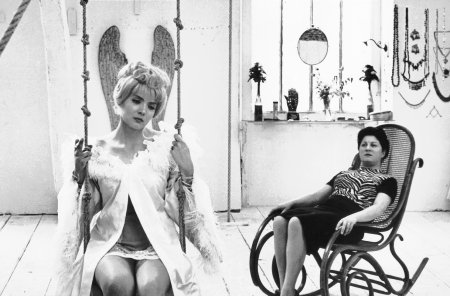
As an aesthetic-historical artifact, a primary source documenting the lost, oft-fetishized swinging jauntiness of early-1960s Western Europe, Cléo from 5 to 7 works. As a story that keys into the low-level dread and inklings of personal fraudulence that rise within us all from time to time — not too often, if we're lucky — it's more effective still. Agnès Varda pulls off an impressive balancing act by stacking a tale of fragile superficiality momentarily shaken by mortality's quake atop what's essentially a documentary of idealized Paris. (But if it's documentary footage, it by definition captures the real Paris rather than an ideal one; critics have surely tied elaborate mental knots about this before.) It's fiction in the foreground with fact in the background. The fiction, though, gets at something very real as well, albeit differently real, with a treatment that stands well apart from other films' before and since.

Cléopatre Victoire's bit of bad news hits her almost immediately, delivered via a tarot deck in this black-and-white picture's sole color sequence. Despite the fortuneteller's boilerplate buffer of hand-waving about change and transformation, Cléo knows full well what that card with the hunched, scythe-wielding skeleton predicts for her. Alas, for two whole days she's been trapped in a sickening limbo familiar to too many: Waiting For The Test Results. Though medical science will come through with the dirt on her possible cancer in a mere two hours, the prognostication confirms her worst fears: as many male (and envious female) heads are turned by her appearance and as many spins as her newly-cut pop single receives on the radio, she's a pretty blonde chanteuse whose days are numbered. The other cards reveal a heartening new acquaintance in her future, but the damage is done; impervious to reassurance, Cléo leaves despondent. (“She is doomed,” the prophet then tells a man, previously unseen, sitting in the next room.)

This would be more tragic if Cléo were at all sympathetic. “Ugliness is a kind of death,” she thinks to herself on the way out, checking out her own reflection in the foyer's mirror. “As long as I'm beautiful, I'm alive.” To label her as vain misses the point. It's not as if she has a tendency toward these moments of high aesthetic self-regard; most of her actions revolve around the examination and manipulation of her own surface. Even the tears shed at the close of her tarot appointment look timed and released to be maximially photogenic in the given context. Moments later, Cléo waltzes down the street, tractor-beaming the gazes of strangers, apparently her usual self. Hers is a broad, generic beauty, one that commands glances by the dozen but rarely provides a gateway to any substantive human contact. (Indeed, it may be an active repellent; she looks, by modern standards, imposingly, laboriously constructed, like her own wax museum figure.) It's no wonder she equates loss of beauty with loss of life — she's got nothing else.

Read more »

Two weeks in China: tourist snapshots, Part II

Part I of this piece appeared last week at 3QD and can be seen here.

by Stefany Anne Golberg

May 12

2pm

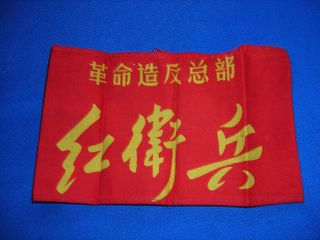
Armband3_web Bill was raised in a poor mountainous village in Zhejiang province (“Where is Hangzhou you will go there”), the son of tea farmers. He was allowed to leave his village and attend university in 1964 but his studies were cut short in 1966 by the Cultural Revolution. “We went mad, you know, we went mad,” he says over and over. He tells us he joined the youth militia and criticized the teachers he went to the city to learn from. He passes around his faded Red Guard armband, laughing at it. He sings about Our Great Leader (“we went mad, you know, we went mad”) and soon the bus driver joins in mechanically, paying more attention to the road. When Bill met his wife, she was a city girl in high school. Bill married her out of benevolence. She suffered in the country, we are told, though we’re not given details. Then suddenly, the Cultural Revolution is over and things start to change. Mao dies, Mao’s wife is arrested, and in return Bill’s wife is allowed to escape the rural toil of farming life. She moves to the city and a few years later in 1982—the government needing tour guides in the city as much as history teachers in the country—Bill and his son are allowed to join his wife, in the city where he resides today, still a tour guide at 64.

By the time Bill finishes his tale, half the bus is asleep with mouths gaping and eyes closed. A Canadian woman snores. Bill’s real name is Huang.

From the spotty window, the farms of Hubei province whiz by. Eight people dressed in unremarkable clothes stand before a gravestone in what appears to be a random spot in a field. A trio of horn players point their brass instruments into the blazing sun, their song silent from the tour bus.

6pm

Aboard the M.V. Emperor, where we will spend the next four days, we are assaulted by a long line of grinning uniformed crew members. Two haggard men in ripped t-shirts stumble into the crowd. They carry a load of heavy suitcases that dangle from a bamboo stick balanced on their shoulders. Among the tourists, there is an audible gasp and nervous giggling. They deposit the bags heavily and someone fumbles around in her pocket for a yuan or two. But the crooked men have already left.

May 13

6:53am

The peagreen Yangtze moves beneath us as we set sail upstream. The river is dotted with small pointy fishing boats. Brick shacks peek out between the trees that cover the surrounding high mountains. The air is alive with tiny white butterflies. You’ve seen it in pictures: the mist, the cliffs— it hasn’t changed for a while or so it seems. But the Yangtze is indeed is changing, it’s just that much of the past is already far beneath the surface.

8am

Our first breakfast on the ship is what has now become my daily morning fare: congee (white, black, corn, millet) topped with spicy pickled things. It is the only item that never seems to run out at the breakfast buffet. “There was some sort of earthquake yesterday,” a woman says.

Read more »

Monday, December 8, 2008

Maureen Dowd Is in My Bed

Justin E. H. Smith

Dowd-ts-190 Maureen Dowd is in my bed. I can tell it's her. That shock of red hair spilling across the pillow, those red high heels kicked haphazardly onto the floor.

What is she doing in there?

I'm going to have to wake her up and ask her to leave. She'll think I'm afraid of intelligent women, but that's not true. My wife is very intelligent. In fact, that's just the problem: Maureen Dowd is not my wife.

Come to think of it, where is my wife? Did I shift possible worlds, into one in which I –or should I say my counterpart-me?– am married not to my wife, but to Maureen Dowd? Did my wife somehow metamorphose into Maureen Dowd while I was out getting her more flu capsules, like some Gregor Samsa, though with an infinitely more gruesome fate?

I suppose the only question that really matters is: am I now married to Maureen Dowd? Whether this marriage was sealed through world-shifting or through metamorphosis is of little interest, except perhaps to the metaphysicians. Perhaps they would tell me that in the latter case we're basically looking at a cosmic annulment by reason of change of substance. I married my wife after all, not my wife-or-whoever-my-wife-might-turn-into.

I'm just going to have to wake her up and get to the bottom of this. I hope she doesn't talk like she writes. That would be unbearable, especially if, metaphysically and legally, she is in fact my wife. Then I would have to put up with it. I would say: “I seem to have shifted possible worlds or something, for I don't recall ever marrying you, Ms. Dowd.” And she would reply: “What a pretty pickle,” or: “So, darling, is it going to be Taming of the Shrew, or more Mister Magoo?” or some other rhymed literary reference that I'll feel I ought to understand, yet won't.

The thought of it sickens me. I don't dare wake her up. Maybe I should go back to the pharmacy, buy some lip balm or something, and when I come back everything will have returned to normal. I probably triggered this with something I did, some minor twitch or gesture that set the universe on a different course. Could it have been the flu capsules? Is this some red pill/blue pill thing? Wait. These pills are red and blue. What would set things right again? Burt's Bees? Gold Bond? Vapo-Rub?

Read more »

A Factual History of Fictional Natures

1.

Somewhere between growing up in farm country and leaving it, I watched my eight-year-old brother fall into a pile of afterbirth. One minute, we were poking the afterbirth with sticks—we couldn’t help ourselves, it was so strange, that pool of black milk, the recent discard of twin lambs—and the next minute, my brother was twitching in the grass, his sneaker anointed with the oddest of glues. He twitched for awhile, and when he stopped twitching he was initiated into the strange nature of hospitals, and after much in the way of cat-scan and examination, he was declared epileptic and released with a small vial of pills. At the time, no one could have convinced me—though I was old enough to know better—that those pills weren’t intended for the sole purpose of preventing my brother from turning into a lamb, as I’d seen him touched, comic-book style, by a substance capable of altering his genetic makeup. Whether I entertained this delusion because I would have preferred my brother as part-sheep—docile, wooly, and scarcely capable of competing for my parent’s affection—or because I believed the animal life to be more inviting than the human variety, remains up for debate.

2.

Emerson claimed that every word was once an animal, and when one is drawn to both words and animals with a frightening amount of affection, there is a temptation to elaborate on this system and transform the rules of grammar so that they might join another kingdom. What results is a cacophony of alphabet and heartbeat, furry vowels, clawed consonants. Sometimes nouns are horses and verbs are monkeys. On any given day, the fluctuations of adjectives are extreme, unpredictable, scampering from moth to snake to hamster. A school of fish is less institution, more living thesaurus, providing synonyms for what it might mean to be endangered or sublime.

3.

Words can be herded, animals, less so. I’ve attempted to blame my obsession on some crazed gene, an unavoidable blip in the familial blood. As children, we were surrounded by aunts and uncles capable of training possums and leading wild horses to makeshift pastures. But the origins of this gift were solely with my grandmother, Estelle, a high-haired little woman who once wore the bite-marks of a weaning kitten on her hand like strange jewelry. When she died in the living room after a long illness, the animals of the house were brought to her side, so that they could understand Our Loss. We watched them sniff her stillness curiously, obsessively, and the precise moment when grief occurred to them was obvious to us, and violently so. Howls went up, tongues came out, my grandmother’s cheek was licked with an alarming intensity, and shortly after, she was buried in her best dress with the ashes of her Great Dane, who’d once stood as the taller of the two while on tiptoe. At the reception that followed, my sister and I let the parrot do all the talking, and examined a beetle crushed at the curb by a mourner’s foot. Our familial tradition is pity for the roadside lost, our inheritance a moral conscience that has swapped the cartoonish hover of devil and angel with the perch of the warm-blooded, and the cold.

Read more »

Two weeks in China: tourist snapshots

By Stefany Anne Golberg

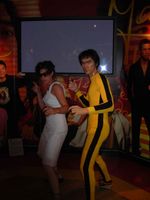
China_shuffybrucelee_webThere’s a curious smell in Chinatown. It smells of fish and death and moldering cardboard. The streets teem with people moving and spinning like the Teacups ride at Disneyland. I try to keep up with my mother, father, and older brother but they are too quick for me. My father is looking for the perfect dim sum restaurant. People bump into me, there is no space in this part of town, not even for a little girl. In every city, anywhere we go, my father takes us to Chinatown. He loves Chinatown. He loves the food, loves the style, the smell, mostly the food.

In every American city, where people mostly travel alone, and eat alone, and shop alone in big big stores, there is almost always Chinatown, where people are packed together, and eat together, and are together. When I am a girl, Chinatown is a world that has been created for me and not for me at all, that I can go to and will never be mine. Chinatown is the rest of the world, its possibilities and its failures. Somewhere, there is a whole country of Chinatown that sustains this one, that creates the magnificent trinkets cluttering the streets, wonderful, beautiful crap, cheap props in a street play.

I learn to love Chinatown too, in any city, anywhere I go.

May 7

6:49pm
“I was a Red Guard member in 1966, saw Our Great Leader Chairman Mao in Tiannanmen Square,” Bill says with a big smile. “I tell you my life story, very sad. That’s why I’m writing a book! About all my life experience. There’s a picture of me in my Red Guard uniform during Cultural Revolution. I will show you!”

8pm
In the hotel room I turn on the television. On one channel there’s a great battle scene from ancient times. On another channel, a man in a suit sits behind a desk and angrily scolds another man, with his pistol. Another shows a march of bloodied soldiers and filthy extras—men, women, children—dragging themselves down a dirt road. There’s an elaborate Tang opera and an infomercial channel dedicated to selling products I can’t identify. Hu Jintao addresses a congress and advertisements for the Beijing Olympics pop up regularly. On the one English-speaking channel, Mongolians in folk costumes frolic through wide grassy fields. In the upper left-hand corner of most channels is a CCTV logo, the major state-run television broadcaster.

11pm
My mother meets me at the Jiangxian Grand Hotel in southern Beijing. She disappears into the elevator with her friend and I finish a late-night plate of bok choy in the empty Western-style restaurant, watching pink plastic lilypads bob in an artificial pond that overlooks the lobby.

May 8

4:30am
Neither my mother nor I can sleep. As she showers, there is a knock at the door. I throw on a robe and open it. A young man’s hands are full of soap cakes and mini bottles of shampoo. He eyes me nervously and says nothing. I hold out my hands and he dumps all the soaps in them. I close the door and put the soaps on the TV. “Who was at the door?” my mother asks. “It was a man with soaps,” I say. “I read that in China if you ask for something you get it immediately,” she says. “Did you ask for soaps?” I ask. She pauses and turns to me. “No,” she says, “I don’t think so.”

Read more »

Embers from my Neighbor’s House

The year in terror has been building and rising, but few expected it to rise to this dramatic crescendo. Boats, control rooms in key buildings, AK-47s, grenades, hostages. As I begin to write, my television continues to bleat the worn platitudes of so many blind men and women of Hindoostan panning reality with their telephoto lenses, over the muffled roar of helicopters and machine gun fire.

Terrorism is high impact and ethics-free anti-art using global media. My imagination has been leached and my insides need cleansing, like an extra travel day spent watching porn in a hotel room. Still, one must concede their mad genius, uniting a new day of mourning in India with the pilgrim feast of Thanksgiving in America, both doused in the same hot stream of media violence.

I am already getting unsolicited text-forwards from cousins and acquaintances. India is planning to bomb Pakistan, says one. My friend Usman, in London, texts me just as he has every time this year, in the wake of each terror strike: “All ok?” “We’re invading Pakistan, but otherwise all okay,” I squeeze out. I’m not sure how funny he found this, for he writes back, “Re: Invasion, ok good. I was worried in the post-Obama fervour the world was becoming too sensible.”

Traveling through Mumbai this week is like living in an alternative dystopic reality, where malls, hotels and airports are surrounded with metal detectors, and armed guards. The usual ceremonies of entry and departure from colonnaded porticos have been suspended, and everyone is being forced to walk the last five blocks to the single entry of their sealed building. In the wake of the attacks, any number of international trade and industry conferences have been cancelled throughout India. Skittish international capital is reevaluating the risk of doing business in India, and so the attacks are having their desired economic effect.

The news channels have been branding it “India’s 9/11.” It is media hyperbole, it serves an ideological intent to align with and perhaps out-victim the US and UK, and it makes it easier to suggest retaliatory military action within the borders of Pakistan. But the label also lingers while we struggle to come to grips with what it was all really about. Not the tragic repetition of someone else’s history, but perhaps a sign from the future.

The attacks exceed the everyday violence that we have become inured to in the subcontinent, even when it has communal intent, even when hundreds die. There is the daring, of course, not only to attack India by sea, but to hit out at the public palaces and perches of the rich and famous. There is the urban, architectural and maritime research, the cross-border planning, the wireless coordination of personnel and armaments. There is the lateral imagination to transform a self-involved metropolis that itself has often threatened to secede from the dirty Indian hinterland into a cowering and precarious place on the edge of a dangerous sea. The Indian people, of every class and region, want to know why this was done to them, and no one really has any ready answers.

The hard answer that Indians are looking for is that there can be no peace for a prosperity that one’s neighbors do not share in, and that we are destined to share not only our past inheritance, but also our future fortune.

Read more »

BIL goes jogging

Jogging The highway of life displays warning axioms, which my brother in law (BIL) missed or just ignored. BIL, the unemployed-but-rich hedge fund manager, laments that he should have never studied finance, which initiated him to a life of greed and excess. He has just realized the truth in the fourth axiom of life: whatever you do at twenty-five, you will regret at fifty-five. He knows it is too late to change his career but probably he could improve his body, which reminds him of the third axiom: whatever you didn’t do at twenty-five will haunt you at fifty-five. In his case it is exercise.

Years at the debt swap desk has slouched his spine, drooped his shoulders and shrunk his chest. His biceps have the tone of dumplings and his quadriceps carry him only a few hundred yards before crying for rest. His belly seems to protrude beyond his area code. He is disgusted, he wants to get into shape and he wants to get fit.

BIL wants to achieve three goals: build his endurance, strengthen his body and live longer. The muscles of his body will have to wake up from years of sloth. He has to coerce his muscles into action; he has to stretch them, work them, and build them. It will help him if he understands how muscles work.

The basic unit of a muscle is its cell – a long spindle shaped structure often called a fiber, which contains energy yielding materials and thousands of rod shaped protein filaments that have the ability to contract. Muscle cells in a group form one cohesive functional motor unit and a muscle has numerous motor units. A single neuron – ‘motor neuron’ – controls one specific motor unit.

When the brain commands a muscle to contract, molecules of acetylcholine transmit this message through the motor neuron, generating an electrical impulse, which crosses the muscle cell membrane and travels through its interior channels. Protein filaments in the cell respond to the signal. They shorten in length by sliding over each other. Stimulus from one motor neuron contracts multiple cells in one motor unit and if more strength is needed multiple neurons participate and recruit many motor units. The result: a muscle contracts.

But brain cannot voluntarily contract of all the muscles; some are beyond its will. Heart, for example, beats to a different drummer – the autonomic nerves and chemicals in circulation. Heart also beats faster to respond to the oxygen needs of voluntary muscles.

What is the source energy supply to muscles? (Nature is wiser than one of the disastrous products of evolution – politicians – and unlike them nature has solved the energy problem of muscles.) A complex molecule – adenosine trriphospate or ATP – is the answer. Muscle cells contain a small amount of stored ATP, which suffices for first five seconds of activity. For next fifteen seconds of contraction the cell converts a precursor molecule – ADP – into ATP. If the vigorous activity lasts longer, muscle must manufacture new ATP. It does so by breaking down glucose.

Read more »

My Father: A Veteran’s Story

Frank P. Costa, Sr. is 91 years old and resides in the Home Sweet Home assisted living residence in Kingston, NY. Quite by accident, I saw my father in a TV ad for Home Sweet Home on a local TV station. I mentioned the TV ad to a cousin of mine and we talked about possible residuals that should go to his estate for the heirs to split. Of course, this was a ridiculous discussion and we got a good laugh out it. My father suffers from dementia and many of his memories of the past are no longer accessible to him in any detail. Having a discussion with him, of any consequence, is just about impossible now.

Dad was a paratrooper in the 82nd Airborne Division of the U.S Army during World War II. He was in the 507th Parachute Infantry Regiment. His first combat jump was on the night of June 5-6, 1944 into Normandy France – D-Day, the allied invasion of Europe. The designated landing zone was the area around the small town of Ste. Maire Egliese. It was on the only main road to the fortified city and deep water port of Cherbourg, further west. Ste. Maire Egliese was the principal objective of the 82nd so that the Allied armies could prevent any German rescue or resupply of Cherbourg.

My father was positioned as the first soldier to exit the plane when the green light, the jump signal, was given. On his training jumps he was always faint and queasy in the aircraft. He couldn't wait to get out of the plane and into the fresh air. So the jump sergeant sat him next to the door of the C47. The triple A flak (anti-aircraft artillery) was so heavy, the pilot veered to avoid the danger and gave the jump signal at a purely arbitrary moment. Many of the pilots in the following planes, with other 507th paratroopers, followed the lead pilot's right turn. They landed more than 30 km from their intended drop zone.

Dad landed in a flooded field, up to his shoulders in water. He cut himself out of the risers on his parachute with his trench knife, but he lost his M1-A carbine. With the arrival of dawn, he spotted a church on high, dry ground and made his way out of the water. He regrouped with his regiment, part of it anyway, in the tiny hamlet of Graignes, maybe 15 km from Carentan. The village church with a tall bell tower was the most recognizable feature and occupied the highest elevation in generally flat terrain. The church was of typical medieval Norman design, but I don't know how old it was. One-hundred seventy-six soldiers (176) assembled, including a few from the 101st Airborne Division, the Screaming Eagles. There was one Army Airforce fighter pilot. None of the surviving vets remembers where the fighter pilot came from.

The 507th was a headquarters outfit. That meant they had mortars, 50 caliber 'light' machine guns, and lots of explosives. They also had a lot of communications equipment, but they were too far away to contact any of the allied units. They were completely cut off from all communications. They had some great officers with them – a Colonel ('Pip' Reed), a Captain, and number of Lieutenants. The first thing they did was ascertain where they were with the help of the locals. They were so far off the drop zone that their location was off their military map. After much deliberation and argument, Colonel Reed decided to stay and set up a defense perimeter, rather than try to get back to the friendly lines through unfamiliar terrain and mostly flooded fields.

The head of the French Resistance in the area was a Graignes farmer, named Regault. His second in command was the Mayor of the Hamlet. The trusted locals were instructed the night before, by Regault and the Mayor, that the invasion was coming and that they were expected to do their duty when the time came. Regault had two daughters, Yvette 18 and Marthe 12. They were to become heroes in their own right and save the lives of many of the Americans. The first thing the locals did was to scour the area for the equipment and supplies that were parachuted with the soldiers. They smuggled the equipment in their horse carts and wagons. The proprietor of the local restaurant, Mme. Brousier, organized her suppliers to bring in large quantities of food stuffs to feed the paratroopers. They had to smuggle and be discreet so as not to attract the attention of the German soldiers in the area. The Germans soon learned of the existence of the Americans, but did not know who they were, how many, or how they were equipped. Some of the young French girls ran off to alert their German soldier boy friends.

Read more »

Monday, December 1, 2008

An American Brownie in Barcelona

by Jennifer Cody Epstein

Earlier this month, I had the opportunity to travel to Spain for a symposium hosted by the Libraries of Barcelona. Aptly titled Reading to Travel, Traveling to Read (link to the site here), it was comprised of three days of discussions amongst a broad panel of writers that included Marianne Pearl (wife of slain journalist Danny Pearl, foreign correspondent and author of A Mighty Heart), Clea Koff (forensic anthropologist for the U.N. International Criminal Tribunal in Rwanda, and author of The Bone Woman), and Chris Stewart (former Genesis drummer and author of Driving Over Lemons). The conversations—translated, UN-style, into French, English, Spanish and Catalan—were divided into roughly a dozen general topics, among them “Living to Travel,” “Ways of Spreading Passion for Travel,” and “Traveling as a Form of Creation.” My assigned topic, shared with Spanish fellow-author Anna Tortajada, was “Traveling as Research.”

As a writer who’s worked mostly with foreign subjects, settings and characters, I found much to ponder in these quadralingual chats. One comment stood out for me in particular: French writer and professor Jean Soublin was recounting how he’d once traveled to study the music indigenous to different nations. “Of course, one couldn’t do that today,” he added. “Now, everyone listens to the same thing.”

The conversation didn’t extend to whether or not this was a good thing, though M. Soublin’s tone (and Gallic shrug) suggested the former. Still, as I explored Barcelona over the next few days, the thought lingered: Has globalization really changed the experience of travel? And is it always and necessarily for the worse?

For a number of reasons, the question was of particular interest at this moment in my life. I’d spent the last ten years on a novel studying the clash and merge of Western and Eastern politics and art, and had just launched into another examining the delicate cultural and political give-and-take in a Tokyo under American occupation. However, in all those years–years marked by the explosion of the internet and noisy, ongoing construction of the “Global Village”–I hadn’t actually left home. At least, not counting Canada (and who really counts Canada?). After spending most of my twenties abroad ( Japan, Thailand, Hong Kong and Italy) the triple-punch of poverty, grad school and new motherhood had kept me firmly tethered to Brooklyn. This– my first trip to Spain—was also my first abroad since a Tuscan honeymoon in 1998.

And while I certainly didn’t feel like I was home–or even in Canada–being abroad felt markedly different than I had remembered. It wasn’t just that music had changed, though it’s certainly true that every kiosk I passed seemed to spew the same, vague variety of World Pop. It was that Spain—or at least, the part of Spain near my hotel–seemed far more accessible; more familiar, than I’d expected. On my first sojourn down Carrer Rossello, I almost felt like I was on Madison Avenue. Sleek flagship stores—Chanel, Burberry, Prada, H&M—lined the well-kept sidewalks. Well-dressed women with small dogs abounded.

Through a combination of slow English and bad Italian, I found my way to Circuit City and purchased an electrical adaptor in the credit-card line. I found a SIMs card for my cellphone at a nearby Nokia store, and called home to wish my daughters good morning. I used the restroom at Burger King, paused (from habit) at a Starbucks but then retired to what seemed a more Spanish-style café. In retrospect, however, it was not so very unlike my favorite coffeespot in Cobble Hill, though the music wasn’t as good and half the customers were smoking. Still, the people—a mix of smartly-dressed professionals, foreign visitors, students and artsy types—felt familiar too.

After coffee, I went back to my hotel to change, then hopped on the subway for that night’s installment of “Traveling to Read.” Apart from trying to walk through the wrong turnstile at Diagonal station, I made it to the Library without incident, listened with interest to Ms. Pearl and M. Soublin, and afterwards had a terrific—if very late–dinner with them, symposium organizers and some other panelists. All-in-all, it struck me as an entirely easy and pleasant day–if not an exceptionally distinctive one. It certainly stood in stark contrast to my introduction to Kyoto, my first foreign city, and one in which I’d spent my sophomore year on homestay.

Stumbling through the old capital’s broad avenues, quiet shrines and shopping malls, I remember remembering Roland Barthe’s musings on travel in Empire of Signs. This situation (he’d written) is the very one in which a certain disturbance of the person occurs, a subversion of earlier readings, a shock of meaning, lacerated, extenuated to the point of its irreplaceable void

And for me Japan was–at least at first—quite a shock. From food to fashion to the crisp cadence of the language; to the very posture and pace of the pedestrians, nothing–quite simply, nothing—felt familiar. For the first time in my life I felt fully an outsider, completely other; almost entirely without cultural or linguistic foothold. The simplest tasks—withdrawing money, finding the bathroom; using the bathroom (all those appliances! All those chirping automations!), making a phone call—seemed vast challenges. Even streetsign English (Fried chicken-drinks here; please remove shoes before being entered) felt like an entirely new language.

At that point, too—before cell phones; before internet; before the translation of hit pop songs into fifteen or more languages—home felt very, very overseas. Connecting with loved ones required lots of coins (Visa being a relatively new phenomenon there and then), a working payphone, and successful negotiation through polite-but-rapid Japanese operator instructions that were interspersed with cryptic-sounding clicks and beeps. Meals, for their part, could feel like an episode out of Fear Factor (“Do you know what this is?!” my homestay father would crow gleefully). And after dinner, all those bizarre TV reality shows!…

It can of course be argued (though I’m sure Europeans would rather not) that European and American cultures simply aren’t all that different; or at least, that they’re far more similar than are American and Asian cultures. And yet arriving in Italy four years later for another year abroad, I remember feeling almost as alienated there as I’d felt in those first weeks in Kyoto: Disconcerted by a foreign language. Confused by the lack of sugar substitutes. Caught off-guard when life shut down for siesta.

Now, twenty-odd years later here I was in Barcelona—phoning home while ambling down the Calle Escudellers. Shopping international franchises, and being offered not only Visa and Mastercard but the choice of paying in dollars or Euros. Logging into Facebook on the computer in the hotel lobby to find that the previous user had just been on Facebook, Spain. It certainly felt like globalization had sanded down some of the differences between our two cultures. But did that mean it was stripping away culture itself? Was the whole world, in fact, becoming like the fictional city of Trude, in Italo Calvino’s “Invisible Cities”: This was the first time I had come to Trude, but I already knew the hotel where I happened to be lodged; I had already heard and spoken my dialogues with the buyers and sellers of hardware; I had ended other days identically, looking through the same goblets at the same swaying navels… Why come to Trude? I asked myself. And I already wanted to leave.

Certainly, many Barcelonians with whom I spoke seemed to feel the same ennui as Calvino’s Marco Polo. At our symposium dinner, I had listened (at least, as much as my Italianized Spanish would permit) as city natives in our group bewailed the erosion of their Catalan culture. Friend and fellow writer James Canon, who’d just moved to the city, told of signs on La Rambla telling tourists to go home. (“Did they feel the same way about the Moors?” I asked, having just been informed that Spanish remains heavily Arabic-influenced. “I’m sure they did,” he said.)

And yet, as my visit continued throughout the week, I found myself wondering whether the ongoing construction of the Worldwide Village doesn’t cut both ways; whether, in fact, globalization actually eliminates cultural difference so much as provides tools to understand, even transcend, those differences. It may be crassly American of me, but seeing a Starbucks on La Rambla didn’t really detract from my overall pleasure in Spain—any more than the sushi shops on Calles Moles did. They all simply felt like part of a growing international lexicon that the U.S., Japan and Spain now shared, along with the rest of the world. In some ways—I’ll admit it—such sights were even oddly comforting; familiar signposts that seemed to remind us that while there was much to be learned from our differences, there was also something to be learned from our similar tastes.

I felt the same way chatting at the H&M sales rack with Spanish teens; commenting—in imperfect versions of one another’s language–on a cute style, a great price, the wait for a changing room. Or admiring—along with a multinational group of passersbys–Gaudi’s Casa Batllo on Passeig de Gracia. I felt it exclaiming over a Barbie doll I found in a toyshop, dressed not in cheesy lame an intricate, handmade Catalan costume that had clearly taken weeks (if not months) of loving care to create. And I felt it, finally, on my last night in Barcelona, spent listening to Spanish guitar at the Basilica del Pi.

It was a breathtaking performance of works by Albeniz, Tarrega and Sors. The audience clearly spoke at least a dozen different languages, though most were stunned (as was I) into silence; and the fluent arpeggios of the guitarist were occasionally underscored by the drunken songs of English footballers outside. For me, though, the night was magic; and no less Spanish for all the international ambience.

Later I ended up at Neri Restaurant on Calle Sant Sever, tucked away in the medieval alleyways of the Barri Gotic. The music there was less indigenously Spanish–a mellow blend of American alternative and Samba–and the food a fabulous fusion of Continental and Catalan. After my main course the waitress gave me a free glass of Spanish champagne to go with the night’s special dessert, which she announced with a flourish: American Brownie ala Mode.

“Don’t worry,” she added, seeing my bemused expression. “It’s all Spanish chocolate. And it’s delicious.”

And despite the title, it was.

Jennifer Cody Epstein’s other writing for 3QD can be seen here, and her own website is here.

Monday Poem

////../
Image_autumn_leaves Kneedeep as Leaves
Jim Culleny

Today, in a java shop
among caffeinators, wired, I
received a poem from a friend
whom I've known since
it didn't seem important
to understand friendship

But now I do
and appreciate his calling me
into the world of this poem
(which is not his, but his
anyway because
he saw some truth in it
and supposed that
I might see it too)

With thanks I add it to
other truths that have blown against my door
now piled kneedeep as leaves,
but less brittle, in fall

///

Interpretations: Maurizio Cattelan, Daddy Daddy (2008)

(Interpretations is a new, occasional series of reflections on artworks, films, songs, signs, artifacts, and other items by Asad Raza and other contributors.)

Picture 1In Maurizio Cattelan's Daddy Daddy, Pinocchio has met his end, floating face-down in the Guggenheim's fountain–presumably having jumped, fell, or been pushed off the ramparts of the museum's ascending spiral ramp. There is no clear cause, just a result: this body, the record of a dismal yet laughable turn of events, the death of a lovable Disney character. The sculpture is site-specific: for its memorable visual joke to work, it depends on the airy grandeur of Lloyd Wright's atrium. You have to be able to look up and see the many places from which a person, or a puppet, could fall. By imagining this disastrous outcome, the piece transforms the museum's spatial splendor into a droll vertigo. (Photo: The Guggenheim Museum.)

Blackly comic in tone, Daddy Daddy recalls the scenarios of many previous works by Cattelan. As with his stuffed squirrel suicide, posed face-down at a kitchen table with revolver in hand (Bidibidobidiboo, 1996), a cute character suitable for children meets an untimely end. Cattelan once displayed a rope made of bedsheets tied togther leading from the window to the ground below, having first used it to climb out of the gallery; Daddy Daddy also posits a hero paralyzed by the fear of inauthenticity (“Am I a real boy?”). Cattelan's work Now (2004), a life-size sculpture of a saintly, barefoot John F. Kennedy in a coffin, symbolizes a loss of hope and a sense of rightness with the world. In Untitled (2007), a horse is suspended in a sort of anti-majesty, its head having disappeared into the wall. Each of these works performs the characteristic Cattelan gesture: staging a climactic punch-line to a narrative of futility.

The use of Pinocchio is appropriate in another sense as well: Cattelan often represents himself mock-heroically as a liar and a thief. For an exhibition in Amsterdam in 1996 he stole the contents of another gallery and installed them in his own, entitling the piece Another Fucking Readymade. On the night before an opening of his in 1992, he went to the police falsely claiming his non-existent work had been stolen, then displayed the police report in the gallery. What better surrogate for himself in his work than the Italian boy-puppet, caught lying in a vain attempt to fit in and prove he belongs, that's he's a real boy? Daddy Daddy is a concise, witty summation of an anxious, futile desperation to succeed and belong.

In addition to these more obvious ways that Daddy Daddy represents a continuation of themes in Cattelan's work, there is another form of continuity operating here. This has to do with Pinocchio's being a puppet. Cattelan's sculptures are very frequently stuffed bodies of one kind or another. Many of his works include them in their most conventional form, taxidermized animals. Even works containing no mammalian forms, however, make reference to the stuffed body, as when he packed the rubble left by a terrorist bombing into large shipping bags (Lullaby, 1994)–a kind of macabre taxidermy that filled a soft container with fragmented detritus. Cattelan seems always drawn to depicting organic bodies as hollow containers, stuffed rather than living objects. The cartoon, which is our first point of reference for Pinocchio, is merely an extreme example this: a body delineated by an outline, but with no real interior.

There is, of course, a link between the Cattelan's narratives of demise and failure and his use of taxidermic or obviously cartoonish bodies to express them: both are ways of questioning holistic understandings of human identity. These hollow shapes disrupt a naturalized sense of ourselves as organic beings. They cast our psychological interiors as mere stuffing. And I think this literal emptying-out of the category of being touches something quite deep within the contemporary idea of what it means to be a person. The ideal of secular modernity is meritocracy: the goal of personhood is to travel upwards, achieving and accomplishing as much as one can without unfair impediment. Yet the meritocratic model renders social life as a competition for high status, which, by definition, remains scarce and graspable by only a few. An ideal meritocracy, then, must leave most of its constituents in the depressing position of having achieved second-rate status–a depression only made more acute in cases of fair and just competition.

A further contradiction of the logic of meritocracy is that it rewards those who most fully internalize the fear of being second-rate: temperamental insecurity and anxiety about accomplishment, that is, are the motivating forces of the high achiever. This is also true of Daddy Daddy. Far from being the record of Cattelan's failure to thrive, it is the latest example of a great success: the achievement of extremely high status in the art world, which allows him to display his work in high-status cultural institutions. Thus Daddy Daddy is pleasing and surprising because it is redolent of the absurdity of contemporary life, which often allocates its greatest rewards to those who are most anxiously unable to be content with them–a situation Daddy Daddy comes close to parodying, with its transformation of angst into comedy.

As a consolation for the bleakness of professionalized social life, Cattelan offers his own example. As he has said of his vocation as an artist, “this is the one profession where I can be a little bit stupid and people will say, 'Thank you, thank you for being so stupid!'” This statement updates the familiar nineteenth-century concept of the aesthetic field as the opposite of the ruthlessness of the market. Art, in this understanding, is not a utopian alternative. It is an adjacent, but equally competitive, field to the professions–but one which values rather than represses reflections on the nature of “the game.” In keeping with this paradox, Cattelan is the ultimate professional unprofessional: he is unconcerned to demonstrate mastery of craft, except the twin crafts of directing fabricators to realize his ideas and eliciting support from curators and collaborators. His work, a series of sculptural vignettes or gestures, expresses not a poetics of mastery, but a comedics of failure. “Laughter is the whole of wisdom,” goes a line by the satirical novelist James Hamilton-Paterson. Cattelan's work tends to confirm this.

That City on a Hill: Books of the Year

By PD Smith

Big bamboo December has a way of creeping up on you. It seems just a few weeks since summer was here and Abbas was making hay in the Alps.

2008 has been a year of fear and hope. Mighty financial institutions have collapsed overnight and America has elected its first African-American President. Apparently, Reinhold Niebuhr and Nietzsche are among Barack Obama’s favorite authors, although I can’t imagine he has had much time for reading this year. Which is a pity as there have been some great non-fiction titles published in 2008.

For me one of the most memorable was Proust and the Squid: The Story and Science of the Reading Brain by Maryanne Wolf (published in the UK this year by Icon). It’s an enthralling celebration of the science and “complex beauty of the reading process”. In evolutionary terms, reading is a recently acquired cultural invention that uses existing brain structures for a radically new skill. Unlike vision or speech, there is no direct genetic programme passing reading on to future generations. It is an unnatural process that has to be learnt by each individual.

As director of the Center for Reading and Language Research at Tufts University in Boston, Wolf works with readers of all ages, but particularly those with dyslexia, a condition that proves “our brains were never wired to read”. Wolf therefore has much of practical value to say about why some people have difficulty reading and how to overcome this. Reading stories to pre-school children is crucial, she says, as it encourages the formation of circuits in the brain, as well as imparting essential information about fighting dragons and marrying princes.

Wolf's story of the development of the reading brain covers many fields, from linguistics, archaeology and education to history, literature and neuroscience. In particular, she highlights the brain's astonishing plasticity, its “protean capacity” to reorganise itself to learn new skills. According to Wolf, we are all born with the “capacity to change what is given to us by nature.” Right from the cradle we are “genetically poised for breakthroughs”. She memorably paraphrases Darwin: “biologically and intellectually, reading allows the species to go ‘beyond the information given’ to create endless thoughts most beautiful and wonderful”.

For thousands of years, the process of engaging with texts has enriched us, both existentially and – as Wolf's remarkable book shows – biologically. Different languages put their own unique stamp on the brain, creating distinctive brain networks. Reading Chinese requires a different set of neuronal connections from those needed to read English. As the writer Joseph Epstein has said, “we are what we read”. Doctors treating a bilingual person who developed alexia (inability to read) after a stroke found astonishing evidence of this. Although he could no longer read English, the patient was still able to read Chinese.

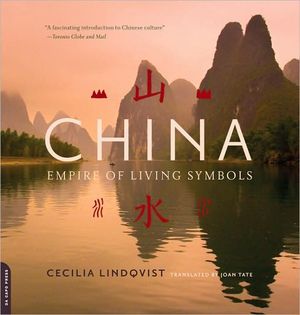
China 2008 was unquestionably China’s year. From terrible earthquakes to space walks and, of course, the Olympics, China was rarely out of the headlines. Out of this year’s red tide of titles about this endlessly fascinating country, I found two particularly memorable: China: A-Z, by Kai Strittmatter (Haus) and China: Empire of Living Symbols, by Cecilia Lindqvist (Da Capo). Both use language as a springboard to explore Chinese culture and history.

For Strittmatter, a German correspondent in Beijing for 10 years, China is “a land of contradictions”. (This reminds me of Bohr’s delightful comment: “How wonderful that we have met with a paradox. Now we have some hope of making progress.”) After spending two decades in a Maoist labour camp, author Zhang Xianliang says: “it’s because China is a mystery, that it's so dear to me”. He is now a member of the Communist party and a successful businessman. Bend, adapt and move on seems to be the lesson here. Perhaps the Chinese have learnt this philosophy from one of their most beautiful plants – bamboo.

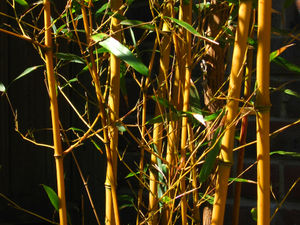
“No plant moves me as profoundly as bamboo,” writes Lindqvist, “most of all the sound of its thin, dry leaves as they rustle in the wind.” I agree completely. One of the first things we did in our garden was plant bamboo. I can see it now from my desk, swaying sensuously. In storms it can be blown almost flat but the next day it is upright again. According to Lindqvist, the resilience of this wonderful grass taught the Chinese a powerful lesson about how to face difficulties: “Bend, adapt, of course, but never abandon ideals. Never be defeated. Other winds will blow, all in good time.”

There are, of course, many Chinas – it is a vast continent unified by a common language, standardised as far back as 221 BC. In Strittmatter’s “pocket dictionary” of Chinese culture, it is “the magic of the characters themselves” that tells the story of this paradoxical land. An entry in his book about the family (jia) highlights the importance of the Confucian virtue of service. For the Chinese that means “sometimes serving the state, generally the family, and always the parents”. In a discussion of chopsticks (kuai zi) he notes drily, and entirely accurately, that they are primarily an “instrument for measuring a foreigner's ability to integrate”. From gan bei (cheers) to why xiao zi (petty bourgeois) was once an insult but is now cool (ku), this is a delightfully witty and insightful guide to today's China.

Lindqvist’s remarkable study broke new ground when it was first published in Sweden nearly twenty years ago. Reissued this year, her book explores the origins of modern Chinese writing in pictures and objects over 3,000 years old, such as oracle bones. An art historian who spent her life studying Chinese culture, Lindqvist weaves archaeological evidence of the earliest Chinese characters together with the country's history to demonstrate China's unique cultural continuity. It's believed written language arose first in Mesopotamia, although Wolf cites recent evidence that suggests Egyptian hieroglyphs may be older than even Sumerian cuneiform writing. No one uses either today, but modern Chinese script is recognisably similar to the earliest forms of writing in the region. China “is a continuation in direct lineal descent from the culture that arose in the long valley of the Yellow River during the 5th millennium before the beginning of our calendar.”

Lindqvist shows how the oldest characters are representational (“man” depicts a person in profile and dates back to the earliest oracle bones) and these remain part of today's language. In this beautifully written and illustrated book, language and images come together to tell a common story about the rootedness of the modern script in the ancient signs. Drawing on her long experience of the country – its sights, sounds and tastes (including a few recipes, such as pork with bamboo, onions and dried mushrooms) – Lindqvist creates an evocative and compelling celebration of language as a carrier of culture.

Another book that memorably explored our love affair with language this year was Off the Page: Writers Talk About Beginnings, Endings and Everything in Between, edited by Carole Burns (Norton) As a non-fiction writer, I have immense admiration for what novelists do with language. It seems to me fiction is a kind of alchemy, a mix of science and magic, fact and poetry. Attempts to explain this process often fall flat. But not Burns’ book. She interviews 43 authors about the writing life, from the nuts and bolts of fiction (how to breathe life into a character) to more general comments on inspiration and influences. AS Byatt starts her novels with a “block of colour” (“Babel Tower is black and red, because of blood and destruction”). For Paul Auster the story comes first: “I find the book in the process of writing it”.

All agree on one thing: writing and rewriting is never easy. Joyce Carol Oates finds the first draft the hardest: it's “like hacking one's way through a thick jungle with something like a butter knife”. Richard Bausch recalls how he wrote an entire 800-page novel before deciding it was really a short story. The process of cutting it down to size was, he says, like passing a kidney stone. Ouch. “Everyone goes a little mad as a writer”, says Alison Smith, and most interviewees agree. Even Martin Amis admits to the occasional “crazy-scientist cackle” while writing.

I sympathise. After finishing my last book (it took over three years), I just wanted to lie in a dark room and listen to soothing music. But I guess all writers are suckers for punishment – I’ve just started researching a new book: a cultural history of cities. It’s a fascinating time to be writing about urban history – this year we officially became an urban species with more people living in cities than in rural areas. There are of course many wonderful books about urban history. John Reader’s excellent Cities (2004) for one, and Peter Hall’s masterly Cities in Civilization (1998) which focuses on cities as centres of innovation and creativity. Interestingly, Hall only mentions China a few times in 1169 pages – a sign, perhaps, of how fast the world is changing and the astonishing rate of urbanisation in recent years. By 2020, there will be ten cities with more than twenty million citizens, gargantuan cities such as Jakarta, Delhi, Mexico City, São Paulo, New York, and Tokyo.

As it turns out, 2008 has been a vintage year for urban studies. Gail Fenske’s beautifully illustrated biography of the Woolworth Building, The Skyscraper and the City (Chicago), is one of my favourites. It is a superb study of the New York skyscraper that became emblematic of the world’s first signature skyline. Cass Gilbert’s inspiring cathedral to commerce opened in 1913. This Gothic spire offered New Yorkers passing by on the sidewalk “an experience of sheer vertical ascent unrivalled by the taller but stepped-back skyscrapers of the 1920s”. Fenske tells the fascinating story of this building’s inspiration, design, construction and its place in the city that has come to define the modern metropolis. The pinnacled tower no longer dominates New York’s vertiginous skyline but it remains a monument to the soaring ambition of its owner and architect, as well as to human aspiration and the desire to conquer vertical space.

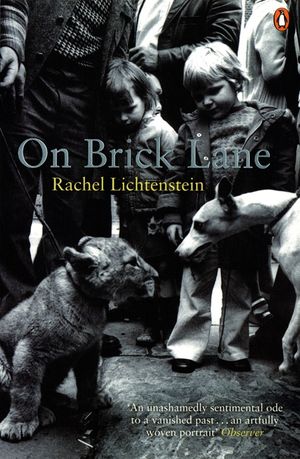
On brick lane Once it was London that broke all urban records, from size to pollution. On Brick Lane by Rachel Lichtenstein (out in paperback from Penguin in the UK) is a wonderfully evocative and personal portrait of a part of the East End of London that has been home to successive waves of immigrants. Chicksand Street, off Brick Lane, is where Bram Stoker’s Dracula slept in a coffin of Transylvanian earth. In the seventeenth century the Huguenots arrived, later there were Jews from Eastern Europe (including Lichtenstein’s own grandparents) and now it is home to a thriving Bangladeshi community. An artist, Lichtenstein has lived and worked in Brick Lane since the 1990s. She evocatively weaves together her own experiences with those of her family and interviews with former and current residents, ranging from a Bangladeshi schoolgirl (“Brick Lane is like a part of Bangladesh”), to the footloose London author Iain Sinclair, who used to work in the 300-year-old Truman brewery, and the poet Stephen Watts, who tells her: “There is a tidal wave of sound and memory rushing down that street.”

The “sensory encounter” with cities is the subject of Dell Upton’s Another City: Urban Life and Urban Spaces in the New American Republic, published this year by Yale. The stench and cacophony of early nineteenth-century American cities must have been terrible, judging from Upton’s impressive research. Using travel journals, diaries, and letters he shows how the “insistent and importunate sights, sounds and smells surpassed anything previously known in the new nation”. To read his book is to be immersed in the sensations of the city.

In New York, “public porkers” roamed the streets up until the middle of the nineteenth century. Indeed, horses, cattle, and goats shared the city with their two-legged owners. Most American cities had no drainage systems and rubbish was thrown out into the street forming a putrefying heap known as “corporation pie”, until scavengers hired by the city disposed of it. Upton argues convincingly that the experience of living in noisy, stinking antebellum cities spurred a reformist desire in many urban communities to realize the ideal of a shining city upon a hill: “The relics of civilized life that bombarded the senses, and the mixed throngs that crowded the streets of antebellum cities, were the crucible within which city dwellers formed a sense of what it meant to be a citizen of a republican city.”

Of course, building Utopia is easier said than done, as Robert H. Kargon and Arthur P. Molella show in Invented Edens: Techno-Cities of the Twentieth Century (MIT). Modernist reformers embraced technological solutions to solve nineteenth-century urban problems such as congestion, pollution and disease. From Ebenezer Howard’s seminal notion of the “Garden City” in the 1890s, to the new urbanist Celebration in Florida in the 1990s, Kargon and Molella argue that the techno-city was a bold social experiment, but one that in the end was doomed to failure. For despite using the latest technology, at the heart of these ideal cities was a nostalgic yearning for small-town life. What the authors term “techno-nostalgia” created a fatal fault line running through the techno-city: “the machine in the garden is a seductive dream, but a problematic reality”.

Kargon and Molella also discuss Oak Ridge in East Tennessee, a once secret city created as part of the Manhattan Project. The plan for this techno-city was inspired by the same nostalgic yearning for an idealized garden city, with tree-lined streets and “organic clusters” of houses. There is, however, a shocking irony about the fact that the people who lived in this utopian city were building a superweapon designed for one purpose – to annihilate cities.

The nuclear age is the subject of Nathan Hodge and Sharon Weinberger’s entertaining and informative A Nuclear Family Vacation : Travels in the World of Atomic Weaponry (Bloomsbury). Where are you going for your holidays next year? How about the Semipalatinsk Test Site in the former Soviet republic of Kazakhstan? It is, apparently, a bona fide tourist destination. But remember to pack your Geiger counter and iodine tablets. As Hodge and Weinberger discover, the site is still highly radioactive. Most of the cold war scientists who lived in the nearby secret nuclear city of Kurchatov have now returned to Russia, but some technicians remain. Asked about the measures they took to protect themselves from radioactivity, one replies dryly: “Before every test, we drank grain alcohol.”

Hodge and Weinberger are a husband-and-wife team of defense reporters turned nuclear tourists. As the title suggests, the authors did indeed visit many of the places during their holidays: everywhere from Iran's Esfahan Uranium Conversion Facility, which supplies material to the top-secret uranium enrichment facility at Natanz, to the Nevada Test Site (a “sandbox for nuclear weapons designers”), and the Cheyenne Mountain bunker (“the ultimate cold war retreat”). In Los Alamos, where the first atomic bombs were designed, the authors noticed that the scientists sometimes had pictures of their favorite nuclear tests hanging above their desks and could describe, “in loving detail, the very personal reasons for their choices”. One scientist even named his son after the 1952 Ivy Mike H-bomb test. But Los Alamos hasn't designed a new nuke since the 1980s, and has become little more than a “repair shop for nuclear weapons”. The scientists are not happy: “the mood at the lab hovered somewhere between depression and despair”.

Revealingly, although Hodge and Weinberger interviewed many politicians and scientists, they failed to find anyone who could say what the purpose of the nuclear arsenal is now. The nuclear weapons industry, costing billions of dollars a year, is an enterprise that has “lost its way”. Their important conclusion is that it is time for the US to think the unthinkable and “explore practical options for eliminating the nuclear arsenal”.

Cans Festival 2008 small No doubt that’s a policy Noam Chomsky would support. In Interventions, which appeared in the UK in paperback this year, he notes that the US spends as much on its military as the rest of the world combined. Another shocking fact: apparently the essays in this collection by one of today’s leading public intellectuals have been published in newspapers all around the world, but were largely ignored in the US. (Sounds like an opportunity for 3QD…)

According to Chomsky, the tacit assumption guiding all US foreign policy is now “we own the world, so what does it matter what others think?”. From Iraq and the war on terror, to Iran's nuclear ambitions and US support for Israel, he accuses Washington of accelerating the race to destruction. Hopefully, America will soon be turning over a new leaf under President Obama. Lead me to that radiant city upon a hill…

* * *

Read more of PD Smith's work at Kafka's mouse.

Monday, November 24, 2008

Lunar Refractions: Debauched Grace—Gainsbourg is no Gorbachev…

SG.Partie.sub_wm-17.php I’ve spent the weekend out in the cold, and as I sit here sipping a glass of hot water with a wedge of lemon, the song that’s been stuck in my head for the past few months returns yet again to mind. Unexpectedly, yet somehow logically, the taste of this citron chaud cold cure I first learned from a Parisian friend of mine has my ears ringingSG.Esclaves.sub_wm-9.php with “Un zeste de citron / Inceste de citron,” provisional titles for the song Serge (and Charlotte) Gainsbourg published some twenty-four years ago as “Lemon Incest.” I can already hear you saying, “Wow, it doesn’t take much…” but no, my mind isn’t always in the gutter—or, if it is, at least it’s in an artistic way. The material on Serge Gainsbourg—his discography, filmography, biography, bibliography, and various other -ographies of all sorts—is inexhaustible. Equally inexhaustible is my ability to listen to this particular song over and over and over; though this may be reason to worry—as if I needed yet another—I’ve decided my fascination with it is worth investigating for what it may have to say about the creative process (pun intended … and no, I didn’t say procreative process!).

SG.50sRouge.sub_wm-8.php I first heard Serge’s mellifluous voice flowing from the stereo in the apartment of a friend of a friend (merci, Elise); I’d just moved to New York—literally the day before—and the tracks on Couleur Café, a posthumous compilation expanding upon the eponymous 1964 EP, intrigued and disoriented me. Where did this music come from, Africa? French Guiana? France proper? But soon this city began its inexorable take-over of my life, and my memory of those beats ceded to more pressing questions: where am I, where have I come from, and just where do I want to go? All those questions most people ask themselves soon after arrival here. But then Serge—Gainsbourg père, one might call him, given his love of literature and painting, as well as the creative enterprises many of his family members have also undertaken—came back with a vengeance.

I See New York, New York U.S.A. (Oh, c’est haut!)

SG.NewYork.sub_wm-20.php Upon moving here I had a brief stint in a bookshop. The pay was miserable, but never since my childhood evenings at the library had I been able to spend so much calm time totally surrounded by books. One day I came across book with sans serif pink and purple lettering and what looked to be a reclining nude—but male, smoking, and photographed rather than painted—on the cover. The subtitle of Sylvie Simmons’s biography Serge Gainsbourg: A Fistful of Gitanes said it all, and periodically over the next eight years I enquired about the book whenever I found myself in a bookstore: all had carried it at some point in the past, none had it in stock. This September I finally got lucky, and delved right into the pages between its fruity covers on the subway ride home that evening. Reflecting on the fact that in many respects, for all their promise, my later cubicle gigs never gave me as much future fodder as that humble little bookstore had, I was immensely grateful for my past servitude and current freedom … and for having finally found the bio.

SG.Nue.sub_wm-6.php I had an inkling that the difficulties and triumphs of any New Yorker paled in comparison to his, but I had no idea; were he alive still, he’d have turned eighty this year. As you can guess, given his dates (1928–1991), young Lucien Ginsburg—an evidently Jewish (albeit assimilated) aspiring painter in mid-century Paris who left high school and then the École des Beaux Arts to follow in his immigrant father’s footsteps to play in various piano bars—was in for a hard time. So how can anyone sublimate the experience of being forced to wear a patch that could get you shipped off to the camps, escaping to stay with a family of hospitable strangers in a small town hours away from home, and hiding behind a different family name? By turning it all—and yourself—into art, of course. It may have taken three decades, but all that, with his experience in the military added in to boot, became a source to be raided for his 1975 album Rock Around the Bunker, complete with song titles like “Nazi Rock,” “Yellow Star,” and “S.S. in Uruguay.” The whole thing was done to music reminiscent of the fifties and sung in a very Elvis-esque tone, though before long he decided on the more radical step of splitting himself in two by creating an alter ego (more on that later). This is one approach to creativity: be yourself, have that taken away; reinvent yourself, be someone else; assume the personae of others, and make them your own. Rock around the bunker that is your ego and your life.

(Lolli)Pop Genius

SG.Profile.sub_wm-4.php SG.Silhouette.sub_wm-16.php The idea of genius comes up repeatedly in his bio and many of his television appearances and interviews. I don’t know that Whitney Houston qualified for the epithet in the mid-eighties when he said she was a genius (see below), but in light of his considerable output, he unequivocally does. He appears not to have liked the term, or was at least too humble to ever have applied it to himself—though he had no qualms about taking credit for his ugliness, saying that “ugliness has more going for it than beauty does: it endures.” So what’s an ugly man obsessed with beauty to do? Expose everything in its own particular type of beauty. According to one interview, he gave up painting because “I wanted to have an artistic genius, and all I had was talent.” Being disinclined to settle for mediocrity, he must’ve rightly felt that in music, at least, he had more than talent going for him.

SG.Tricouleur.sub_wm-5.php I’d twist the term genius to say it’s applicable to his work insofar as he’s captured the sense of genius loci as it might’ve been understood by the mythic Wandering Jew—the man who’s seen it all, experienced it all, lived a long time (and will, indeed, by condemnation or not, live on forever), all the while remaining somewhat excluded. In his oeuvre, Gainsbourg combines many traditions—rock, classical, jazz, reggae, rap—to create what many now consider one of the keystones of popular music; but it’s worth remembering that it wasn’t always popular, and certainly can’t be traced back to any one tradition. Instead, his genius was precisely that ability to transcend place and time (if not language), loot tradition for all it’s worth, and put out something that no one, anywhere, had ever heard before—say, a song for an innocent little girl about lollipops and how much she loves it when her lollipop’s anise-flavored sugar runs down her throat…. A tender France Gall won the 1966 Eurovision contest (an American Idol of sorts, sans painfully televised tryouts) with just such a song, and was later upset to learn that its lyrics could insinuate something other than her love of candy—could a nineteen-year-old back then really have been so pure, so much more naïve than today’s nineteen-year-old? And what’s wrong with a little insinuation when it leads to such sweet, scary, laughable clips as the one of young Gall and not-quite-so-young Gainsbourg singing that duet? One of my main criteria for whether something is art or not is how deeply it changes your idea of self and your life, and it sounds like this song changed France’s life deeply indeed. Over the years several more muses would come into his life to set the scandal bar slightly higher than it ever had been before.

Oh Daddy Oh (Daddy Oh…)

[Parental/filial advisory: this is the part with lemons and incest in it.] Gainsbourg had been married, had a child, and divorced by the time he met Jane Birkin, who had also been married, had a child, and divorced. Three years after briefly baring all at seventeen (take that, Mademoiselle Gall!) in a playful scene of Antonioni’s Blowup, Birkin found herself in Paris for a film test, and was set as heroine opposite Gainsbourg’s hero in Slogan. But I cannot go into everyone’s lengthy artistic c.v.s here: long story short, their union produced a daughter named Charlotte. She is now a singer, actress, and mother in her own right, after debuting at age thirteen (take that, Madame Birkin!) in the (in)famous “Lemon Incest,” the aforementioned 1984 duet with her father. While many people may be familiar with that song, not everyone knows that it also appeared as the last track of an album the two released together in 1986, Charlotte For Ever. My personal favorite is track three, “Oh Daddy Oh.” Aside from its catchy tune, it’s even more interesting when you hear some of the words this father puts into his daughter’s mouth:

Oh Daddy oh Daddy oh Oh Daddy oh Daddy oh

Tu te prends pour Alan Poe You take yourself for Edgar Poe

Huysmans Hoffmann et Rimbaud Huysmans Hoffmann and Rimbaud

SG.Maison.sub_wm-14.php Such references—to the Decadent author of Au Rebours (Against Nature), the poet in Offenbach’s semi-fictitious eponymous opera, and two other poets—says a lot about this particular Daddy, and his ability to make fun of himself via words penned to be tossed right back at him by his own daughter. Much as he was a musician, reading his lyrics one notes how he was equally a poet; not only that, but a poet who more often than not was capable of keeping remarkable rhyme schemes without having to break tradition, and while sustaining double, sometimes triple entendres. I suppose he left his revolutionary energies to the parts of his life that lay outside the strictly compositional precepts of verse writing—i.e., the sexual, political, and non-verbal artistic realms.

Returning briefly to Birkin’s sparklingly blonde appearance in Blowup, another curious connection emerges: the brunette friend with whom she harasses the photographer is played by none other than Gillian Hills. Three years earlier, a nineteen-year-old blonde Hills (a familiar age, n’est pas?) had sung at Serge’s side in another episode that falls well into the category of his recurring theme of young women and old men, to directly quote his 1959 song “Jeunes femmes et vieux messieurs.” See this excerpt from their 1963 “Une petite tasse d’anxieté:”

[Elle:] [Her:]

Où m’emmenez-vous ? Where are you taking me?

Etes-vous donc devenu fou ? Have you gone crazy?

[Lui:] [Him:]

Un p’tit tour au bois A little ride through the woods

Si vous n’avez pas peur de moi If you’re not afraid of me…

[Elle:] [Her:]

Mais vous vous trompez You’re mistaken,

Je n’ suis pas celle que vous croyez I’m not what you take me for…

Between the sixties and the eighties, the Vieille Canaille’s young woman counterpart is seen in her transformation, over several albums, from uncooperative lass to instigating vixen, culminating in “Lemon Incest.” For those who are ready to accuse the old man of going too far, here’s the key verse, sung by Charlotte:

L’amour que nous n’ f’rons jamais ensemble The love we’ll never make (to one another)

Est le plus rare le plus troublant Is the most rare, the most troubling

Le plus pur le plus énivrant The purest, the most intoxicating

Sublime love is all of those things, and when a thirteen-year-old tells you so, how can you denounce it? Sure, she may not yet have the necessary life experience, but compare this to Marilyn’s songs from the fifties (especially her rendition of Cole Porter’s “My Heart Belongs to Daddy” in Some Like it Hot), and tell me these women didn’t fully determine the words they sang and how they sang them.

Now for that alter ego I mentioned earlier: a lot of artists are known for their multiple personalities, be they clinically certified or not. While Gainsbourg always kept things clean within the family, he was nevertheless a very open, free man. In the late seventies the highly cultured, somehow elegant (at least melodically speaking) Gainsbourg created an alter ego named Gainsbarre; the latter was a drunken lout, a provocateurconstantly enveloped in a blue-grey cloud of smoke issuing from the ever-present Gitane in his mouth, and loved to make appearances on live national television. Simmons points out that Gainsbarre came into being shortly after Birkin walked out on him, and it was only a few short years before he was even conducting interviews with himself, the civil, suit jacket–wearing Gainsbourg delving into the depths of the sunglass-masked, leather jacket–wearing Gainsbarre to discuss his/their courage, fears, having to wear a star… in short, a philosophical conversation.

Such moments showed Gainsbarre at his best, whereas his appearances on other TV shows often proved superlative in other, less flattering ways. The two most well known occasions were what I’ll call the Houston incident and the 500-Franc incident. In the first, he and Whitney Houston were guests on a popular talk show. Less than two minutes into it, after claiming his mic doesn’t work, he abruptly interrupts Michel Drucker, the interviewer/interpreter, saying “You are not Reagan, and I am not Gorbachev, so don’t try, eh! I said I want to fu*k her.” (Mais j’ai bien dit que je voulait la baiser.) The comparison he used for that scold is curious, and reveals a certain political awareness one might think such a drunken man wouldn’t have. To run with it, there are similarities: both Gainsbourg and Gorbachev were of Russian descent; both grew up under totalitarian regimes; both help foster a disintegration of barriers and greater cultural (not to say economic) exchange on many levels. But as far as I know, Gainsbourg never did a Vuitton ad.

SG.Franc.sub_wm-2.php

But he did burn money in other, less fashionable ways. In the 500-Franc incident he was seen, again on live national television, illegally taking his lighter to a bill and burning roughly the same percentage of his total earning he paid in taxes. He’s careful to specify that he knows it’s illegal but doesn’t care, and, more importantly, that his anger stems from the fact that the government funnels the money into nuclear (energy and weapons) and other such wastes, not to the poor. Remind you of any other administration?

Un Role Model

SG.Gun+Roses.sub_wm.php Ultimately, 6a00d8341c562c53ef010536207fa6970c-150wi Lucien Ginsburg/Serge Gainsbourg/Gainsbarre/Le Vieille Canaille was not just an unparalleled artist, but he was “un role model,” a linguistically mixed concept I’ll awkwardly translate, just as so many of his lyrics lose their grace in translation: in latter-day, anglo-filled French, un role model = a role model (un bon exemple); in English (sure, add the hyphen), he’s plainly an un-role model, the sort of man you might never want your son to take after, but undeniably a role model nonetheless—perhaps a role model of the sort clearly attested to by dozens of little boys on a children's TV show dressed up as him, complete with cigarette and (hopefully faux) glass of liquor in hand, five-o'clock shadows on their sunglass-clad faces, and greyed hair singing a modified version of one of his old songs as an homage.

SG.Dessin.sub_wm-18.php To round out this picture of the young painter turned musician turned activist—the real renaissance man—along comes his (semi-autobiographical) novel Evguénie Sokolov, whose protagonist is a struggling young painter suffering from a terrible, chronic case of gas. He literally takes a shitty situation and harnesses his shortcoming to create pieces he terms “gasograms,” much like the surrealists’ automatic paintings (Gainsbourg adored Dalì). In both the book and the song, young Evguénie Sokolov, and by extension his creator, echoes the idea that taboos are simply time-dependant limits he’s unfettered by and will, on the contrary, turn to his advantage where possible.

SG.Clock.sub_wm-3.php For myself, in my own creative endeavors, the points and ideas I take from Gainsbourg’s songsSG.Cuffs.sub_wm-7.php and life are most encouraging. Critics often have an agenda that doesn’t apply to you. Critics are often wrong; when they aren’t wrong, it behooves you to find out why. Style both matters and doesn’t matter at all. The style of the day, in particular (i.e., the twist, les ye-ye), can be nice but is often forgettable. Smoking and drinking can facilitate great works of art. Smoking and drinking can kill you. Proper grammatical construction can be a hindrance (i.e., “Je t’aime, moi non plus,” “I love you, me neither”). Amid all the hot air—intestinal and otherwise—beauty (often masked in ugliness) reigns supreme.

SG.écrit.sub_wm-19.php SG.N'écoute pas.sub_wm-10.php For months I’ve been waiting for the right time to address this adoration I harbor for Serge, and it never comes, but as my citron chaud runs low I know I have a lot more to listen to before we’re done. Now I’m just waiting for some linguist or French music and lit specialist to begin the lexicography of Gainsbourg’s multi-entendres.

SG.TombGinzburg.sub_wm-13.phpASG.TombPoiçonneur.sub_wm-12.php previous 3QD link about Gainsbourg is here, and previous Lunar Refractions can be seen here.

All images courtesy of this site. More great clips can be watched here, here, here, here, here, here, here, and here.