As we celebrate the inauguration of our first black President, it may be edifying to look back on another time when all Americans were suffering from comparable economic woes, faced like challenges, and held similar hopes. During the spring and summer of 1937, three remarkable African Americans—possibly the greatest of all time in their respective fields—were in the public eye. All three sought wider recognition, an equal share of the market, full citizenship, and their rightful place in history. They achieved more than that.
By 1937, despite an entrenched system of institutionalized racism, the trumpeter and singer Louis Armstrong, the boxer Joe Louis and the pitcher Satchel Paige had all risen to unprecedented levels of success, and were, in essence, fighting for equal rights every day of their lives—simply by showing up for work.
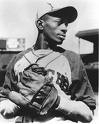
Paige, the incorrigible right-hander from Mobile, Alabama, had established himself as the greatest hurler of his generation, and possibly of all time. Paige was also the game’s supreme showman, and at the end of his career he claimed to have pitched 2,600 games including 300 shutouts and 55 no hitters! (More recent research places his total wins at around 600.) At the start of the 1937 season, in response to the bigoted system that kept Paige and some of the country’s best ballplayers from competing in the majors, he up and quit the Negro Leagues and headed south.
The bloody Dominican dictator Rafael Trujillo had lured the pitcher and other black stars including James “Cool Papa” Bell and Josh Gibson down to the Caribbean, and signed them to lucrative contracts. That spring and summer, Los Dragones, or the “Trujillo All Stars,” as they were called, would barnstorm across the island of Hispaniola, taking on all comers. The team’s name was in keeping with the dictator’s character—he had rechristened Santo Domingo “Ciudad Trujillo” in 1936.
As Washington picked itself up and dusted itself off after the country’s most expensive inaugural ever, I searched myself to understand why my enthusiasm for Obama and his mission had slipped a notch or two. The event had been flawlessly executed, save for the faux pas of Chief Justice Roberts. The media had followed the Obama-administration inspired script that a new American electoral majority for good, many-faced and many-raced, had finally emerged to put several generations of poisoned, partisan, and reactionary politics behind us.
There was also abundant external evidence of the Inauguration’s success. Almost two thirds of those who watched the inaugural ceremonies told pollsters that they felt better, more optimistic, about America afterwards. USA Today and the Gallup Poll found that 46% of those who heard the inaugural address thought it excellent, and another 35% found it good. That’s about an A- as a grade average. Thus far, three million have watched Tuesday’s inaugural address on You Tube.
It didn’t work for me.
Why?
First, I do not think, in contrast to the view of many, that President Obama is a great orator. His voice works no siren sound on me. I don’t find myself getting stirred, or for that matter, find myself comfortably awash in vocal sonorities, the way I do, say, when I listen to recordings of speeches by Franklin Roosevelt or Winston Churchill. Think of the great voices of the Anglo-American theatre like James Earle Jones, John Gielgud, Laurence Olivier, and then think of Obama’s. The comparison is not felicitous. He sings no melody as might Gielgud, opens no pauses in the thought as does Jones, nor does he press himself upon you through simple elocution as did the great Olivier.
As a British citizen I watched the inauguration speech of America's 44th President with a warm but distanced interest. But as someone who was brought up in a non-religious family, and has thrived without a belief in a deity, I listened to Barack Obama's words with fascination, concern and hope. Obama's message to his nation and the greater world was one of inclusion. A broad ranging speech during which America's new leader threw his arms wide around those who believe in America, and even wider around those who perhaps do not.
The matter of 'belief' resonated throughout Obama's address: the belief in God, the belief in America and the belief in Obama himself. Yet in regard of that single word a debate among 'non-believers' has sprung up. A debate as to whether Obama's nod to the millions of Americans who call themselves non-theists, atheists or agnostics should have been wrapped up in such a semantically negative phrase.
To pick apart the significance of the phrase 'non-believers' it pays to look at the word 'atheist': a label which is often analysed by theistic and nontheistic communities alike. A common etymological error connects “a”, from the ancient Greek for “without”, and “theism”, denoting a belief in God. Thus, an a-theist is considered to be someone without a belief in God. The true etymology of the word though is better derived from the Greek root “atheos” meaning merely “godless”. Thus athe(os)ism is closer in kind to a “godless belief system”, rather than “without a belief in god/gods”. This analysis, although tiresome, is worth attending to in regards Obama's inclusive rhetoric, because as a minority non-theists are some of the most pilloried in American society.
George Orwell challenged us to understand what happens directly in front of our noses, and in the case of the big meltdown, it only makes sense to step out the front door, particularly if one lives in New York’s Upper East Side. After all, if any clues to the spiritual, moral, or cultural problems of the time are present, they ought to be near by. Plus, the dog must be walked.
So out the door and down the stoop and West toward Central Park on 71st Street and right into the thick of it – The Great Unwinding of assets and leverage.
Third Avenue is busy, as usual on a weekday afternoon, but it is hard to tell if these men and women are special examples of greed and excess. No wears their portfolio like a jacket, and one can’t know exactly who used to work pulling the fulcrums of leverage at a bank downtown, who blew up and who got away with millions. The captains of paperwork all look the same as they always have, dressed almost to the last like English gentlemen out looking for quail, wearing forest green waxed Barbour coats and thick rust-colored corduroy pants, that sort of thing.
On their heads, typically, ball caps with coded symbols of wealth, the triangular yacht club burgees, or the call sign “ACK,” signifying the Nantucket airport, or maybe a few unbuttoned buttons on the cuff of a custom sports coat. But these days they have all begun to look like Bernie Madoff, and one constantly feels one has spotted the great crook, and not really a quail hunter. For a walker out for a stroll, the collapse plays like a soundtrack in your head, coloring everything. The tinted windows on a $300,000 Maybach idling by a fire hydrant now seem to hide shame instead of glamor. After all, at a time like this, it's hard to guess who in their right mind would really want to be seen in the back of a car like that.
Past Third, and the lovely four-story townhouse where the actor Sean Connery and his neighbor have been suing each other for six years. What to say of a culture which could support two armies of lawyers locked in constant battle over renovations? Possibly it is not a healthy one, or, conversely, was formerly of such robust health that there was time and money to be spent on nonsense like that. Two or three more doors down and there’s the little townhouse from Breakfast at Tiffany’s, a love letter to decadence, but you can’t be too grumpy about that.
“I don’t know. You tell me. In fact, go ahead. Try telling me an American story.'
'”Now?”
“Yeah! Now! What better place then this, sitting here at your favorite table in the Villa Orient café in the heart of Sarajevo?”
“Well, I have been thinking of a story idea.'
“Tell me.'
‘Really? You want to hear this idea?'
“Yes.”
“Well let’s order another bottle of wine first. Okay. Now, let’s see. How’s this for a start? Ahem. If you take the yellow line back into the city—that is to say into DC…'
“Yeah? What happens if I take the yellow line metro into the city?”
“No! I’m telling you the story now. That’s the opening dialogue. This guy is doing the narrating he’s talking to you and telling you his story.”
Last April I received a somewhat stunning email from the Brooklyn Museum. In December, Gloria Steinem—the Gloria Steinem; the original Ms., G.L.O.R.I.A.—would be moderating a panel at Elizabeth Sackler’s Center for Feminist Art. The topic was global sex trafficking. Dr. Sackler had read my novel based on the life of prostitute-turned-post-Impressionist Pan Yuliang. She wanted to include me, in some capacity, in the discussion.
My first reaction was euphoria. For for me, as for millions of women worldwide, Steinem is a hero of uber-rockstar proportions. The idea of speaking with—or even speaking near—her was like being asked to back up the Beatles. Or perhaps a more sober Janice Joplin.
My second reaction was panic: for while it’s true that The Painter from Shanghai spends time in an early 20th-century Chinese brothel, it’s actually a relatively small portion of the storyline–a fact with which I’ve tried (though almost invariably in vain) to combat endless Memoirs of a Geisha comparisons. I’d read up on the sex trade, of course, in books like Gail Hershatter’s Dangerous Pleasures (about Shanghai prostitutes of the last century) and Alexa Albert’s Brothel (about the women of Nevada’s famed Mustang Ranch). I’d followed with rapt horror Nicholas Kristof’s New York Times columns on the global sex trade and its victims—some younger than my own 5-year-old daughter. I even did a story on this subject myself once, on girls in Chiang Rai, Thailand who were desperately fighting prostitution’s pull.
But I’m the first to admit I’m no sex-trade expert. I’m a novelist. And for all the thrill of the invitation, I didn’t really feel qualified for Gloria’s gig. Happily, Dr. Sackler had already come to this conclusion; in her next email she clarified that I would be speaking and reading, not with the panelists, but in a separate event the following day. But, she added, if I attended Saturday’s panel there was a good chance that I could meet my icon in person. “Yesyesyes!” I wrote back; and tattooed it into my calendar: “Sex Trafficking and the New Abolitionists. December 13th.
Eight months later there I was, lined up enthusiastically with scores of other Steinem fans, outside the Brooklyn Museum’s auditorium. The doors opened to a small stampede for good seats. I’m sure that, like me, all of these attendees were very interested in learning about sex trafficking. But I’m equally sure that many (if not most) were primarily there to see Gloria. About five minutes into Steinem’s articulate and self-effacing introduction, however, something interesting happened: I found myself paying less attention the woman than to her words. Quite simply, some of the things she and her fellow panelists Tania Ben-aime, of Equality Now and Rachel Lloyd of Girls Educational and Mentoring Services were relating were, to me, utterly astounding:
–FACT: The United Nations Office on Drugs and Crime describes the trafficking of sex as the world’s fastest-growing criminal enterprise, and it now rivals the drug and the arms trades.
-FACT: There are today more slaves worldwide than there were in the 1800s.
-FACT: The average age of entry into the sex trade in the U.S. is between 11 and 12 years old.
–FACT: You can actually buy such a child’s sexual “services” online, and collect them in a house in New Jersey.
This text, which will appear on 3QD as a four-part post, was begun as a musing on the theme of series and repetitions in modern and contemporary art inspired by a challenge issued by an art historian colleague of mine. This post includes the intro and a consideration of the first of three artists who dealt with this theme.
Repetition and Remains: Three Centuries of Art’s Multiform and Manifold re-
“Oneness is killed either by repetition or by fragmentation.”
—Nicolas Calas [1]
“At all levels of language, the essence of poetic artifice consists in recurrent returns.”
—Roman Jakobson [2]
Introduction: Reintroduction?
In dealing with serial work in the visual arts, it is nearly impossible to know where to start: while some series have a clear linear progression, be it narrative or strictly formal, others do not, and still others seem to vacillate depending upon how one chooses to delimit any given group of works. I would therefore like to take my cue from Ferdinand de Saussure’s arbitrarity principle and, shifting it from the linguistic realm to the visual realm, begin with three (ostensibly unrelated) works I’m particularly intrigued by. My interest in them stems from the questions each work raises—questions that deal with the very nature of seriality and repetition as it appeared and has proliferated in the visual arts from the late nineteenth century up to the present day.
Simply put, a series may be defined as an evolving sequence consisting of a number of parts. Such a structure invariably implies a progression, movement or narrative—although such ideas seem much stronger in representational work, and decline as one moves through the increasing abstraction of the twentieth century and beyond. Even this most simple definition introduces several problematics: first, quantity—are just two works enough to constitute a series? Or, instead of a pair, is a trio the minimum requirement? And just how does one define a single work? What about diptychs, triptychs, and poliptychs? What about modular works? And if, “synecdochally,” a part reflects the whole, just how is such a relationship best dissected for meaning as it applies to both formal and conceptual content (if the two can even be cleaved from one another)?
Welcome to my space. Come in, take off your boots, and make yourself at home: especially if you haven't got one any more. Warm yourself by my fire. It's going to be a long, cold winter. You know it and I know it. It's 7 degrees in the South Bronx this morning, as I write, but for about a quarter of an hour the rising sun comes romping westward down the street into my window, casting everything in gold, shining out the trash-strewn streets and sparse-shelved bodegas and vacant lots and abandoned baby carriages. For a moment.
Wall Street sure laid us one ginormous goose-egg. (I guess now we know what the inverse of that image on the Right looks like.) But tomorrow it'll all crack wide open. Hope you like your Humpty-Dumptys sunny-side up. I know I do. I used to take them scrambled, but now I know on which side my bread is buttered.
You're probably scrambling, hunting down that endangered species known as a job, scientific name JobIS bonUS. I feel your pain. Someone recently wrote that the Internet, as advanced as it seems, is still in the hunter-gatherer stage. Well, I've been a-huntin', and a-gatherin', and I've got laid in these weeds all kinds of Easter eggs for you to enjoy. It's better than a game of Boggle.
In November of 1970, a thirteen-year-old girl arrived, accompanied by her mother, at a California family aid office. The girl, who is known publicly by the name “Genie,” walked hunched with her hands raised in front of her like paws. According to Susan Curtiss, author of Genie: a Psycholinguistic Study of a Modern-Day Wild Child, she weighed only 59 pounds and spat incessantly. In addition to her decrepit physical appearance and bizarre social habits, Genie seemed incapable of producing normal language – only ever uttering a few isolated words.
For the ten years leading up to that day in November, Genie had been confined to a single room – strapped, by day, to a “potty chair,” and, by night, to the inside of a sleeping bag. During that time, Genie had very limited human contact, and – of particular interest to the psychologists who studied her for the eight years to follow – almost no exposure to language. This fact – the occasion of Genie’s tragic abuse – gave scientists the opportunity investigate a question that could never have been probed through direct experimentation: does one lose the ability to acquire a first language?
Cases like Genie’s suggest that the answer is yes. While children who were deprived of linguistic stimuli up until age six have gone on to possess normal language, others, like Genie, whose deprivation continued past this point, have not had the same success. Genie did learn the meanings of many words, but she was never able to piece them together into sentences with normal syntax. Instead, she formed statements like “Applesauce buy store” and “I like elephant eat peanut.” Although controversies remain regarding Genie’s case (for instance, allegations of inconsistency in the documentation of Genie’s progress), the apparent linguistic limitations of so-called “feral children” offer strong evidence for a “critical period” after which it is impossible to acquire normal language.
The critical period hypothesis, which refers exclusively to first language acquisition, in turn suggests that children possess certain innate faculties which are crucial for (and, perhaps, specific to) the acquisition of language. This notion, which was brought to mainstream attention by Steven Pinker in his 1994 bestseller, The Language Instinct, is accepted in some form by most psycholinguists. However, a related question – one with even greater practical relevance – remains a point of controversy: does one lose the ability to acquire a second language?
“I first began to think about this after I saw the video of Robert Dziekanski getting killed in Vancouver… remember? He was the Polish guy who got Tasered by the police because he was acting all ‘agitated’ after hours and hours of being stuck in the international arrivals area where no one could tell him what to do.
“He was moving to Canada to be with his mother… he got on the plane, landed, but something went wrong. He got stuck in the no-man’s land between luggage and immigration, or immigration and luggage… you know how it goes. He did not speak enough English to get himself sorted out, so he was left to his own devices, he got frustrated, and eventually he got killed.”
“What did they shock him for?”
“Oh, who knows… they probably didn’t know any better… you have to understand, Canadian police… well, let’s just say that the best and brightest probably aren’t the ones patrolling airports at 1:30 in the morning. Someone gave them Tasers and they use them like toys. There were four of them, one of him, and rather than figuring out a way to talk to him or to put him down another way, they got their Tasers out and zapped the poor guy instead. I think they told him to put his hands down on a table, but he put his hands up instead. He didn’t speak a word of English, so… you know…
“I remember watching the news the next morning… the police were giving their own version of the story…. ‘he was agitated… public safety… officers acted as they were trained… will review…’ you know how they talk. I don’t think that this is different in any country—I remember watching the Brits try to explain themselves after they shot that poor Brazilian on the tube. Cops always say the same things after they screw up…
On somehow failing to rent my apartment for Inauguration.
Little boys crave taking sides for battles and banding together into little gangs, yet whenever I begged my father to tell me which side we wanted to win in football games on television (about as far as my notion of being a warrior extended then), he would shrug his shoulders. “I just want to see a good game,” he’d announce.
He served as a black-robed judge for a quarter century, and seemed to think that professional ethics bound him to maintain a strict judicial neutrality even on the Minnesota Vikings versus the Chicago Bears. “No, dad, come on! Who should win?” Who do we want to inspire us? Who should we give ourselves to?
“As long as it’s a good game, that’s all I want.” He’d eat some peanuts.
I hated that he left my brother and I so unmoored about our loyalties. We could have cheered for the local team and found solidarity with everyone else, or picked a division rival and defined ourselves as iconoclasts. We sat out.
Because I never had practice either immersing myself inside a crowd or fighting upstream against a crowd, I never understood crowd dynamics as a child, especially what makes people band together and willingly commit to someone or something. What inspires them? Why do they cheer? Willing commitment became an oasis for me, but like most oases it had qualities of a mirage. After undergoing such torture with my father, I never could judge if people were genuinely passionate about “their” team or just posing.
And this shouldn’t be dismissed as a trivial case. Trivial cases are practice for real life.
A quiet, global community of researchers want to change how psychologists think about the mind and culture — or to put it a bit more precisely, they want to call attention to some almost forgotten ones. They publish their research in Culture & Psychology, whose founding editor is Jaan Valsiner. Professor Valsiner was kind enough to furnish us an interview via email. The text has been edited for style.
Jonathan Pfeiffer, 3quarksdaily: How does cultural developmental psychology help us to understand changes in human life, either from moment to moment or over the course of one's lifetime?
Jaan Valsiner: The idea of cultural developmental psychology is best captured in this photo. What do you see in it? Of course it is very ordinary; this is a toy gadget for children (but note the inscriptions we call “graffiti” on the sideboards — an arena for public art?). In it you can see the world of adults, who invent such objects, build them, and take their children to the neighborhood park “to play” and deeply believe they are doing their best for their children, as the latter now can learn the “right ways” of behaving. But, of course, what they create in actuality are opportunities to act in new ways that are more challenging than the “right ways.” You can observe that when children play with this kind of slide and do many other things with many other toys, thus experimenting with the “contrarian movement.” They climb up the part of the structure where they are “supposed” to slide down. Any object of furniture is a culturally designed object that suggests to its users — children or adults alike — some socially preferred courses of action. Yet by that suggestion, these objects call forth counter-action to the opposite, resistance to suggestions, and in one word, creativity. If there were no people — children or adults — who would constructively “disobey” the socially suggested ways of being, then no new technologies or social changes could be possible.
Cultural developmental psychology is a basic science of human development from birth to death, covering the whole life course, that investigates the construction, use, and abandonment of the whole range of cultural tools in the dynamic life course of human beings: language, physical objects of everyday life, symbolic objects in public and private settings, and social roles people assume (mother, father, policeman, tax accountant, beggar, president, criminal, etc.).
1. Casino Capitalism — making money from money with other people's money
What financial toilet is our government trying to flush us out of? Here's the best explanation I've read of the cause of our trouble — toxic mortgage-backed derivatives — by independent trader Jeffrey Carter:
“The collateralized debt obligation that is talked about is like you selling your car to Joe, but not getting any money today for it. Joe is going to pay you next year. As soon as Joe gets your car, he rents it to Jim. Jim doesn’t pay him, but offers to pay him monthly for the use of the car. Jim sells the car to a chop shop. The chop shop pays Jim a commission, and sells pieces of the car at a profit to Tim, Tom, Dick, and Harry. Harry buys Dick’s pieces, and puts together a new car — but has an accident. How is Joe going to collect? Who really owns the car? Of course it’s more complicated than that, but you get the idea. The government is going to bail out everyone, or pick a person in the chain.”
Sounds like quite the merry malodorous mess, doesn't it? In fact, it's so stinky that Goldman Sachs, while they were selling these derivatives, were also shorting them — i.e. betting their own money that the poopscoops they were selling to trusting pension funds were bound to lose their value.
And they call Bernie Madoff a crook. “Casino capitalists” is the kindest, gentlest name for what Wall Street people have become. They don't produce anything, they don't back entrepreneurs, they don't start factories, they don't create useful products, they don't build stuff, they're not actual dinkum kosher capitalists. They just use other people's money to make more money out of money. In other words, they borrow-and-bet. The bottom-feeders of capitalism. Parasites. People who have decided that the best use of their entire lives is to make money off money with borrowed money.
And boy, have they coined it. The financial companies' share of corporate profits in 2007 was 40%. Think of that — 40% of profits came not from doing anything except play around with money. And now we know that what they bet on — and with — is mostly crap. How much ca-ca? In 2006, Wall Street earned $62 billion in bonuses. To earn that much, they parlayed derivatives or debt or crap all over the world to a degree that people say now starts at $85 trillion. The Iraq War will cost us around $1 trillion, so we're talking 85 Iraq Wars of debt here. (The derivatives market itself is supposed to be $500 trillion.) Poor Barack Obama: he thinks he's going to save us from $85 trillion of crap by printing an extra one trillion.
By now, anyone who has followed the Israeli massacre of Palestinians will be accustomed to the absurd reality that the life of a Palestinian is worth about 100th to 1000th the life of an Israeli, depending on the news outfit. “Respectable” media outlets like the Guardian and the BBC will give every one hundred dead Palestinians the same space they give to one dead Israeli, whereas crappy propaganda outfits like the NY Post, NY Times, the New Yorker, CNN and Fox News, will give every 1,000 Palestinians the same space they give one Israeli. This has become normal.
But today, this racist arithmetic was taken to absurd levels by the folks at the Associated Press who decided that it also applies to demonstrators in New York.
I was part of a demonstration on Sunday that had thousands and thousands of people show up and protest the Israeli mass-murder of Palestinians.
I was at the front of the march when we turned on 58th street. I stopped on the sidewalk to chat with police and to examine the crowd. It took the back of the demo some 20-30 minutes to get to the corner of 58th after the front had reached it.
I spoke to the chief policeman at the demo and asked him for a crowd estimate. He said 20,000 was a reasonable estimate, though he would not confirm that this would be the police’s final and official estimate. Since he is the one who will be issuing the crowd estimate, it’s safe to assume it would’ve definitely exceeded 15,000. It certainly could not go as low, as… I don’t know… 150.
So imagine my surprise as I come home, turn on my computer, and find this article by Karen Matthews, for the AP, claiming that there were 150 people in the demonstration. I’ve managed to get pictures and videos that show incontrovertibly how utterly nonsensical this article is.
This CNN I-Report video was made by someone who heard the crowds chanting from 50 floors up (which should give you an indication of the numbers) and took out their camera:
Note that in this footage the camera cannot show both the beginning and the end of the demonstration. Even from this height, the demo was too long to be caught in one frame. Also note that the crowd that appears around the 00:20 mark is different from the crowd that appears at the 1:10 mark, since the first crowd had two giant Palestinian flags spread on top of it while the second group doesn’t. These are two ends of the demonstration, not the same crowd pictured again. Once you take that into account, you will realize that this truly was a huge demonstration.
But what is even more ridiculous about this is how a pro-Israel demonstration on the same day managed to get not only far more (and far more favorable) coverage on the media, but also a precise (and probably exaggerated) count of the demonstrators. By all accounts, the pro-Palestine demonstration dwarfed the pro-Israel one, as testified by people who saw both, people who went to the pro-Israel demo and then saw the video above, and people who saw videos of both.
I have been thinking recently about lying. I don't mean I have been thinking of telling a lie. Many of the lies I tell do not need to be thought about very much. “I am fine.” “Not at all. I think that color is quite flattering.” “Let me pay. My university will reimburse me.” “Yes, Dr. Phillips, I floss every day.” I mean I have been thinking about what is a lie and is it ever okay to tell one and why, if we think lying is wrong, so many of us are liars.
This thinking is not occasioned by some personal crisis of character, or being faced with a difficult decision to tell the truth. I am a philosopher and have just finished teaching a graduate seminar called “The Truth about Lying.” That seemed a cool title last year when I had to propose one for the catalog. It seems to me now, well not quite a lie, but more like false advertising. If I really knew the truth about this difficult subject I would, as they say, be rich.
I wanted to think about this topic because it seemed to me to have a number of features not shared by other moral concepts– such as murder, cruelty, theft, or promise-breaking. First,while almost all of us would refrain from these acts, most of us lie on a daily basis. (As do doctors– at least if you think prescribing placebos is lying. In a recent survey 45-58% , depending on how the question was phrased, prescribe them on a regular basis. If it's any consolation, the sugar pill seems to have been replaced by vitamins.) Second, if any of us were to act cruelly when this was pointed out to us we would either deny that was an appropriate description of our action or admit we were cruel and, at least, feel guilt or remorse. Whereas many of us are prepared to defend our lies–indeed, to glory in them sometimes (“Boy, did I have you going! Gotcha.”) Third, there seem to be contexts in which not only does the fact that something is a lie not count in any way against what we are doing, but seems to count in favor–poker, spying, lying contests, getting someone to a surprise party, lying to the murderer at the door about where his victim is hiding.
There seem to be very large differences between people as to what they regard as a lie. A , who makes a mistake about the day of the week, says, ” Damn. I lied. It's Tuesday not Wednesday.” But many people distinguish between being wrong and lying. B, who believes that today is Tuesday ( it is actually Wednesday) says to C, “Today is Wednesday”. Some people think that B lied; others that he tried to lie but failed. Some people think that gross exaggeration– “I haven't eaten for over a year”– is a lie; others do not. Now most ethical concepts have borderline cases– is not returning the lost wallet theft? is failing to rescue the drowning child murder?– but with lying it sometimes seems that the borderline is the whole territory.
Another interesting feature is that some people make a sharp moral distinction between lying and other ways of misleading by what one says. If you ask me what happened to your mail, and I say “Someone stole it from your box”without mentioning that the someone was me, some people will say “Well, at least you didn't lie” as if that somehow makes what I did less serious. The medieval Catholic Church elevated the idea of equivocation– saying something true but meaning it one way rather than another, as in the Saint found who reported to would-be persecutors “That Saint is not far from here,”– to Clintonian heights. Many people—myself included—see a difference between lying to someone and failing to tell them something that they have an interest in being told.
[Below is my translation of Georgics, the first section of Antonio Gamoneda's book Libro del Frío (Book of Cold.) Gamoneda, born May 30th 1931, was winner of the Cervantes Prize in 2006 and it is difficult to overstate how largely he glowers over the world of Spanish and Latin American poetry, though he is little known in the U.S. He was born in Oviedo but by the time he was three lived in León, and has lived there ever since. The town and its landscape figure greatly in his poetry, both aesthetically and as it was there where he saw Franco's repression first hand, during the Spanish Civil war.
I will follow next month with another section from the book and a short essay on translating Gamoneda.
Please bear in mind that individual poems begin and end between ———–. They are two, sometimes one sentence poems that each receive their own page. For space and blogging comfort, I have smushed them.]
Alan Page
Georgics
———–
It is cold by the springs. I climbed until my heart was tired.
There is black grass on the hillside and purplish lilies in the shade, but ¿what am I doing before the abyss?
Under the soundless eagles, immensity lacks meaning.
———-
Between the dung and lightning bolt, I hear the shepherd’s cry.
There is still light on the sparrowhawk’s wings as I climb down to the damp pyres.
I have heard the snow’s bell, I have seen purity’s fungus, I have created oblivion.
———–
Faced with the vineyards scalded by winter, I think on fear and light (a single substance in my eyes,)
I think about the rain and the distances cut through by wrath.
Grandpa was stiff and stark as the handle of an old world hoe but grandmother must have had her dreams …………………….. At a window in a stuffed chair she sat fingering a rosary gazing down Roessler murmuring Hail Mary’s through the pane bead by bead …………………….. At other times in that chair she stroked her long greyblack hair …………………….. with a stiff brush then rolled and pinned it into a persistent bun …………………….. as sun streamed through the top sash through laddered blinds …………………….. and stroked the red rug with light well into the room …………………….. A clock ticked somewhere a door slammed. …………………….. She boiled chicken served tea with milk and called meJeemy in sentences loaded and laced with Slovak so my green ears tasted the sounds of the foothills of the high Tatras of the Carpathians as if they were dining on poems in Matiasovceor Staraves. …………………….. In her kitchen a crumb-haloed babka loaf next to a knife on a plate sat upon a brown enamel table laid out like a detail in a peasant tableau painted by a Slovak Van Gogh …………………….. She placed her plump hand on mine my small palm lying still a five-spoked hummock on a mesa …………………….. ~ ~ ~ …………………….. In the plush back seat of Matkovsky’s two-ton Chrysler returning from mass on wide whitewalls rolling in the time before seatbelts in the time before TV in the days before e-Babel in the days before stillness disappeared she leaned forward in the seat her ample cantilievered bosom secured by straps and clips buried beneath a modest sequined bodice one hand gripping the loop over the door peering through another window which opened upon scenes passing of another of her dreams which (perhaps) she lived in real time in her new world having long shaken the dust of childhood and Slovakia from her high-topped stout-heeled …………………….. black Sunday shoes ……………………..
To modern Western viewers — and even to a lot of modern Eastern viewers — the films of Yasujirō Ozu, with their rigorously mannered appearance and undeniably narrow topical range, feel neither accessible nor relevant. What a shame that is. The Ozu enthusiast’s typical response to dubious uninitiated friends is that, behind the aesthetic formalism, deliberately restrained acting and unshifting focus on the midcentury Japanese household lies a great artistic bounty. But that sounds wrong, somehow; these qualities don’t build a wall meant to keep out the unworthy viewer, nor do they simply emerge as the by-products of a peculiar authorial process. They’re the very architecture of Ozu’s style, the struts supporting, the spaces accommodating and the entryways leading us into what’s so stunningly effective about his films.
Ozu was a craftsman. The analogy is hardly unique to me — best of luck finding a film writer who hasn’t made it — but it clicks so well that employing it is irresistible. From the late 1920s to the early 1960s, Ozu directed over fifty films, refining (and occasionally expanding) his cinematic technique with each one, using similar elements every time but honing the skill with which he united them. Save for a few very early projects, all of his movies are, broadly speaking, thematically and compositionally alike. In his exceptional book on the filmmaker’s life and work, Japanese film scholar Donald Richie observes that Ozu “had but one major subject, the Japanese family, and but one major theme, its dissolution,” that “the conventionality of the events in the Ozu film is even by Japanese standards extreme” and that these films “are shot from an almost invariable angle, that of a person sitting on the tatami matting of the Japanese room.”
That a stationary camera, mundane subject matter and the same elements revisited over and over (Ozu even recycled character names from script to script) comes as a turn-off to filmgoers today is perhaps unsurprising. But just one viewing of an Ozu film — practically any Ozu film — should suffice to make a solid case of why these aren’t necessarily negatives. Ozu’s priority was not showing his audience the world, nor showing them experiences alien to their own, nor forcing them to observe from unconventional vantage points. He was concerned with one element above all else, an element compared to which all the others were merely unwanted opportunities for distraction.
That element is character, and at the center of 1958’s Equinox Flower, the onetime black-and-white stalwart’s debut in glorious Agfacolor, stands one of Ozu’s most fascinating. Portrayed by former matinee heartthrob Shin Saburi, the middle-aged Wataru Hirayama starts the film looking like just another of Ozu’s upper-middle-class patriarchs. But he’s quickly humanized at the wedding of a friend’s daughter, when he’s called upon to deliver an impromptu speech. He expresses admiration for the bride and groom, a couple who managed to come together without their parents’ hands arranging it, and half-jokingly nods toward his envy, his own marriage having been of the “unromantic” arranged variety. When a colleague later visits Hirayama’s office and confides his worry about his uncommunicative daughter who’s moved in with her boyfriend, Hirayama readily agrees to help out by visiting the bar at which she works and having a talk with her.
Nothing kills the enjoyment of music for some people faster than trying to analyze it.But I’m obsessed with solving the mystery of Arthur Alexander.His body of work is small. His songs are musically and lyrically simple, even simplistic. Almost nobody but the most dedicated music lovers remember his name today. Yet he was the only songwriter to win pop music’s Triple Crown:His songs have been covered by the Beatles, the Rolling Stones, and Bob Dylan, arguably the three most respected songwriting acts in rock and roll history. Dusty Springfield, Ry Cooder, Roger McGuinn, and dozens of others1sang them too.
I’ve been wondering about these tunes for 45 years now, since I was ten years old.Maybe I’m getting closer to understanding them, But I’m not there yet. After all, his chord progressions were basic.His lyrics seem banal on paper:“Every day I have to cry some/wipe the water from my eyes some.”“Oh my name is Johnny Heartbreak …”“Me and Frank were the best of friends …”But by at least one objective measure – the artists who covered him – he was the greatest rock songwriter who ever lived. Subjectively, his best songs are impossible for me to resist as a listener and indescribably rewarding to sing.
So who the hell was this guy, and what made him so good?
He had a brush with R&B stardom as a singer, but really made his name as a songwriter in the 60’s. Yet even after the Beatles and Stones covered him he had trouble collecting royalties.He lived out the next 25 years as a bus driver, interrupted only by one small hit in the 70’s. Then he then enjoyed a brief comeback in 19932 before dying suddenly.
I was first introduced to Alexander, like many of my generation, by the Beatles’ cover of “Anna.” That track is a great reminder that, before he went on his odyssey from musician to activist to martyr to Apple icon, John Lennon was one of the great rock and roll singers.Alexander’s songs lean to melodrama, and Lennon milks this one for all it’s got.Alexander’s simple vocal patterns leave singers a lot of room to fill the space, and Lennon's able to pull out tricks Alexander hinted at in his original recording, like the Buddy Holly-ish pseudo-yodels that punctuate the bridge (“oh-oh-oh-oh …”)
That’s one of Arthur Alexander’s secrets: His lean song structures make them a pleasure to sing. And his recordings provide suggestions rather than instructions.Where other writers fill every measure with musical and lyrical acrobatics, Alexander’s are spare frames singers can hang their hearts on.
Emotionally, each song has a story arc.If you wrote songs using the Syd Field screenwriting method they’d turn out a lot like Alexander’s.They’re three-minute mini-operas full of conflict and resolution.Take “You Better Move On,” which the Rolling Stones covered in 1964:A poor boy’s talking to his wealthier rival, and he humbly admits he can never give his love the good things he wants her to have.But then he turns on his competitor … “I’ll never let her go,” he says, “I love so.”Then the air fills with tension.“I think you better go now,” he says quietly, “I’m getting mighty mad.”Soft-spokenness can be more menacing than a raised voice, and Arthur Alexander knew that.
Sound corny?Lame?Yeah, maybe.But listen to this cover by Mr. Ironic Distance himself, Randy Newman (before Newman launches into his own “It’s Money That Matters” ):
There’s no distancing in Newman’s performance or Mark Knopfler's accompaniment, no sense of anything but the drama in each moment.That’s the best thing about Arthur Alexander’s songs:They’re irony-proof.
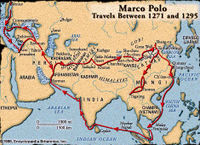
Returning home from China in 1292 CE, Marco Polo arrives on the Coromandel Coast of India in a typical merchant ship with over sixty cabins and up to 300 crewmen. He enters the kingdom of the Tamil Pandyas near modern day Tanjore, where, according to custom, ‘the king and his barons and everyone else all sit on the earth.’ He asks the king why they ‘do not seat themselves more honorably.’ The king replies, ‘To sit on the earth is honorable enough, because we were made from the earth and to the earth we must return.’ Marco Polo documented this episode in his famous book, The Travels, along with a rich social portrait of India that still resonates with us today:
The climate is so hot that all men and women wear nothing but a loincloth, including the king—except his is studded with rubies, sapphires, emeralds and other gems. Merchants and traders abound, the king takes pride in not holding himself above the law of the land, and people travel the highways safely with their valuables in the cool of the night. Marco Polo calls this ‘the richest and most splendid province in the world,’ one that, together with Ceylon, produces ‘most of the pearls and gems that are to be found in the world.’
The sole local grain produced here is rice. People use only their right hand for eating, saving the left for sundry ‘unclean’ tasks. Most do not consume any alcohol, and drink fluids ‘out of flasks, each from his own; for no one would drink out of another’s flask.’ Nor do they set the flask to their lips, preferring to ‘hold it above and pour the fluid into their mouths.’ They are addicted to chewing a leaf called tambur, sometimes mixing it with ‘camphor and other spices and lime’ and go about spitting freely, using it also to express serious offense by targeting the spittle at another’s face, which can sometimes provoke violent clan fights.
They ‘pay more attention to augury than any other people in the world and are skilled in distinguishing good omens from bad.’ They rely on the counsel of astrologers and have enchanters called Brahmans, who are ‘expert in incantations against all sorts of beasts and birds.’ For instance, they protect the oyster divers ‘against predatory fish by means of incantations’ and for this service they receive one in twenty pearls. The people ‘worship the ox,’ do not eat beef (except for a group with low social status), and daub their houses with cow-dung. In battle they use lance and shield and, according to Marco, are ‘not men of any valor.’ They say that ‘a man who goes to sea must be a man in despair.’ Marco draws attention to the fact that they ‘do not regard any form of sexual indulgence as a sin.’
Their temple monasteries have both male and female deities, prone to being cross with each other. And since estranged deities spell nothing but trouble in the human realm, bevies of spinsters gather there several times each month with ‘tasty dishes of meat and other food’ and ‘sing and dance and afford the merriest sport in the world,’ leaping and tumbling and raising their legs to their necks and pirouetting to delight the deities. After the ‘spirit of the idols has eaten the substance of the food,’ they ‘eat together with great mirth and jollity.’ Pleasantly disposed by the evening entertainment, the gods and goddesses descend from the temple walls at night and ‘consort’ with each other—or so the priest announces the next morning—bringing great joy and relief to all. ‘The flesh of these maidens,’ adds Messer Marco, ‘is so hard that no one could grasp or pinch them in any place. … their breasts do not hang down, but remain upstanding and erect.’ For a penny, however, ‘they will allow a man to pinch [their bodies] as hard as he can.’