by Meghan Falvey and Asad Raza
In 1981, Irish republican prisoners, led by Bobby Sands, conducted a hunger strike at HM Maze prison near Belfast. Steve McQueen's Hunger is an account of that strike. It opened in New York City on Friday, and we recommend you see the film before reading this.
Meghan: The restraint of your summary suits the movie, I think. I come to any movie or story about sectarian violence in Northern Ireland expecting that I'm going to be attacked with sentiment, with a light scrim of history thrown over a pretty standard David vs Goliath root-for-the-underdog set up. It bothers me that that stuff can get into my Irish-American lizard brain– I cried watching Ken Loach's The Wind That Shakes the Barley, and it was only partly out of frustration that I was susceptible to romantic nationalism. Also I expected another exercise in telling stories about recent history that are meant as metaphors for the American invasions of Afghanistan and Iraq and the War On Terror's illegal captures and torture. At the beginning of Hunger I felt like I braced for a similar assualt, and then it never came– I almost relaxed as it went on! The two Thatcher voiceovers were the closest thing to melodrama– what a ham she was! But that's enough, maybe, about what Hunger isn't. I watched it as a– well, what did you make of it?
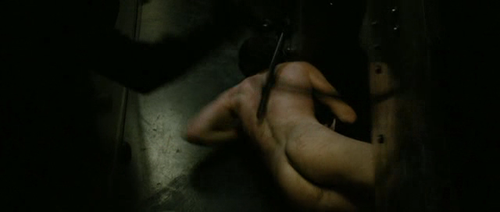
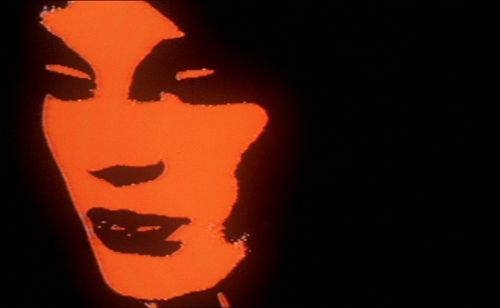
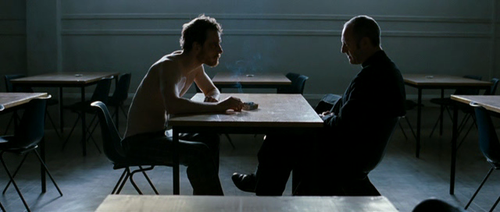
Asad: The first thing that occurs to me to say to readers is: please see this beautiful, terrible film. I watch a lot of movies, and this one, from the first pounding sequence, felt fresh. More than fresh: new. There's lot to be said for letting a talented visual artist try to make a movie with total control–McQueen's technical confidence and maturity are so… there. There's a moment in the film where the Bobby Sands character breathes and as he does, there are three very brief dissolves to birds flying, and then back to Sands. He's near death. That brilliant use of an age-old technique–the dissolve–was so evocative and so sad that I cried. Even as a structure, the movie is very bold–it's a triptych in which the parts are almost totally distinct. (We have to talk about that middle “panel” in more detail below.) As for the politics of the film, which you bring up, I think they are my favorite kind: the politics of the body and not the body politic. Know what I mean?