By Evert Cilliers aka Adam Ash
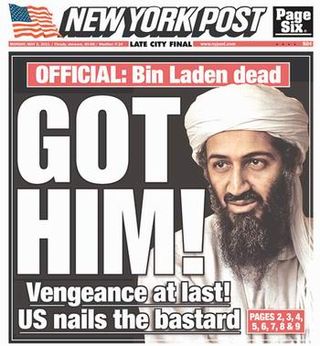
There are events so shocking, untoward or thrilling, they are bigger than language. Beyond words.
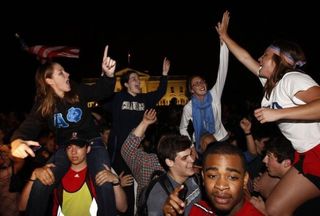
In my lifetime, such events have included the assassinations of JFK, MLK, and Bobby Kennedy, as well as 9/11 and the killing of Osama bin Laden. Being a South African-American, I'd add the 1976 Soweto Uprising and Mandela's release from jail.
What sets these events apart from all others? They scorch the collective cerebellum. They rip away the veil we construct between us and reality to such a degree that, for at least a minute, and sometimes for days, we look straight into the heart of the raw what-is. The realness of the Real upends our world and blows our minds. We find ourselves staring into an approximation of Kant's Ding an sich. Language becomes inadequate. Eloquence cannot meet the moment. The event is too original for any rhetoric to be appropriate. As Adorno famously observed about the greatest crime in history, “Poetry isn't possible after the Holocaust.”
Listen to a mother talking about what happened when she and her husband heard the news that Osama bin Laden was dead. Maureen and Alexander Santora lost their firefighter son on 9/11, and this is from an interview on May 5th at Ground Zero. Mrs. Santora is talking.
“Well, Al was out watching TV and I was on the computer and he yelled out, come out right away, and I came out to the TV and on the bottom was, you know, Osama bin Laden is dead. And then they kept, you know, delaying the President coming out to speak. And we thought initially the President would say, we thought it was him, but it was a mistake. And when he came out and he said he's actually dead, we just sat there for 20 minutes and didn't move. We were just motionless. And then we were just filled with joy. We just were filled with joy. We were just elated at the realization that this had actually happened.”
Zapped by reality for 20 minutes. As if there were too much reality to absorb. And then filled with a wordless joy.
But that's not where it ends. After the merciless intrusion of the real, something happens that robs us of that moment, that wrenches us away from the unmediated experience of the raw what-is, the actual Actual.
That something is language. Inevitably, a consensus language emerges. An official narrative spins the event out of our original grasp — or nongrasp — into the pastiche of consolation or celebration.
It's like a couple ready to claw each other's clothes off, but trapped in a wedding that goes on forever. The wedding is beautiful, but it allows no room for the raw, wet desire that drew them together in the first place.
Read more »



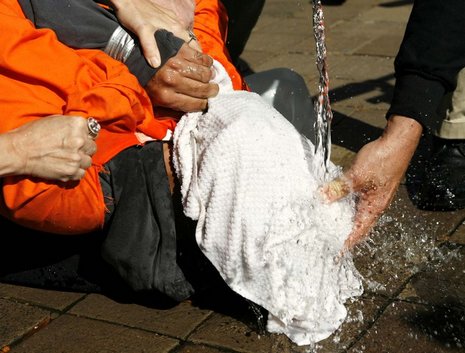 In the wake of Osama bin Laden’s killing on May 2, veterans of the Bush Administration have hit the airwaves in an effort to reserve for their policies a portion of the credit for the success of SEAL Team Six’s covert lethal mission in Abbottabad. Chief among the many Bush policies they credit with enabling President Obama’s team to kill bin Laden are those permitting the torture and “rendition” of foreign combatants. According to