By Aditya Dev Sood
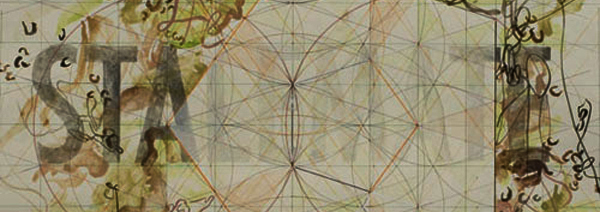
I am sitting inside a white cube, watching things familiar but different. I know this music, but there are no lyrics, nothing to anchor the sound flowing round and through me. These soldiers, their rhythms, they seem to be preparing for an event I was once at. Perhaps India's Republic Day, which I remember attending with my kid brother when he was about six, both of us sitting in grass in front of the VIP enclosure with passes that Captain Kumar had arranged for us while he was serving as ADC to the President. Perhaps the Beating of the Retreat, which is held in front of the old Viceroy's Palace, now the Rashtrapati Bhavan, and which ends with a spectacular drum detail, no two drummers in the same uniform or from the same regiment, North and South Block reverberating together, silhouetted by the camel brigade, whose mounted guards point submachine guns into the air as the flares come sailing down to close the ceremony. It is, of course, another country, another time, and these memories have been triggered by a haunting new video work by Shahzia Sikandar entitled Bending the Barrel (no still available).
There is something uncanny about the angle and depth of Sikandar's camera. The marching band is moving past without making much progress, as if depth had been flattened for framing the scene into a Mughal miniature painting. The music emanates from their instruments but the moment is intercut with other scenes — we are there but no longer there. Before there can be boredom there is a new anomie, introduced by Krugeresque text fragments that overlay the image plane, not with slogans, but with the impersonal and passively-voiced militarese that cannot but be recognized as the public pronouncements of the Army's leadership. This is an acute, biting piece, crafted without polemic, so much more powerful for being all quotation, all documentation, all juxtaposition.
The conductor's back is to me, his musicians stare at their sheets of music. They are seated on an elevated bandstand whose steps were coated last night in chuna, lime, to shine back in the sun a brilliant, almost blinding white, outshining the musician's spats and their neelam-washed white tunics. Framed by Sikandar, the musicians at first appear anonymous, ordered, regimented. But now and again she swoops in. At first this causes me to worry that some amateurism had caused a camera shudder. But she is neither zooming nor panning, but shifting frame, capturing in perfect detail a particular Army bandsman staring directly back at the recording lens, a new composition, a new picture within the picture. This is the delirious pleasure of experiencing cinema through the eyes of a miniaturist, who like others of her craft, can see, and can desire to see the whole as well the individual parts of creation with the same detail, the same interest. Sikandar's way of seeing is elucidated by her film-making, and newly educated, I want more of this vertigo.