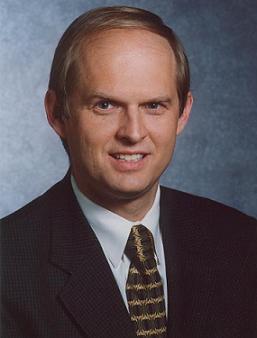
Robin Hanson is a professor of economics at George Mason University, research associate at Oxford’s Future of Humanity Institute and chief scientist at Consensus Point. He’s also the thinker behind Overcoming Bias, a popular blog about issues of honesty, signaling, disagreement, forecasting and the far future, around which a large rationality-centric community has developed on the internet. Colin Marshall originally conducted this conversation on the public radio show and podcast The Marketplace of Ideas. [MP3] [iTunes link]
 If we are both honest truthseekers, we should not, over the course of this discussion, disagree. Is that correct?
It's more than this discussion. It would be any discussion between any two people who are honest truthseekers on any matter of fact, and it wouldn't have to be by the end of the discussion. It would be at any point in time. I should be able to pick a topic now and guess your next opinion on it. My guess of your next opinion should be the opinion I'm stating to you right now. If I say, “I think this interview will last an hour,” my best guess of what you'll say for the interview lasting should be an hour.
This is going to sound hard to get the mind around for somebody not familiar with what you've written. They'll say, “But people disagree all the time. Humanity is here, essentially, to disagree with one another.” How do you quickly get across to someone like that why there shouldn't theoretically be disagreement?
The whole reason this is interesting is that you have a theory that differs from behavior. It's a normative theory; it says what you should do. It doesn't say what you do do, but it gives you some idea of how we're going wrong. The key idea is that we should be respecting each other's opinions. That is, I don't know how you came to your opinion, I don't know what evidence it's based on, I don't know what reasoning you went through or analysis. I'm sure there's lots of noise and errors in the whole process, but nevertheless I think you were trying to estimate the truth, and that's the key point. When you tell me your opinion, I take that very seriously as a summary of all the things you know and think and have analyzed up to this point on that topic.
What gets in the way of the reality matching the theory? I could probably come out stating an opinion of mine as fact, I could be overstating the probability of some guess I'm making. That's one way this could go off the rails. Why else?
The first thing to notice is that theory and reality do match up, on lots of of ordinary topics we don't care about. It's when our pride or enthusiasm gets hyped up that we start to disagree. If you and I were walking down the street and I said, “I think there's a tree around the corner,” you probably wouldn't disagree with me there. If you said, “No there isn't,” I would say, “Oh, okay.” When our pride isn't on the line or we're working together on a project and we need to achieve something — maybe our job is at stake — we're much more likely to be reasonable. But when we talk about politics or religion or whatever we talk about on these radio shows, that's when we're much more likely to not be reasonable to find it more enjoyable to speak to listen.
Politics, religion — these are topics where people can hold opinions, but when they hold them, they don't actually act on them much of the time, is that correct?
That's true, although it also applies to topics that you do act on but where your pride is on the line. A CEO versus a subordinate director might disagree, or we might disagree about some actual business decision we're making, or about which restaurant we should go to and which is likely to be open and tasty. We disagree on things where we'd rather think that we're right. It's very pleasant and affirming to think we're right and they're wrong. We might rather indulge that feeling than actually be right.
Read more »