Tan Lin is a poet, professor of English and creative writing at New Jersey City University and author of the books Lotion Bullwhip Giraffe, BlipSoak01 and Heath (Plagiarism/Outsource). His latest book, Seven Controlled Vocabularies and Obituary 2004. The Joy of Cooking, uses its form to escape the notions, conventions and structures of the traditional reading experience. Colin Marshall originally conducted this conversation on the public radio program and podcast The Marketplace of Ideas. [download and show notes] [iTunes link]
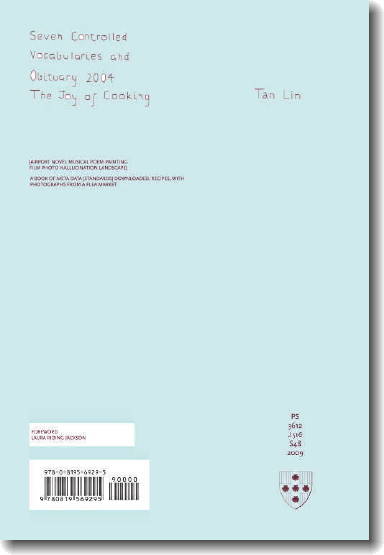
No, I think it’s about dispersing reading into a number of different environments. One of them, of course, is to do with bibliographic controls that establish various genres, like architecture or film. Also, it connects to online reading practices. People have argued — I think Nicholas Carr most recently — that online reading is much more distracted, conversions of information into short-term working memory and then into long-term memory are disrupted. The book is designed, in some sense, for a kind of skimming. Once you insert pictures into a book, I think you’re in a different sort of textual environment. The book is supposed to open up and free a little bit of space around linear reading practices.
I know this is a huge question to get into, but what is the prime way you’ve made it prompt readers to get around their usual, deeply, deeply, deeply ingrained reading practices?
Maybe the deeply ingrained reading practices have to do with how people read books. But on the other hand, you’re always free to skim, to highlight, to jump around in a book. Again, in an online environment, these things are multiplied exponentially. This book plays with those notions. In some ways, it’s about translating a book into a different kind of reading environment. Part of it has to do with social networking. Part of it has to do with the commodification of attention, perhaps. Part of it has to do with basic online reading practices. There doesn’t seem to be an ideal way to read this. Maybe there’s a distracted skimming going on throughout the book that’s encouraged, but also the insertion of, say, bibliographic controls — oh, this is about architecture, or, oh, this is about poetry, or this is about photography — those help to stabilize the reading practices.
Read more »
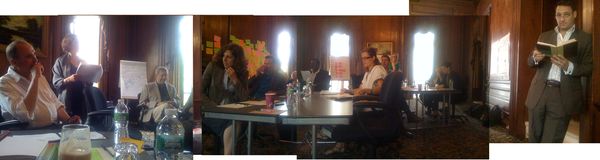


 Seph Rodney: I wanted to start off the conversation by asking both my guests how it is that we get the kind of literacy that we have to decode writing. It seems to me that it’s everywhere, that we take it for granted. It seems that there’s a kind of decoding that happens in reading, isn’t there?


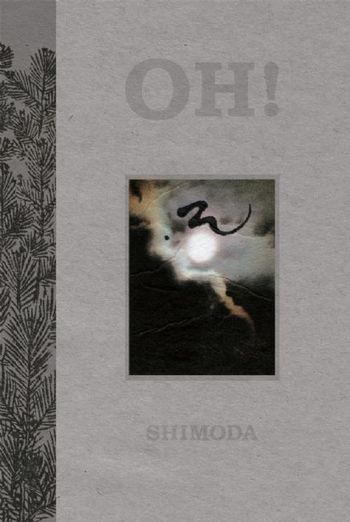 These three novels of yours form a loose trilogy. The obvious way I can tie them together is to say all of them take place, in full or in part, in Japan. But in your own mind, what holds these books together?