by Quinn O'Neill
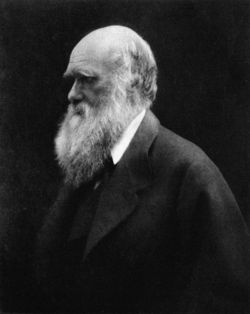
Some might wonder what could be so terrible about teaching students that we were created in our current form by a kind and loving God. It’s an idea that can help people to cope with mortality and uncertainty and offer a sense of purpose to our existence. It may seem pretty harmless.
The teaching of Creationism as science constitutes a tragic failure of science education for a number of reasons, some of which don’t get mentioned often enough. When debate bubbles up on the internet, it tends to revolve around what is and isn’t true, with talk of facts and evidence. Certainly evolution is true and there are reams and museums of supporting evidence; but the rejection of facts and evidence itself isn’t really tragic in my opinion, it’s just disappointing and frustrating.
The real tragedy has more to do with the power and utility of evolution than with its truth. Evolution is a potent concept that can transform the way we see the world and everything in it. In Darwin’s Dangerous Idea: Evolution and the Meanings of Life, Daniel Dennett compares the concept to a sort of “universal acid” that’s so powerful it will inevitably eat through anything used to contain it. In Dennett's words, evolution “eats through just about every traditional concept, and leaves in its wake a revolutionized world-view, with most of the old landmarks still recognizable, but transformed in fundamental ways.”
But evolution doesn’t just change the way we look at things, it’s necessary for making sense of much of science. Major science organizations have acknowledged this vital role. The American Association for the Advancement of Science states:
“The modern concept of evolution provides a unifying principle for understanding the history of life on earth, relationships among all living things, and the dependence of life on the physical environment. While it is still far from clear how evolution works in every detail, the concept is so well established that it provides a framework for organizing most of the biological knowledge into a coherent picture.”1