by Shadab Zeest Hashmi
The ghazal entered my consciousness first as music (on Radio Pakistan or my parents’ LPs), accessible only through melody, beat, rhyme, refrain; the poem’s literary heft, of course, utterly lost on me. The ghazal was really a visceral stimulus in my pre-language existence and as such revealed itself as sad, cold, dim, energetic, red, blue or sweet depending on what emotion its sonic synthesis suggested. Later, when I studied the form in school, I was filled with the sense of awe that surrounds the Urdu ghazal in Pakistan.
The ghazal is distinguished as the most elevated of poetic forms, and considered to be the litmus test of a true poet. I learned about the Urdu ghazal’s formal constraints, and how, in the hands of the masters the form has been known to embody in the elegant brevity of a couplet, a vast range of subjects with depth and precision. All this talk was useful in understanding the craft and reach of the ghazal but it created a chasm of sorts and cut me off from my earliest response to the ghazal—hearing in the ghazal a color or temperature of emotion, and falling under its spell. This loss of connection with the spirit of the form became apparent to me after writing and teaching the ghazal in English and reading the Spanish poet Lorca’s lectures on the Duende.
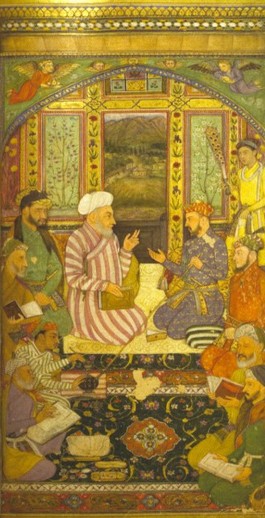
Before I discuss the ghazal and the duende, here is a brief history of the ghazal and how we have come to know and utilize it in English: The ghazal form originated in pre-Islamic, pre-literate Arabia, spreading across parts of Asia, Africa, and Europe, soon after the Muslim conquests of these regions. The Persians cultivated and refined this form to the extent that it became a defining feature of Persian poetics and was further transmitted to many other literary traditions, including that of Urdu. The Urdu ghazal took root in the court of the Sultanate of Dehli in the thirteenth century. The foremost ghazal poet Amir Khusrau was a famed scholar, Sufi mystic and musician, and was a poet in the court through the rule of seven emperors of Muslim India. His Persian and Hindavi (early dialect of Urdu) ghazals would later have a significant influence on the Urdu ghazal.