by Joshua Wilbur

I would never call myself a birdwatcher. I’m confident—arrogant even—about blue jays and cardinals, but everything else is a crapshoot. I identify finches as sparrows, sparrows as hawks, hawks as starlings. I’m more often wrong than right.
That said, I do like to watch birds. In college, I would go to the Boston Aquarium to see the African penguins. Peering over the central railing, I would pick out a single penguin from the group and follow its (his? her?) every move for as long as possible. Into the water, out of the water, into the water again…
These days I spend a lot of time in Central Park, where countless pigeons roam the paths. When I’m not in a rush, I’ll find a bench and read for awhile, and, inevitably, the legion arrives. Again, I like to pick out one member of the group and see what it does. Whether penguin or pigeon (or finch or sparrow or gull), what fascinates me about watching birds is how contingent—how utterly arbitrary— their actions can seem.
Why does the bird take three steps this way instead of that way?
Why does it fly to that tree in particular?
Why does it return to the ground at my feet, turn a few circles, and continue its march along the sidewalk?
I understand, of course. It’s looking for food. But there’s a wide gulf between a pigeon’s world and mine. And I feel that divide most strongly when I look into a bird’s eyes. I’ll stare down at a pigeon, focus on the red and orange and black of its vigilant eye, and think about a very old question: “Is anyone in there?” Read more »


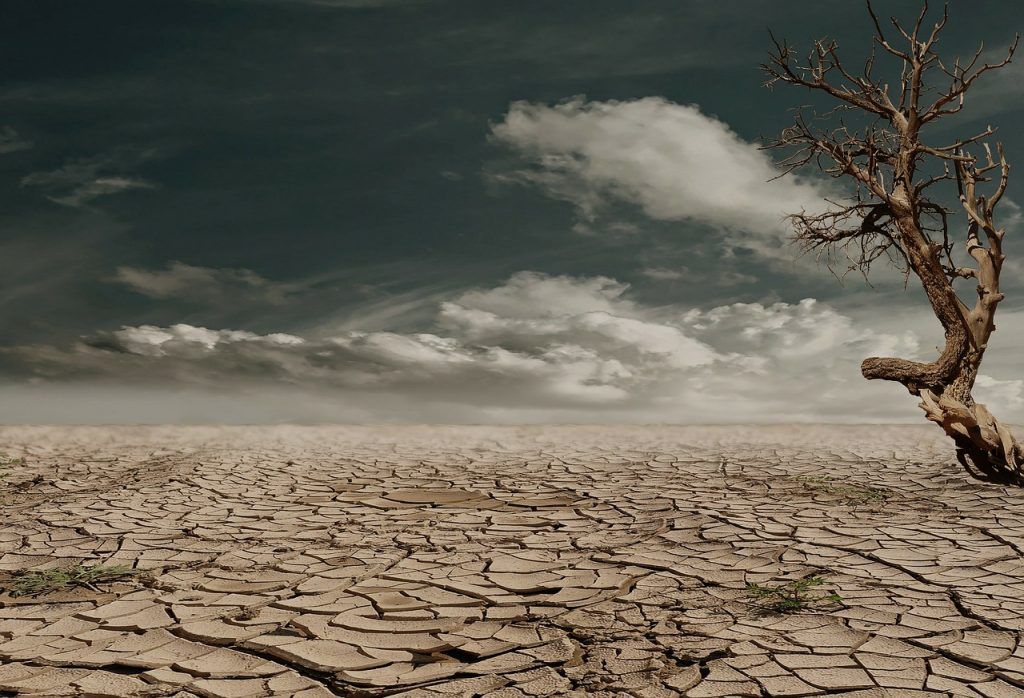 The dangers of climate change pose a threat to all of humankind and to ecosystems all over the world. Does this mean that all humans need to equally shoulder the responsibility to mitigate climate change and its effects? The concept of CBDR (common but differentiated responsibilities) is routinely discussed at international negotiations about climate change mitigation. The basic principle of CBDR in the context of climate change is that highly developed countries have historically contributed far more than to climate change and therefore need to reduce their carbon footprint far more than less developed countries. The per capita rate of vehicles in the United States is approximately 90 cars per 100 people, whereas the rate in India is 5 cars per 100 people. The total per capita carbon footprint includes a plethora of factors such as carbon emissions derived from industry, air travel and electricity consumption of individual households. As of 2015, the
 A number of scenes in Eugene Zamyatin’s dystopian novel
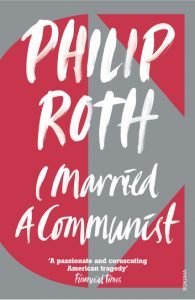 The link to Charles McGrath’s ‘No Longer Writing, Philip Roth Still Has Plenty to Say’ which appeared in the New York Times in January, only a few months prior to Roth’s death in May this year, was forwarded to me by a friend who thought I might find the article interesting. How indebted I am to my friend that he thought of me in those terms, for the sending of that article rekindled my acquaintance with Roth; life’s events and circumstances had left my reading of his work to the margins.
 The past years have seen many debates about the limits of science. These debates are often phrased in the terminology of scientism, or in the form of a question about the status of the humanities. Scientism is a
 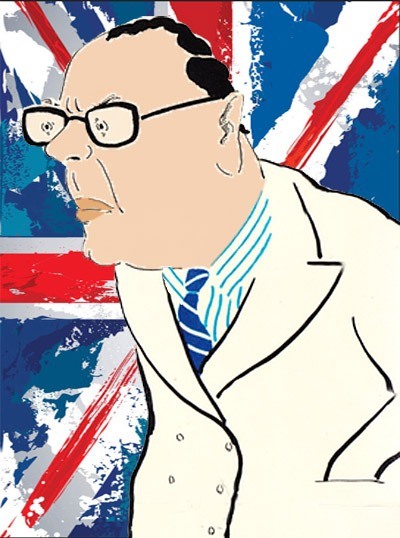 The career of Kenneth Widmerpool defined an era of British social and cultural life spanning most of the 20th century. He is fictional – a character in
 It’s a Saturday in May. I’m 17, and I’ve spent the morning washing and waxing my first car, a 1974 Gremlin. I’m so delighted that I drive around the block, windows down, Chuck Mangione playing on the radio. Feels so good, indeed. I’ve successfully negotiated a crucial passage on the road to adulthood, and I’m pleased with myself and my little car. Times change, though, and sometimes even people change. Forty years later, with, I hope, many miles ahead of me, I sold what I expect to be my last car.
 I like playing Scrabble, and part of the reason is creating new words. That and the smack talk. I played a game with the swain of the day decades ago, and he challenged my word, which was not in and of itself surprising. As you may recall, if you lose a challenge, you lose a turn. With stakes so stupendously high, you mount a vigorous defense. I ended up losing the battle (and probably won the war) and thought no more of it. The ex-boyfriend brought it up a few years ago; I think he has put that on-the-spot coinage next to a picture of me in his mind. It is a shame that the word he will forever associate with me is “beardful.”


 In the Municipal building on Livingston Street, two floors are reserved for Housing cases. In each court, dozens of people work and wait, a Bosch tableau with an international cast. HPD lawyers work the perimeter. They bring Respondents to the bench, confer with them in the hallway and negotiate with Petitioners on their behalf. HPD attorneys also lunch with landlord’s counsel. There is little ethical or proximate difference between Officers of the Court, save who signs their checks and the pay scales. To a person, they distribute a crushing weight, balancing malfeasance and negligence, plunder and systemic rot. The lasting effect of a day in Housing court isn’t the stipulation Management makes for repairs, nor the tenant’s payment (sometimes, less an abatement), it is feeling that force haul you down and watching others already borne off by it.