
Zurn and Bussett in MIT Press:
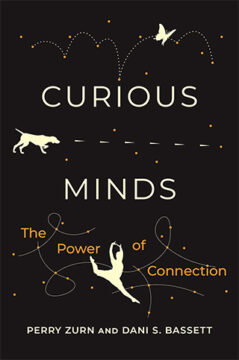 For millennia, curiosity has been characterized predominantly as an individual drive to acquire information. Whether it is Saint Augustine’s “lust to experience,” John Locke’s “appetite after knowledge,” Sigmund Freud’s “scopophilic drive,” or Hans-Georg Voss’s “motivation to explore,” philosophers and psychologists of the Western intellectual tradition have largely understood curiosity at the level of the individual organism, its forces, and its feelings.
But in the ancient and medieval periods, such expressions of individuality were also deeply suspect. Curiosity was seen as a largely vacuous interest in novel or forbidden information. The curious person was thought to reach for what was hidden and secret, beyond their proper purview, and thereby isolate themselves from spiritual and social community.
More here.
Enjoying the content on 3QD? Help keep us going by donating now.