
Robert Kolker in The New York Times:
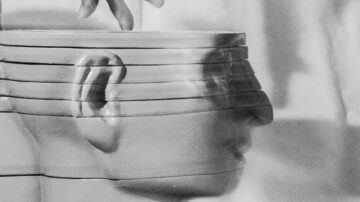 The story of the science of dementia began on an autumn day in 1891, when a 71-year-old man was admitted to the psychiatric hospital at the University of Prague. The man, referred to as August H. in his medical file, had periods of freezing up mentally, sometimes fainting and not coming to for several minutes. More recently, he had been prone to fits of rage, and even threatened his wife with a knife, shouting that he was going to kill her.
The case caught the attention of the director of the clinic, Arnold Pick. After August H. died, Pick’s team examined his brain, dividing it into sections and weighing them and checking for abnormalities. The brain seemed essentially normal except for signs of decay, or atrophy, in one self-contained place: the left temporal lobe.
This was quite likely the first recorded moment that a scientist, staring at a piece of brain tissue, saw dementia as a problem to be understood and solved, rather than a natural, unavoidable part of aging. Until then, almost everyone, including Pick himself, had taken it as an article of faith that dementia, or senility, was a generalized condition, the sign of a brain in overall decline. But after seeing August H.’s brain, Pick began to search for and document other dementia cases in which the problem wasn’t aging, but this specific part of the brain that was starting to lose function and misfire.
Enjoying the content on 3QD? Help keep us going by donating now.