
by Derek Neal
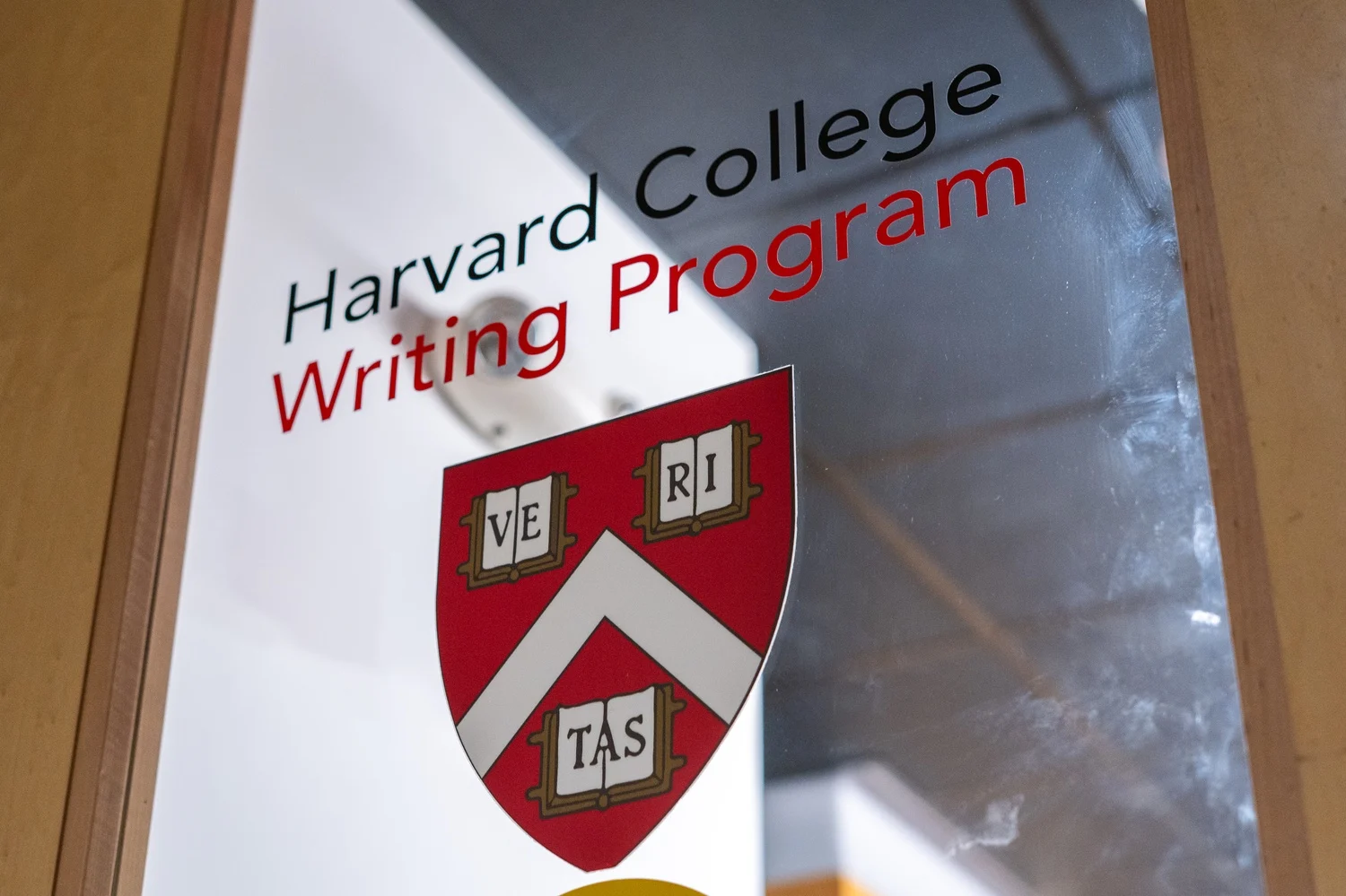 The other day I heard that Harvard had closed its Writing Center. This saddened me, as I had once been a university writing tutor myself—not at Harvard, but at my local college, the University of Vermont. Reading the news, I thought I might cast my mind back, 14 years ago, to when I first became a tutor. I haven’t thought about that time in many years, and the only way for me to recover it, to turn over those stones in my memory, see the activity underneath, is to write. I really was that person, and that person is still inside me somewhere, but unless I write, that self lies dormant, replaced by my present self.
Fall semester, 2012. Red brick buildings, autumn leaves, crossing the quad, running into friends constantly, lying on a picnic blanket in the grass, jumping on a slackline. Possibility everywhere. Every free moment, reading and writing, weekends spent wandering into one building on campus, working for two hours on an essay, then moving to a new spot, more writing, again and again, until something had been formed, somehow, by turning ideas over and over, a coherence and a sense had been fashioned from a jumble of thought, something created that hadn’t existed before, and that could only be created through the process of writing.
My first session: an exchange student from Sweden with bright blonde hair. That’s all I remember. She was older than me, and at that age, even one year makes a difference. Surely I was nervous, and probably shy, too. I must have followed what we’d learned in class—find out where the student is in the writing process, have them read their paper out loud, be sure to understand the assignment, don’t correct grammar, diagnose global issues or specific, narrow problems, ask questions, make it a conversation, a dialogue. At the end of the session, she was grateful. I still remember that; she recognized the effort I’d put in, and because of her recognition, I realized I’d done well. She was leaving the 50-minute session with more clarity than when she’d walked into the Writing Center.
There were other students. Francis, a janitor at the school from DR Congo, who was taking a Continuing Education class. He was my writing partner for a semester, maybe two, meeting once a week. He invited me to his birthday party, I showed up to his house on the dot, the first person there. Eventually the room filled with some 30 people, all Congolese, all speaking French. A heated debate took place on whether Ronaldinho or Samuel Eto’o was the better footballer. Obviously Ronaldinho was the correct answer, but I didn’t say anything. We danced in the living room to music from the TV. At the end of the night, one person told me I spoke French well, although I’d hardly said more than a couple of sentences. Another student whose name I don’t remember, my partner for a semester. He was older, from Germany, interested in lithographs. I didn’t know what a lithograph was. Another student, Richard, from China. His teacher wanted him to write something about marginalized people. Why, he said, they’re on the margins—that’s their problem. Yes, I said, but what about the way society keeps them there, prevents them from progressing? We went back and forth a few times, never getting anywhere. He invited me to his dorm for hot pot, bring a friend, he said, there will be a lot of food. I went, I brought a friend.
I was a tutor for two years, my sophomore and senior years. Most students I only met once, others I met repeatedly. I worked just a few hours a week, so over a semester I must have had 40-50 sessions. In the summer, they needed tutors for a program for international students, so I did that, providing general academic help. At the time, the students, who were all Chinese, had no siblings, having been born during the time of the one-child policy. One guy did, though. He was the younger brother, he said his parents had to pay a fine so he could live—at least that’s what I understood. One semester I was paired with another writing tutor, which confused me at first. Why would a writing tutor need a writing tutor? As we met each week to discuss the other tutor’s thesis, however, I understood the value in having a sounding board, someone who could help the other person think through their ideas and ask questions to push them further in their research.
I can draw a straight line from my work as a writing tutor to my current work, in a program supporting international university students with English. This is why I find the closing of Harvard’s writing center so short sighted and perplexing. From an academic standpoint, the cynic in me understands that some administrators and, yes, even some teachers, no longer see value in writing when AI can do it for students. But these same people, who presumably conceive of post-secondary education less as a place to gain a deeper understanding of oneself and the world, and more as mere job training, must see that being a writing tutor is worthwhile as it gives students work experience, adds to their resume, and trains them for future employment—even in fields that may no longer require writing ability, a tutoring session requires the “soft skills” that are currently in demand (now that many people think AI can do the hard stuff) and in this way trains tutors for post graduate employment. In my own case, that first tutoring session set me on the path I’m still on, 14 years later, as it allowed me to discover abilities I had no idea I possessed, giving me the confidence and agency (the main thing, in my experience, that AI insidiously erodes among students) to discover and know myself.
Enjoying the content on 3QD? Help keep us going by donating now.