
Nate Wooley at n+1:
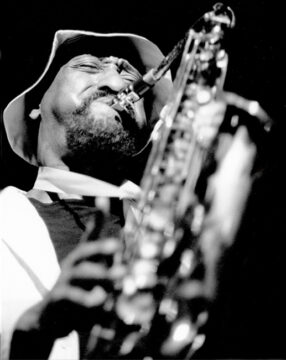
At the dawn of the 1970s, Rollins took another two-year hiatus. Again, no prison; this time, not even the bridge. Just a period of quiet self-discovery. He immersed himself in meditation and yoga, studying at an ashram near Mumbai. The son of islanders also found new inspiration in his roots, visiting the Caribbean for the first time and developing a fascination with calypso, a bouncing, convivial music invented by the enslaved people of 19th-century Trinidad and Tobago. Its infectious dance rhythms perfectly fit Rollins’s increasingly angular phrasing and broken articulation. Upon returning to the scene in 1971, Rollins concentrated much of his musical energy on calypso, as well as soul and funk, an aesthetic that found its finest form in his 1978 album Don’t Stop the Carnival. Not everyone appreciated the new direction, but no one could deny Rollins’s immense creativity. From this point onward, he continued to follow his gut. He released albums more rarely, explored the saxophone as a solo instrument, and even turned to orchestral composition with a concerto for saxophone written for the Yomiuri Nippon Symphony Orchestra—with the solo part, of course, played by himself.
more here.
Enjoying the content on 3QD? Help keep us going by donating now.