
Consuelo Araos at Aeon Magazine:
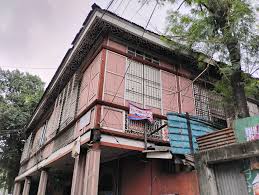 Victoria’s story is part of a broader reality among poor urban populations across Latin America, where roughly a quarter to a third of urban residents have lived in informal housing conditions as cities expanded through the late 20th and early 21st century. In Santiago, much of what is now the pericentral belt took shape between the 1960s and ’80s through a precarious process of informal occupation of marginal land and later state-regularised poblaciones that shaped the city’s growth. These are neighbourhoods slowly and collectively assembled by hand over multiple generations – their houses, streets and public spaces still bearing the marks of that history, as do the family configurations and forms of local sociability, as well as civic and political participation, that took shape within them. Although it may be technically correct to consider the self-built house as merely one particular residential typology among others, I have come to think otherwise. I arrived with the vocabulary of deficit – informality, overcrowding, the housing unit to be counted and completed – and the field slowly took it apart. In all their precariousness – and perhaps partly because of it – self-built houses reveal some conditions without which a place cannot truly be lived as a house.
more here.
Enjoying the content on 3QD? Help keep us going by donating now.