
by Jeroen Bouterse
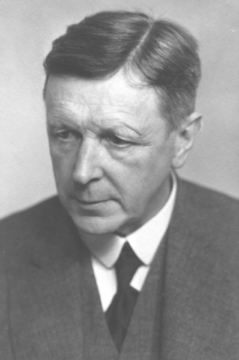
This is not a piece about Carl Schmitt, but it does start with him. Unfortunately. In 2025, Schmitt was hard to miss, as James Traub chronicled in this excellent essay. For a while now, the democratic order has felt like the Weimar republic – flawed, fragile and possibly doomed. It seems only sensible to get acquainted with the political thinker who wrote most honestly, most mercilessly, most profoundly, about its weaknesses, in a time where the stakes were highest.
Schmitt, however, is not just the prophet of liberal failure; he wants to see it happen. Often, when he sums up the ills of modern parliamentary democracy – its party-politics, its banality, its political crises – he seems less a political philosopher than an angry pundit. He picks his abstractions and identities so that they associate the institutions and values of the Weimar republic with an enlightened rationalism that he loathes, and that he believes he can easily discredit.
The secret ballot, for instance, where each vote is counted and an “arithmetic majority” calculated? Pah! That, Schmitt knows, has nothing to do with the will of the people, which is of necessity public. The popular will can be known just as well or better by acclamation than by “the statistical apparatus that has been formed with such diligence over the last half-century”. Democracy simply demands that the law and the will of the people are one and the same. This has nothing to do with such unglamorous procedures as counting. The popular will can be expressed by a minority, or even by one individual.
Better people than Schmitt have been wrong about the secret ballot; John Stuart Mill had his reasons, which didn’t depend on disdain for numbers or on general-will-voodoo. But the contrast could not be larger. Mill’s impulses were liberal, democratic, and utilitarian, and he sought out tensions and contradictions between his ideals in order to face them and perhaps solve them. Schmitt, on the other hand, did exactly what illiberal propagandists are doing in our time: driving wedges between the popular will and democratic institutions, slandering the latter because they stand in the way between the people and some glorious national future.
Above, I wrote that the Weimar republic was ‘flawed’, in an attempt to draw parallels between then and now. Immediately, that felt like a cheap shot in two directions. Everything is ‘flawed’, but when we think of Weimar Germany we imagine those flaws to be fatal. We burden it with the sins of what came after it. In the face of illiberal backlash, we are apologetic, almost embarrassed, when celebrating liberalism. When reading Schmitt, it is tempting to convince ourselves that his observations must be correct; the Weimar republic was many things but clearly not a success. And so, surely, was whatever led to Trump and to the surge of far-right parties everywhere? Is there something untenable, something contradictory, something impossible about liberal democracy now? Has it had its time?
If you are sometimes burdened by such thoughts, then come read Richard Thoma with me. Thoma was a German legal scholar, working during the Weimar era, and during and after Nazism. The following is mostly based on a short 1948 book called Über Wesen und Erscheinungsformen der modernen Demokratie (‘On the nature and varieties of modern democracy’), in which Thoma summed up his views on the historical and intellectual roots of representative democracy. They are, I believe, a good antidote to any impulse to write it off or exaggerate its problems, presented with the authority and cautious confidence of someone who was both an expert on the subject and lived through its nadir. “We have had democracy in Germany until 1932”, he curtly says at one point; “and we will perhaps have it again in the future.”[1]
Ancient and ever-new
Thoma proceeds from the idea that popular sovereignty can never be direct – it is always mediated. Yes, all the people can speak in a plebiscite; but being called to affirm or reject something is not the same as ruling. There will inevitably be elites, and the question is what it is that makes their oligarchic rule democratic. For Thoma, this hinges on two conditions: that their government is temporary or removable, and thereby responsible (Thoma uses the English term); and that there is universal suffrage.
Thoma then traces the historical roots of democratization: he discerns religious roots in Calvinism (transferred via the Puritans to the US), and he recognizes philosophical sources, although he is by and large unimpressed by those. Yes, there was a ‘left wing’ of early modern legal and social philosophers who thought of popular sovereignty as a source of legitimate authority. They were a minority, however, and most of them were rather inconsistent and didn’t want to extend the vote to the poorest citizens even in theory.
Much more important were historical ‘social-revolutionary’ forces: democracy was the tool of the economically disempowered, even if the Marxist prediction that they would form a uniform and class-conscious majority turned out to be wrong. 19th-century ‘democratizers’ were a mix of different (lower) classes, joined for tactical reasons by more powerful players. An important driver in the dynamics leading to democratization was the struggle for power between conservative and largely monarchical forces on the one hand, and a bourgeoisie that tried to guard its power in Parliament on the other. As an example of the “ancient and ever-new tactical alliance of Caesarism and demagoguery”,[2] emperor Napoleon III used mass suffrage as a means to disempower the bourgeoisie.
The main point here is not Thoma’s precise historical narrative (which is synoptical), but the fact that he emphasizes social-historical over philosophical roots at all. Thoma has no time for naïve idealists who think that democracy was invented by thinkers who had thought their way towards justice for everyone; he is aware that it has always been a matter of politics. Indeed, when Schmitt complained, in Die geistesgeschichtliche Lage des heutigen Parlementarismus (1923, known in translation as ‘The crisis of parliamentary democracy), that Parliaments failed to live up to rationalist ideals according to which free and open discussion would generate better and truer outcomes, Thoma’s review came down to: but dear Carl, who put that idea in your head? Democracy was not primarily about freedom and equality; it was much more about nationalism and universal conscription.
This can make reading Thoma a bit of a cold shower for modern idealists, too, but it is precisely where I believe the wisdom resides that he has to offer to our age. Both in and between the lines, he is a clear believer in representative democracy and liberal institutions – but he also reminds us that we never had any cause to demand miracles from them. We don’t have the right to Schmitt’s resentment, because that itself relies on exaggerated ‘enlightened’ expectations.
In the next section, Thoma explores the ways in which democracies sustain themselves, and it will become clear very soon that he cares. Democracy requires freedom and some extent of protection of property (it is hard to say how much precisely); but above all, it requires political parties. Here, in his positive evaluation a healthy system of partisanship and political competition, Thoma is at his most forceful and his most attractive. Never call political parties a ‘necessary evil’ in his presence; they are the very opposite – they are a precious vehicle of political freedom. Without parties, the people will fall prey to demagogues or to indifference. A democracy, Thoma quotes an anonymous joker, is a system where the sovereign needs to be yelled at constantly to keep him awake. Political parties make sure to maintain the necessary levels of popular engagement. This is a noble task, and every decent party politician can walk with their head held high.
It is also a potential weak point, because parties don’t always exercise these functions responsibly. Thoma loathes “splinter parties”, which represent one particular interest – home-ownership, the fight against alcohol, a religion – and which are rudderless when it comes to every other topic. They are an evil. In general, understanding a concrete democracy requires understanding the parties and groups that constitute it. The internal makeup of the parties matters enormously, because they need to produce the elites that govern the state. Parties should not be too weak, but partisanship should also not run too deep. All these possibilities constitute risks to the health of a democracy. The deadliest of all is the rise of anti-democratic parties, “which intend to undermine democracy by abuse of its institutions and freedoms.”[3] Not any fault in its constitution but this, Thoma insists in 1948, is what killed the Weimar democracy.
Democracy’s friends and enemies
The fun parts of Thoma’s text are where he weighs the pros and cons of different flavors of democratic systems. A two-party system looks very good on paper, but it is at risk of being held hostage by those damned splinter parties. In Europe, a pluralistic system is the rule in any case, and if there are going to be multiple parties, you should always want proportional representation rather than first-past-the-post systems. (I hope any British readers are taking notes.) Yes, multi-party systems have well-known problems too – difficult coalition formation, struggles to obtain offices, volatility – but Thoma talks forgivingly about them: they are not the catastrophes the press tends to make of them. So what if a coalition government falls every now and then? The world will keep turning.
Other problematic features of democracies are the potential for sudden changes – again, things are usually not so bad in practice, although democracies can be less safe for career officials than monarchies – and the necessity of compromise. Here, we see where the enemies of democracy come from: radicals and “hundred-percenters” who call every compromise a ‘weak’ compromise and refuse to see their enemies gain even the slightest bit of influence.
As other sworn enemies Thoma lists aristocrats, plutocrats, and racists. He spends a little longer with nationalism and socialism, because both have a complicated relationship to democracy. The history of nationalism is intertwined with that of democracy, but the desire for glory and power for the nation runs contrary to it.
“To the nationalist, the thought is unbearable that, in the hour of destiny, power over the state could be in the hands of left-liberals, clericalists and social-democrats who, with their willingness to talk and negotiate, leave the spotless sword in the scabbard and the shimmering weapons in the armory.”[4]
Socialism, in turn, is not against democracy in its intentions; but uncompromising versions of it seek to postpone democracy until after the dissolution of class societies. Those versions (and bolshevism in particular) are in practice enemies of democracy. Thoma emphasizes that none of that criticism stretches to reformist versions of socialism.
Does democracy have friends, too? Yes. First of all, there is a natural alliance between democracy and the lower classes (complicated only by radical socialism), which also means that there cannot be a way back to census suffrage now. After democratization, the choice is more binary: between democracy and the despotic one-party-state. The higher classes need to ‘resign’ themselves to this fact: a turn away from democracy will drive the masses towards communism, and their opponents towards fascism. From that perspective, democracy can be seen as the lesser evil.
This “democratism of resignation” plays a shockingly big part in Thoma’s account: there are no other rational justifications of democracy, he says. No other justifications other than the avoidance of bolshevism or fascism! Thoma is aware that some writers, found mostly in the English-speaking world, have argued that we can expect the most just, the most wise, the most benevolent insights and laws to flow from the discussions in democratic Parliaments. This is laughable, he says. Just look at how most democracies treat their minorities.
Another bucket of water straight in the face; we are learning to expect them. Where Schmitt opposes liberal-democratic ideology to the cynical working of the real world, inviting us to leave the fiction behind and embrace the world of politics, Thoma embeds democratic reality in that same world. He still sees a connection between democracy and an ethics of universal brotherhood – a spirit of ‘philanthropic altruism’ that a democracy needs to foster. However, in his hands, equal representation, accountable government, political freedom, and the institutions and legal protections maintaining them appear not as feeble moral ideals that are doomed to perish in a hard world; rather, they are the robust results of serious historical forces in that world – they can survive in it and they have. Yes, they can also fail, not through weaknesses intrinsic to democracy, but through particular failures of the parties constituting particular democracies, exploited by particular actors.
To what extent should a constitution protect itself against such actors? Thoma lists pros and cons of rigid and open constitutions, but leans towards some guardrails against suicide, as a German who has seen the consequences of “the casual destruction of our first democracy”.[5] There is no saying whether democracies in Europe and America will survive, he concludes, but a constitutional democracy remains the “relatively best and most sustainable chance of nations to pursue well-being and justice in freedom and peace.”
[1] “Demokratie haben wir in Deutschland gehabt bis 1932 und werden sie in Zukunft vielleicht wieder haben.” (section III)
[2] “das uralte und immer wieder neue taktische Bündnis des Cäsarismus mit der Demagogie” (section II.4)
[3] “antidemokratische Parteien […], die es darauf absehen, die Demokratie unter Mißbrauch ihrer Institute und Freiheiten zu unterwühlen.” (section III.2)
[4] “Dem Nationalisten ist der Gedanke unerträglich, daß in der geschichtlichen Schicksalsstunde die Macht über den Staat in den Händen verständigungs- und verhandlungsbereiter Linksliberaler, Klerikaler und Sozialdemokraten liegen könnte, welche das blanke Schwert in der Scheide und die schimmernde Wehr im Zeughaus lassen.” (section IV.2)
[5] “Wenn zu entscheiden ist, ob einer demokratischen Verfassungsurkunde eine Hemmung gegen das Recht auf Selbstmord eingefügt werden soll oder nicht, dürfte uns Deutschen, die wir unter den Folgen der leichtfertigen Vernichtung unserer ersten Demokratie so bitter zu leiden haben, die Entscheidung nicht schwer fallen. Denn wiewohl niemand voraussehen kann, ob sich die Demokratie in den führenden Nationen Europas und Amerikas behaupten oder ob sie entarten und dann ihren Feinden erliegen wird, so wage ich doch zu behaupten, daß in der allenthalben erreichten Entwicklungsstufe der abendländischen Zivilisation die gebundene, verfassungsrechtlich geordnete und befestigte Demokratie den Nationen die relativ beste und dauerhafteste Chance bietet, in Freiheit und Frieden nach Wohlfahrt und Gerechtigkeit zu streben.” (section VI.5c or final paragraph)