
by Jochen Szangolies
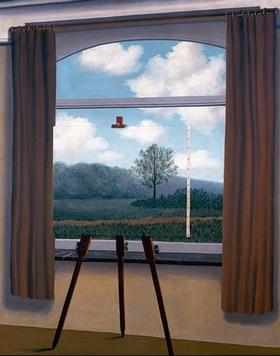
The world is not the world. How’s that for a gnomic, faux-profound fortune cookie opener? There’s all sorts of places we can go now, from Chopra-esque quantum mysticism to watered-down Western lifestyle Buddhism. But I think that this statement is actually true in a perfectly ordinary, quotidian sense that is probably obvious to pretty much everyone on reflection, yet which causes avoidable problems because we’re normally insufficiently aware of it. That sense is simply that what we’re aware of, the things we see, hear, smell, and so on, isn’t what’s out there, what exists independently of our observation of it.
Thus, the seemingly-innocuous term ‘world’ immediately bifurcates: into a directly experienced, lived reality where we take ourselves to inhabit a three-dimensional space populated with chairs and trees and other beings like us, and an ‘external reality’ from which we and our experience of chairs and trees and the like is subtracted to yield—well, what? There’s the rub: because that world is by definition never part of our experienced world, even so much as referring to it in a non-question begging manner that doesn’t project the properties of our experience onto whatever’s out there is fraught. But this is perhaps the most dire, and most common, philosophical error: to think that just because our seemings seem a certain way, whatever being is out there ought to be that way, too.
Again, I’m not under any delusion of dispensing some great pearl of insight here. Most people, when pressed, will readily agree that while things like colors, smells, and other examples of what John Locke called ‘secondary’ qualities may exist in the perception of a thing, they do not necessarily inhere in the thing itself. And speaking of things itself, Kants distinction between the phenomena of perception and the noumena, the mind-independent unknowable objects ‘behind’ our perceptions, leaps readily to mind. The veil of Maia, the brain in a vat, Descartes deceived by his demon, Zhuangzi and the butterfly: there is no shortage of images that capture the basic idea that what we see and what is may be wildly different. But while this concept is readily available upon reflection, I believe that it is rarely present as a factor shaping the way we go about our everyday business. So while we abstractly know that the world is not the world, by and large, we think, plan, and act as if it is. And I think that’s a problem.
It’s not immediately obvious why it should be to anyone’s detriment that we take the world for granted. After all, many niggling philosophical worries might make for good late-night conversation in the dorm room, but don’t really seem to carry that much weight in the light of day. Are we free, or do we merely seem to be? Are there universal moral standards? Are numbers real? Answers to these questions, it seem, have little impact on how we go through the day: we have to go to work, pick up groceries, worry about the news, make pleasant conversation with people we don’t like, one way or the other.
But I think the unreality of the world is a different order of issue. If we’re systematically mistaken about the character of the world, at least as it features in the way we run our daily errands, we risk getting important things wrong, and even if our only access to the world is negative—if we can only say how it is not, namely, as it seems—this may provide a necessary corrective to maladaptive behaviors. Buddhism, even the lifestyle magazine version, offers a case study: being entails suffering because we can’t avoid being systematically misled about the true nature of things, most notably that things have a true, intrinsic nature, which ultimately leads to desires that can’t help but be frustrated, because they’re aimed at an illusion. Even if breaking free from the cycle of Samsara seems like a remote option, some measure of comfort rests in this realization.
To see how being aware of our misinterpretation of the world as just being what it seems to be may help us navigate it better, we’ll first have a look at the reasons why we are so deceived. I’ll mainly concentrate on two such reasons (there may be others), one evolutionary, one cultural, and argue that it’s best to view the world-as-we-perceive it as a kind of interface and operating system for the world we actually inhabit. Like the bits and bytes doing their busywork behind the scenes on the device I’m typing this on, that world then is necessarily obscured by these metaphors of access.
Fit For A King
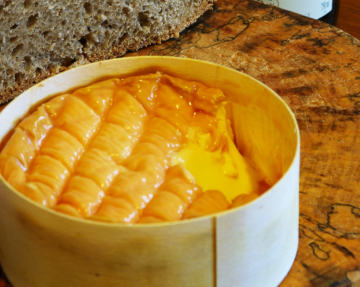
Suppose you like cheese, and find yourself in a world with varying amounts of cheese distributed throughout. You eat cheese to survive, however, too much cheese may result in adverse consequences. It would seem that some type of cheese-o-meter sense organ that can accurately quantify amounts of cheese in your vicinity would be your best evolutionary bet: you can always locate where to turn to satiate your daily dairy desires. A faithful representation of (this particular aspect of) the world around you appears to be to your advantage.
But perhaps surprisingly, that turns out not to be the case. You’ve got a decision to make: have you had enough cheese, or do you want more? And with every decision, there is the possibility of error. (Of course, this highlights the fictional nature of the narrative: more cheese can hardly be an error.) Contrast this to another entity who is, rather, in possession of a fit-o-meter: that is, a sense organ that does not indicate the quantity of cheese, as such, but brings to salience those particular concentrations of cheese that are optimal for its nutritional needs—that fit in the Goldilocks zone of nourishment, so to speak.
This move avoids potential metabolically costly errors: by associating the most salient stimuli with an optimal survival strategy, a rival scheme that tracks ground truth will be outcompeted, despite providing better knowledge of the actual facts of the matter in an agent’s environment. This counterintuitive result is the fitness beats truth-theorem, proved by cognitive scientist Donald Hoffman and colleagues. Since we are the result of billions of years of evolution, it thus stands to reason that our perceptual apparatus is not designed to uncover the world out there as it is, but to provide us with an ‘interface’ to navigate our environment in a way maximizing reproductive fitness.
This is indeed the theory proposed by Hoffmann in his 2019 book The Case Against Reality: the three-dimensional world populated by chairs and stars and cars and butterflies is merely a representation of the information impinging on our sensory contact surfaces designed to present us with those affordances of our environment that, if we make judicious use of them, ensure our continued metabolic viability. That’s not a chair, that’s just an icon that represents to us (among other things) the opportunity for recuperation by resting on it. This also entails that chairs exist as chairs only in their being perceived as chairs—a modern-day, evolutionary neuropsychology take on Berkeley’s esse est percipi.
Our nature as paragon of a long chain of evolutionary adaptation thus gives us reason to think that our perceptions do not represent the world as it is, but as it is relevant for our needs. The things we perceive are never just neutral, but are, instead, what one might call things-for: a chair is a thing for us to sit on. This immediately gives the world we perceive a dimension of utility: to a certain extent, the world we take ourselves to inhabit is shaped by the needs of the type of creature we are. This gives ordinary things a kind of almost teleological, purposeful nature: they are things-for in the sense that they are directed towards a certain end. The world seems shaped to our needs because we perceive it through a filter of utility.
Les Non-Dupes Errent
As human beings, however, our nature is not exhausted by our evolutionary history. Just as much as we are biological beings inhabiting a physical world, we are cultural beings navigating a shared social reality. And just as much as the necessities of biology shape our perception of external reality, so do the conventions of culture influence the construction of the social sphere.

Here, by the social, I don’t merely mean the interactions of humans with one another, but aim at a wider notion, something not too distant from the actor-network theory of French philosopher and anthropologist Bruno Latour. There, the social is defined by a network of relations whose nodes not only encompass people, but also nonhuman entities that enter into socially efficacious relationships with active agents. An example might be a human with a gun and one without: the social relations this pair enters into may be very different than those entered into by two equally unarmed people. Things can thus transform social realities, and to the extent that all things are things-for, these social realities shift towards their embedded ends. A gun is a thing for violence, so any relation it participates in obtains an intrinsically violent, power-imbalanced character. Guns might not kill people, but they do place them in social realities of which the possibility of killing and getting killed is an integral part.
But what a thing is for is not an immediate aspect of its nature. A screwdriver might be used to fix a loose hinge or to stab somebody—or, to take a non-violent example for once, a chair can be used for sitting on or to reach a high-up cupboard shelf. Thus, the thing-for-ness of things is both cause and consequence of the social realities they inhabit. What we take a thing to be for is, thus, also a function of our needs—as with the external world, social reality appears to us filtered through a lens shaped by utility and affordance.
Where social reality diverges in character from that of an external world is that it is not merely filtered or transformed, but rather constituted by the interpretational layers through which it is available to human agency. What a theory of the social, unlike a theory of perception, thus provides is not merely an interpretation, but rather, a creation story for the social world—a cosmogony.
It is important to realize that, just as we can’t access the unfiltered external world beyond our perceptions, we have no unmediated access to social reality, either: what things are for in our social relations is shaped by our beliefs, norms, knowledge, and goals. If we don’t know what a thing is, or we have no use for it, it can’t be brought to affect the construction of our shared social structures. Thing-for-ness is thus never neutral, but always shaped by values, norms, and expectations: in a word, by ideology.
Ideology is generally thought to be a state of bias, of ‘false consciousness’ due to being in the grip of some grand narrative, bending the world to its whim. But just as there is no unmediated access to the external world, there is no value-neutral set of social relationships to be uncovered as the ‘real’ character of human society.
If perception yields an interface to interact with the world, ideology provides its operating system: it determines what the ‘icons’ of our experience represent as elements of social structures. And just as we can’t use a computer by interacting with its bits and bytes directly, so do we only navigate social realities through an ideological lens. Those who think of themselves as being free from ideology are the ones most deceived—“les non-dupes errent” (“the un-duped err”) in Lacan’s triple-pun phrasing. (The wording is near-homonymous to both “le nom du père”, “the name of the father”, referring to a law-giving authority, and “le ‘non’ du père”, “the ‘no’ of the father”, reflecting its prohibitive nature.)
Beyond Bestand
If we are, thus, all unavoidably deceived about the nature of the world, what is there to do? Doesn’t this just mean that “nothing is true, and everything is permitted”? But that our means of navigating the world are not primarily oriented towards truth does not entail that all such means are ultimately equal. Even if our chief concern with the things of the world is what they are means for, that doesn’t entail that there aren’t better or worse ends. Thus, we can potentially foster ideologies that allow us to make better use of the world as it is given to us—because, well, it doesn’t take more than a cursory glance at the news to tell us that we don’t exactly have a stellar record in this regard.
But to make an effort at improving the metaphors, beliefs, and aims that shape or social reality, we need to first be conscious of the fact that, well, the world is not the world—that we need not accept the way the world is presented to us as a brute, immutable reality. It’s here that internalizing the gulf between seeming and being becomes important: the fact that the world is not just given to us ready-made, but is shaped by needs and beliefs is not an abstract philosophical curiosity, but a daily reality that can and should influence how we go about our daily lives. To this end, I wish to supply a metaphor that I hope can serve as an easy on-ramp for the daily reflection of our own perpetual ‘dupedness’, and provide us with, if not certain knowledge of truth, then at least a means to improve our interfaces and operating systems.
Our current dominant ideology is that of a technocapitalist logic of production. The things of the world are, then, predominantly things for such production: they are the raw material out of which our prosperity is constructed. The trees of the forest are construction lumber in waiting; the sheep’s wool is a warming blanket yet to be. Heidegger’s term for this perception of the world as a mere collection of feedstock or commodities is Bestand, or standing-reserve. Perceiving the world in the grip of the logic of production is to view it as mere fodder for machines and labor to create products of consumption; everything has value only in so far as it has value as a raw material.
This logic is closely mirrored by the popular board game The Settlers of Catan, or just ‘Catan’ for short. The object of Catan is to use available resources (wood, wheat, brick, ore, and sheep) in order to build up your settlements on a randomized grid of hexagonal plates that represent different land types. Each land type is a source of a particular resource, except for the desert: forests produce wood, pastures produce sheep, and so on. The strategy of the game is to place your settlements such as to efficiently harvest the needed resources to build more, and bigger, settlements and connecting roads. Should that not be possible—if you are missing critical resources—you have the option to trade: if another player needs resources you have, you can come to a mutual arrangement to exchange, say, one unit of wool and sheep each for a unit of ore. Both players participating in the trade may benefit from it, but typically, since each player wants to win, they’ll be motivated to engage in trade such that they believe it benefits them more than the other party.
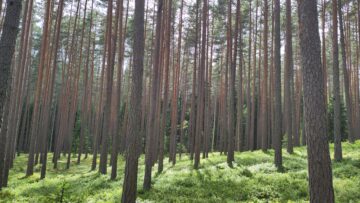
The game is both simple and a great amount of fun. But to prove the point that all fun can be ruined by a sufficient amount of theory, it also exemplifies the logic of production in a uniquely stark way: forests are valuable solely and exclusively as a means to produce wood for construction or trade. You can’t spent a leisurely afternoon strolling through a forest in Catan: there is no alternative to viewing it merely as a source of raw material. Likewise, sheep do not appear as individual animals, living beings with moods, perhaps companions, but solely as producers of wool. Everything is viewed under the lens of exploitation for production.
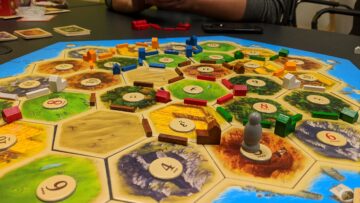
What’s more, this exploitation, in Catan, has no negative consequences. Forests produce wood, fields produce grain, pastures produce sheep, which can be farmed at a more or less steady rate. Exploitation is determined by the number (and type) of settlements placed adjacent to a landscape, with production effortlessly scaling to meet demand. Needless to say, in the real world, this isn’t how things work: over-exploitation of a resource can lead to reduction, and eventually collapse, of yield. Forests need time to grow, over-grazed pastures need to replenish themselves. In the real world, limitless exploitation has consequences, often grave ones; the logic of production thus needs to be mitigated in order to not become self-destructive.
We can see the destructive consequences of the logic of production at work all over the real world. A particularly stark example is factory farming: there, animals are treated as a mere resource, without any consideration begin given to their status as living beings. They are treated as things for meat production. (I won’t recount the horrors of this practice here, but the interested reader is warmly invited to take a look at this short YouTube documentary.)
But things don’t have to be this way. The world of the logic of production, of Bestand and exploitation isn’t the world as such; it is one possible mode of engagement with the world. And I think that very often, it’s not a great one. Again, though: alternatives exist. We don’t have to accept the world as it is presented to us: we are active participants in its creation, part of its cosmogony, and we can renounce our consent.
I can’t here give an in-depth guide on how to free yourself from the logic of production (even if I had one). But I think a first step is to become aware of your place within this logic: either, you are exploiting the Bestand of the world—or you are being exploited yourself (or perhaps most commonly, both). A second step is to ask yourself, in your social interactions: am I just playing Catan right now? Am I looking at the sheep and seeing nothing but a source of wool? Am I taking the forest as standing reserve of uncut lumber? And if so, perhaps the first revolutionary act would be to just go into the woods, to spend an afternoon enmeshed in the green of the forest, engage in aimless wandering, taking in the sights and sounds and smells—exploring its use for the making of souls, rather than chairs.
Enjoying the content on 3QD? Help keep us going by donating now.