
by Gary Borjesson
You know you have loved someone when you have glimpsed in them that which is too beautiful to die. —Gabriel Marcel
Meno famously asked Socrates whether virtue could be taught. True to form, Socrates pressed the deeper question: what is virtue, anyway? I’m going to save myself and the reader considerable grief by taking for granted that we know roughly what virtue is—when we see it. That’s not to say we can’t get mind-numbingly confused, as Meno did, if we start philosophizing. What I want instead is to look at how this familiar and vital idea appears in practice.
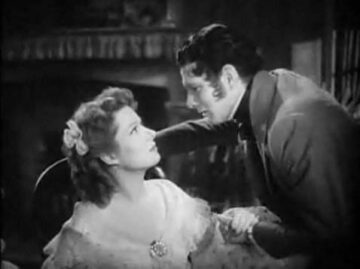
Specifically, I’ll show how virtue comes to light in the love and friendship of Darcy and Elizabeth. I know of no better depiction than Jane Austen’s in Pride and Prejudice. I’ve chosen it because Austen’s view of virtue is philosophic in its depth and precision, and because it’s a wonderful story known to many readers.
Austen’s title announces the theme of virtue, by pointing to the obstacles Darcy and Elizabeth face to having more of it. I say “more”, because, contrary to a common opinion, virtue is not a thing but an activity that falls on a continuum. With regard to virtue, we behave better and worse, have better and worse days; some of us lead better or worse lives relative to others. We call a way of acting and living virtuous when it aligns with the good or true or beautiful. (Austen would agree with Aristotle’s gloss of virtue (areté) as excellence in action and character.)
What makes Darcy and Elizabeth so compelling is that they take their lives seriously, which is to say they want to be virtuous. Indeed, each of them assumes they already are! The novel’s drama unfolds in the space between who they think they are, and who they actually are—which is not so virtuous as they thought! But while they have high opinions of themselves, they are not egotists, for they don’t want merely to appear virtuous to others and themselves, they want actually to be good and true, and to live in a beautiful way. That’s why both despise flattery and falseness, whereas an egotist invites it.
Yet, though they are not egotists, they are complacent, each priding themselves on their strong understanding and virtue, neither aware of their shortcomings. But what they can’t see about themselves is clearly seen by the other. Elizabeth sees how Darcy’s pride makes him care less than he should about how others see him, and about how he makes them feel. His later self-assessment is spot on: “I have been a selfish being all my life, in practice, though not in principle.…I was given good principles, but left to follow them in pride and conceit….and to care for none beyond my family circle.”
Darcy for his part sees how Elizabeth’s prejudice in favor of her own lively mind leads to a blind self-certainty that judges prematurely, as she does in the case of her friend Charlotte’s choice of Mr. Collins, and in the cases of Wickham and Darcy. Thus her later self-reflection, “How despicably I have acted!—I, who have prided myself on my discernment!—I, who have valued myself on my abilities!…I have courted prepossession and ignorance, and driven reason away. Till this moment, I never knew myself.”
What’s responsible for the ignorance—in the form of unreflective self-regard—that keeps them from more fully expressing virtue? It’s fair to point to their youth, Darcy is 28 and Elizabeth 20: becoming excellent at anything, including love, requires time and practice. But perhaps more important in their particular case is that both have superior gifts, and know it, and both have suffered from a lack of good parenting that would have educated and tempered their gifts.
Fortunately, they learn from each other what their parents couldn’t teach them. Darcy, continuing the self-reflection quoted above, says, “You taught me a lesson, hard indeed at first, but most advantageous. By you, I was properly humbled. I came to you without a doubt of my reception. You shewed me how insufficient were all my pretensions to please a woman worthy of being pleased.”
I read their unfolding love as fundamentally a tale of friendship, but let’s give romance its due. For romantic desire brings them closer, where their pride and prejudice can be recognized and confronted. Darcy and Elizabeth immediately take notice of each other and soon there’s kindled a conflicted liking that is based on mutual attraction (romance) but also on a recognition of each other’s seriousness and superiority (virtue friendship). There are several deliciously witty scenes where they flirt and sound each other’s character. In one, Miss Bingley and Elizabeth walk arm in arm around the room while Darcy is reading. Elizabeth, teasing and inquisitive, examines his character in a series of exchanges; his brief replies include inferences regarding her character. When at last Miss Bingley says, “Your examination of Mr. Darcy is over, I presume, and pray what is the result?” Elizabeth’s reply is, “I am perfectly convinced by it that Mr. Darcy has no defect. He owns it himself without disguise.” Ouch.
Such exchanges turn them slowly from their unreflective self-regard toward each other, and specifically, toward how each is viewed by the other. But the real turn comes, as it so often does, through the painful experience of being exposed as not so virtuous as they thought!
The catalyst is Darcy’s confession of love. And it is a confession, for his proposal of marriage—as she points out when rejecting him—seemed to have the “design of offending and insulting me, as you chose to tell me that you liked me against your will, against your reason, and even against your character.” His behavior confirmed what her prejudice had already decided, that his pride was ugly. Darcy only becomes aware of that ugliness after her shocking refusal. She buries the knife further by adding that his behavior “spared me the concern I might have felt in refusing you, had you behaved in a more gentleman-like manner.”
This last remark, as he later tells her, “was inexpressibly painful.” It showed him that in her sparkling eyes he is not the man he thought he was. His pride had blinded him to how the woman he loved and admired might feel about a marriage proposal that including pointing out all the obvious defects of the match: she has a vulgar and embarrassing mother, a father who does not take life seriously, and a family that has nothing of consequence to offer, other than disreputable behavior. A less arrogant man more concerned with the feeling for others would still know all this, but he wouldn’t say it.
The irony is that even in his pride Darcy’s love of virtue is evident. After all, what leads him to overcome all his misgivings is that he sees Elizabeth’s virtuous character. In another irony, her refusal confirms his judgment as to her virtue: this is a woman of genuine substance who will have nothing to do with a man who behaves in a way that is unfeeling and unjust—regardless of how rich and powerful he is. Thus both reveal their basic alignment with virtue, even if their practice of it is lacking. Darcy values a virtuous marriage over a conventionally prudent one: he loves Elizabeth because she is good and true (and beautiful). For her part, Elizabeth rejects Darcy, despite all he offers, because she has judged that he’s not virtuous.
Thus, painful and humiliating as Elizabeth’s rejection is, Darcy doesn’t succumb to his wounded pride. Instead, he reflects feelingly on their conversation and his past behavior. He then writes Elizabeth a letter showing he’d taken her speech to heart, and offering his motives for behaviors she has found so reprehensible. Darcy’s letter does for Elizabeth what her rejection had done for him: forced upon her a painful reckoning, quoted above, about how her prejudice and hasty judgment led her to judge wrongly, about others’ character and her own.
Between the time of the letter and the renewed and accepted proposal of marriage, the drama concerns whether one or both of them might choose to save their ego or reputation or convenience at the expense of their love and virtue. During this time, Darcy proves his character, not in principle (which as he says he already possessed!) but in deed, by staying true to his love for Elizabeth—despite his wounded pride—and by acting in a way that shows true regard for the feelings of others. At a sacrifice to himself, he acts generously and discreetly to save Lydia and Elizabeth’s whole family from (further) disgrace. When Elizabeth and her uncle and aunt visit his estate (having been assured he wouldn’t be there), he shows up unexpectedly and treats her and her relatives warmly and generously, with no hint of pride or resentment. Elizabeth for her part is eager to make amends, by listening to what those who really know Darcy, such as his servants at Pemberly, say of him, by observing his behavior with her and her relatives, and by changing her mind—painful for a woman who prides herself on the superiority of her discernment, and who has let everyone know how ill she thinks of Darcy, the man she now has to convince them she wants to marry!
Austen shows us that virtue is not an all-or-nothing affair, but a work in progress, something we get better at with practice. She shows how developing virtue depends on a willingness to learn about ourselves from others. She shows us how desire can be the means of overcoming our self-absorption, inasmuch as we’re led to see in someone else something of the good and true and beautiful that we want to be worthy of ourselves. This is, I think, what happens with Darcy and Elizabeth.
There’s a beautiful moment before they reconcile, where Elizabeth reflects that she is able “to comprehend now that he was exactly the man, who, in disposition and talents, would most suit her….it was an union that must have been to the advantage of both; by her ease and liveliness, his mind might have been softened, his manners improved, and from his judgment, information, and knowledge of the world, she must have received benefit of greater importance.” What’s especially striking is what Elizabeth says immediately afterward, as her thoughts turn to the contrasting example of Lydia and Wickham: “How little of permanent happiness could belong to a couple who were only brought together because their passions were stronger than their virtue.” Darcy and Elizabeth prove to be the opposite, which is why the deeper story in Pride & Prejudice is their friendship.
Enjoying the content on 3QD? Help keep us going by donating now.