
Sneha Khedkar in The Scientist:
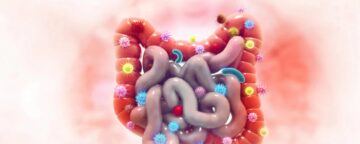 The mammalian gut is a dynamic environment, wherein shifts in the local environment can lead to disease. Despite the importance of monitoring biochemical parameters in the gut, the most commonly used tools are invasive endoscopic methods, which provide information at only one point in time. To overcome this, Carolina Tropini, a microbiologist at the University of British Columbia, and her team engineered gut bacteria that would dim their fluorescence under disease conditions. Their system, described in Cell, offers biosensors that can continuously and non-invasively monitor gut osmolarity in mice, highlighting the utility of the microbiome as a tool to track gut health.1
Intestinal factors such as pH, salt balance, and oxygen levels mold the gut environment, with any alterations leading to illnesses. “Understanding these gut changes is essential for advancing our diagnostic and treatment strategies for gut health,” said Tropini in a statement. “For that, we need highly sensitive measurements as those changes occur, including before symptoms appear.”
More here.
Enjoying the content on 3QD? Help keep us going by donating now.