
David Adam in Nature:
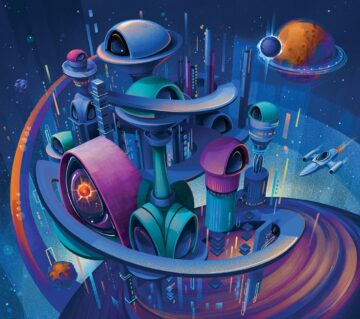 The Roman sage Marcus Aurelius said we should never let the future disturb us. But then he never had a conversation with the futurologist Nick Bostrom about the state of the world in 2050. “There’s a good likelihood that by 2050, all scientific research will be done by superintelligent AI rather than human researchers,” Bostrom said in an e-mail. “Some humans might do science as a hobby, but they wouldn’t be making any useful contributions.” Time to rethink your career options, Nature readers!
To adapt a cliché about computer models, predictions of the future are usually wrong, but some are interesting. And Nature has a long history of seeking stimulation in forecasts, projections and auguries about how research might unfold in the coming decades. Most notably, the journal marked the end of the twentieth century and the onset of the twenty-first with supplements dedicated to scientific soothsaying, and a bold prediction, from then-editor Philip Campbell, that life based on something other than DNA would be discovered by 2100. (It was a statement he called foolish then, but stands by today.)
More here.
Enjoying the content on 3QD? Help keep us going by donating now.