
Ritchie Robertson at Literary Review:
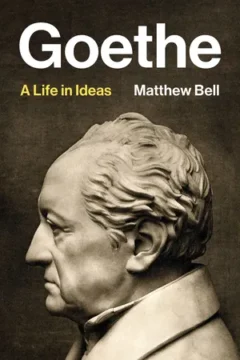 Goethe’s philosophical coordinates came initially from Rousseau and Spinoza, two thinkers who appealed to and fortified his own disposition. Rousseau’s concept of amour de soi, the urge for self–preservation, appears in Goethe as the need for individual authenticity. The opposing force, Rousseau’s amour propre, becomes the dead weight of social conventions suppressing whatever is distinctive, original and creative. Hence Goethe’s protagonists are powerful, charismatic personalities who experience society as a ‘prison’, the metaphor used by Werther and Faust. For some, such as Werther, the only way out is death. Others, such as Faust, preserve their essential character, but the struggle to do so leaves victims in its wake. Werther himself, unable to conquer his love for the married Lotte, leaves her and her husband devastated by his suicide. Faust’s egotism inflicts tragedy on his lover Gretchen. Goethe is honest about the cost to others of preserving one’s own authenticity.
Disliking the arid Lutheranism of his upbringing, Goethe found a more congenial religious outlook in the Dutch-Jewish philosopher Spinoza, who was often unjustly reviled as an atheist. Spinoza offered him a God who was identical with the world.
more here.
Enjoying the content on 3QD? Help keep us going by donating now.