
by Daniel Gauss
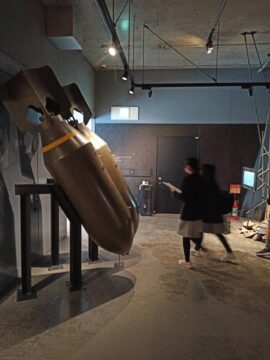
There are more than 50 armed conflicts going on in the world right now. In fact, depending on how you define “armed conflict,” the number from the most trustworthy sources ranges from around 60 (using a strict, high-intensity definition) to over 150 (using a broader, low-intensity definition). We wake up, take a look at the news and often see that it’s war again. Again. An airstrike, retaliation, another round of funerals and recriminations.
A recent, well-publicized armed conflict was in South-East Asia between a government run by a father/son dictatorship duo and a government still dominated by its military establishment, where generals retain substantial power to influence and often overrule civilian politics at will. Both of these governments demanded and marshalled the patriotic fervor of their respective populations to square off over who “owned” a largely inaccessible 1,000-year-old temple in the middle of a forest, which does not even generate much tourism money. People died.
All these wars, clashes and skirmishes…if you listen closely, really closely, past the rattle of gunfire, the buzz of drones, missiles smashing into concrete buildings, the somber gravitas of the news anchor, you’ll hear it…the soft whimper of a bruised ego.
There is the assumption that war is often rationally motivated. Somewhere in a quiet, high-tech, air-conditioned war room, serious, highly educated and seasoned adults in formal attire or uniforms decorated with medals did the math, weighed strategic interests and analyzed existential threats. We then read that they had no choice but to take action, and, of course, according to the “humanitarian” rules of war, they tried to minimize civilian casualties.
But I sense that beneath all the theatrics is something simpler. It’s the emotional equivalent of someone throwing a fit because their feelings got hurt. “They made us feel small. Now we have no choice but to blow them up.” They don’t admit this, of course.
Instead, they say, “They violated our sovereignty,” or some other grandiose nonsense. An aggressor attacking a neighbor might say something like: “We are fighting for the right to live in our own land according to our will. For the future of our people, for our children. We will never give up on our love for the Motherland and our faith in truth and justice.”
Or how about: “The survival of liberty in our land increasingly depends on the success of liberty in other lands.” Behind the highfalutin language about liberty was something far less idealistic: America’s wounded pride after 9/11, its leaders unable to bear looking weak, possibly incompetent and definitely vulnerable, so they dressed up a spasm of status anxiety as a gratuitous crusade for freedom. (Exact numbers cannot be provided and most mainstream studies on Iraqi deaths converge only on figures around roughly 150,000 to 650,000.)
They violated our sovereignty…We are fighting for the right to live in our own land…The survival of liberty…It sounds more adult that way. It sounds like the language of policy and justice while it’s just raw, unexamined emotion screaming for attention. The truth is: people often die because someone with a license to kill on a massive scale felt disrespected or their sense of honor was threatened. Whole villages burn because a leader couldn’t bear the thought of looking weak. Mass deaths are dressed up as national defense, to soothe a psychological paper cut.
Emotion, poorly handled, becomes the most dangerous force on earth. Not nuclear weapons. Not ideology, because emotion just needs a story to trigger tragedy on a mass scale. The story is often: “They hurt us first. We have no choice.” I mean, every kid on every playground in the world learns that when someone pushes you, you push back harder.
And it’s the boys, mostly, still not completely grown up at the age of 70, who are primarily shooting the missiles and targeting the drones at each other’s infrastructure while those darn children and civilians just happen to keep getting in the way.
You push back on the playground because you don’t want to look weak. They tell you that if you don’t push back, everyone will push you. You don’t want to lose status and respect in a context where the adults allow those who push first to thrive. Then you become a dictator or president or generalissimo and the same fear of losing status is there, of everyone possibly pushing you (what kind of a strong man are you!?), and innocent people pay for a lack of maturity or moral restraint/strength.
So folks go off to war, dignified and enraged, because when you’re wounded emotionally, it becomes okay to kill strangers, just to make sure your sense of self gets the last word, to make sure that you, as a leader, are still respected by the other boys in charge, who only learned how to push back harder and not how to address or diffuse situations of conflict with dignity, fairness and humanity.
Frankly, we don’t even teach these peace-building skills or attitudes to our children. We prefer what Paolo Freire called the “banking” system of education, where we “deposit” officially approved “knowledge” into the brains of our children while they are captively seated in passivity for hours at a time and educators merely rehearse and reuse the rhetoric of active and relevant learning. You can grade, differentiate and help continue inequality this way.
There’s no room for creating an environment that really develops the humane traits that might save the world. There is a whole unwritten, invisible life curriculum of bad values that children actually pick up and use, and never question, and this involves a concept like pushing back if you get pushed or indulging in and taking pride in anger and hatred instead of recognizing, questioning and dismissing it.
After 9/11, there was an almost instant consensus in America, NATO and among our other allies about what had to happen next. Most people agreed, few spent more than ten seconds thinking about it. It was obvious: war with Afghanistan.
The Taliban must be obliterated. Osama bin Laden must be hunted down and shot on sight. No trial. God forbid the American people suffer through the ratings disaster of another Saddam Hussein televised courtroom marathon, with the man rambling on about Western sins, pleading his case and reminding everyone he was once supported by Washington.
The invisible curriculum of childhood kicked in: “If he pushes you, you push back harder.” Of course it had to be war. What alternative could there have been?
But, frankly, how did that work out? Nobody asked why the Taliban existed in the first place, or what social and economic conditions allowed them to gain power. Few imagined a thoughtful, humane approach that might make the world safer and Afghanistan better for women and children.
How long did we keep “pushing back”? Twenty years? More? Pushing back at what, exactly? Afghanistan was never a single enemy; it was a patchwork of tribes. And on top of fighting, we decided to play nation-builder in a society still organized tribally. A Bush administration backed politician became “president.” We lost that war too, because we never stopped to think. It was twenty years of reflex, like the years we spent against Ho Chi Minh.
We never questioned what motivated us or whether there were alternatives to what often seemed like an unending war. We just obeyed our well-trained guts, and dopamine whispered: “Yes, you’re right. God is on your side. How could all of you be wrong?”
Maybe one day countries will create a new aspect of government: the Department of Ego Management. Before pressing the launch button, leaders will be forced to sit with a therapist and explain, “I felt unseen when their jets flew near my airspace.” They can be handed a stress ball and told to take deep breaths. They’ll learn how to handle their frustration. “Remember Mr. ‘President’, frustration leads to anger, anger leads to violence. Let’s diffuse the frustration, OK? Let’s problem-solve our way out of the frustrating situation so that we don’t enter the anger stage and let’s save some lives.”
Until then, folks in power will continue to confuse national identity with their emotional fragility. We will continue to bomb each other for the sake of feelings and we will call it justice, because this isn’t about borders, it’s about emotion, and we’re just not that good at understanding or handling our emotion.
We should be. Why aren’t we? This should be a human pedagogical priority, we should all be experts on why we feel what we feel and why we do what we feel like doing without even questioning our motives; but we have, generally, no clue about what we are feeling or why we are doing what we do. We have neurochemicals that often tell us that anything we feel like doing is right. We are an insight-averse culture.
A lack of self-actualization in high places can only cause trouble, and we do not seem to demand self-awareness or moral restraint from our world leaders when this would definitely save the world from burning. Indeed, we often overlook self-awareness and restraint in ourselves. How can we, who learned how to push back harder in playgrounds as well, condemn “leaders” who might just be doing what we would probably be doing in their positions?
This a real problem because, in the past, we elected ostensibly good people just like us to high positions, people who talked about a safe and sane world and who promised to pull us or keep us out of wars. Nice folks before office, they seemed to ultimately succumb to the emotional pressures to act with violence.
We elected leaders who seemed peaceful, liberal and even progressive, but we soon found them engaged in bombing other countries (e.g. Kennedy in Laos, Johnson in Vietnam, Nixon in Cambodia, Clinton in Serbia/Kosovo, Obama across seven countries). Mastering the rhetoric of peace or liberalism did not help them master themselves. They carried into power the same status anxieties and reflexes to strike back that most of us learned in schoolyards, only magnified by the military might at their command.
The solution to become good and authentic judges of our leaders, and stewards of the future of humanity, is to develop the self-awareness that allows one to examine, question and control one’s own emotions so that we are predisposed to understand, to tolerate, to forgive, to show a sometimes painful restraint and, especially, to problem-solve instead of launching drones and missiles out of frustration, anger and status anxiety.
We should be constantly setting these high and humane standards for ourselves and others. We should be expecting each other to rise and become more introspective and less reactive, more compassionate and humane. We should reward forgiveness more often, reward restraint and kindness and mercy. These should be values and expectations for our children.
Anyone can and should do this, and this would be the source of a true moral revolution from the grass roots upward, a revolution that everyone could participate in, which would also set the proper expectations for those who would still have the license to kill, but no longer the desire or need to use it.
As the Marquis de Sade warns in Peter Weiss’ Marat/Sade, unless we unlock the inner prisons that really drive our behavior, social change is hollow: “These cells of the inner self are worse than the deepest stone dungeons. And as long as they remain locked, all your revolution, Marat, is but a prison mutiny to be put down by corrupted fellow prisoners.”
The only way to demand maturity and humane growth in the world from our leaders is to practice it ourselves. As Martin Luther King Jr. pointed out, only light can dispel darkness. You can’t get rid of a bully in power by becoming a bully yourself; fighting fire with fire may feel righteous, but it only leaves us with more smoke and ruins. If we reward mercy more than aggression in our daily lives, if we promote positive values and reflection before action, maybe one day missiles will seem as childish as playground shoves.
Enjoying the content on 3QD? Help keep us going by donating now.