
Laura Spinney in The Guardian:
 The story of human evolution has undergone a distinct feminisation in recent decades. Or, rather, an equalisation: a much-needed rebalancing after 150 years during which, we were told, everything was driven by males strutting, brawling and shagging, with females just along for the ride. This reckoning has finally arrived at language. The origins of our species’ exceptional communication skills constitutes one of the more nebulous zones of the larger evolutionary narrative, because many of the bits of the human anatomy that allow us to communicate – notably the brain and the vocal tract – are soft and don’t fossilise. The linguistic societies of Paris and London even banned talk of evolution around 1870, and the subject only made a timid comeback about a century later. Plenty of theories have been tossed into the evidentiary void since then, mainly by men, but now evolutionary biologist Madeleine Beekman, of the University of Sydney, has turned her female gaze on the problem.
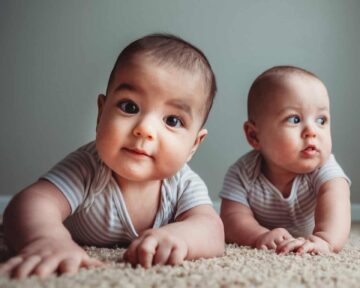
Her theory, which she describes as having been hiding in plain sight, is compelling: language evolved in parallel with caring for our “underbaked” newborns, because looking after a creature as helpless as a human baby on the danger-filled plains of Africa required more than one pair of hands (and feet). It needed a group among whom the tasks of food-gathering, childcare and defence could be divided. A group means social life, which means communication.
More here.
Enjoying the content on 3QD? Help keep us going by donating now.