
Madeline Bodin in Smithsonian:
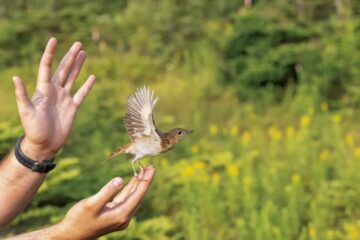 Less than two hours after sunrise, with the shadows still blue and slanting hard in a dense growth of balsam firs and spruces, the baby bird blundered into a fine black net strung along the ridgeline of Mount Mansfield, at 4,393 feet Vermont’s tallest mountain. Desirée Narango, a conservation scientist with the Vermont Center for Ecostudies, or VCE, retrieved the rescued bird and with practiced fingers spread one of its wings like a fan. From the bird’s mottled and rumpled feathers, Narango could see that this slate-colored bird was a dark-eyed junco, a sparrow species found in various color combinations across North America. The bird was just a few weeks out from leaving its nest. It was too young to tell its sex. But she was less interested in the bird itself than in what it had been eating.
Juncos are known as seed-eating birds. They spend their days rummaging through the undergrowth searching for fallen seeds. At feeders, they prefer smaller grains, like millet. But seeds don’t provide the protein juncos, or any songbirds, need to grow a new set of feathers while they molt. And the protein this baby junco needs to molt its blotchy juvenile feathers and to grow sleek stone-gray feathers on top and white ones below would come only from bugs.
More here.
Enjoying the content on 3QD? Help keep us going by donating now.