
by Muhammad Aurangzeb Ahmad
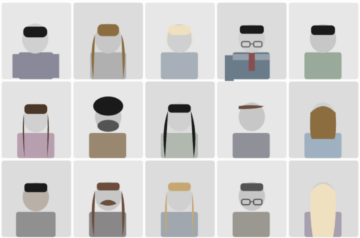
In the 1840s, nearly all of the potatoes grown in Ireland came from a single cultivar called the Irish Lumper. It was a good potato. It was reliable, high-yielding, well-suited to the wet Irish soil, capable of feeding a family through a winter on a small plot of ground. In enabled the rapid growth of Irish population. And then Phytophthora infestans arrived, a water mold that had crossed the Atlantic from the Americas. It devastated potato fields in Ireland. Millions died or were forced to flee the Island. It changed the history Ireland forever, its pre-famine population has not recovered even in 2026. The problem was not that the Irish Lumper was a weak potato plant type. It was that it was the only potato plant type. The blight did not discriminate; it simply found, in every field in every county, the same host, carrying the same genetic signature, offering the same absence of resistance. Another way to frame this story is that this disaster was a consequence of agricultural monoculture i.e., a consequence of uniformity.
We may be seeing a similar phenomenon play out in the world of human thinking. I have seen this in my own classroom, in my own inbox. Writing style have become to converge, I have caught myself doing this as well. Almost everyone seems to be getting more fluent, more organized, sound more confident in their writing style. That said, all of the chatter is beginning to sound, all of it, like variations on a theme. Yes, we are standing to sound like LLMs in our writings. This may not be as bad if this was just restricted to how people write. This is now also impacting how people think!
In March 2026, a team of researchers at the USC published a paper where they argued that large language models are not merely reflecting dominant patterns of expression. They are amplifying and reinforcing them. They are actually doing this at scale, in real time for hundreds of millions of people. The feedback structure of the system actually makes the process self-accelerating. Every time a user runs a draft through a model, the output moves toward the statistical center of what the model has learned to call “good.” Every time that output is accepted, edited, sent, published, it re-enters the stream of human writing from which the next generation of models will be trained.
The researchers identified three dimensions along which this homogenization is operating. Read more »