Tripping Over the Bulges: What Really Matters Morally

by Tauriq Moosa

How should we tackle things we believe are wrong and should be illegal, when it seems their very status of being ‘illegal’ gives rise to the problems we oppose. It’s not drugs per se that bothers us, but the violence and destruction that can arise. It’s not sex itself that’s a problem, it’s how we consider sex and apply it to policy decisions. But using our emotions and knee-jerk reactions and letting it simmer within policies can have disastrous effects for us.

I’ve written before that I don’t quite understand the so-called inherent moral problem of necrophilia. Sure, the deceased’s loved ones might be upset, offended and so on. But aside from these interests, what else should we be concerned about? Health reasons, you say? Well, that’s a problem even for living and consensual partners in sex acts, given STD’s, trust, promiscuity and so on. What makes necrophilia particularly a problem?

The main thing about acts of necrophilia, it seems to me, is revulsion. What makes it particularly potent is the combination of ‘sex’ with death. Sex, for many people, is fraught with moral problems – but, as I’ve briefly highlighted above with necrophilia – it’s not particular to sex with dead bodies or sex with live bodies. Both are apparently problematic. It’s how people consider sex in general.

I don’t quite understand why sex should be considered morally problematic in itself. It is not. Just as driving a car is not problematic in itself: Sure, we can kill others and ourselves, and usually we have partners involved, but that doesn’t mean driving a car is automatically morally problematic. Sex offers pleasure and pain, like most of life. I think that many people are still caught up in absolute right and wrong ways to conduct themselves in and toward sex, instead of realising that like most human actions, sexual relations are dynamic and varied. The ways we approach sex more often has terrible consequences than the results of consensual sex between rational persons.

Consider recently a story in the M&G about prosecuting 12- to 16-year-olds engaged in consensual sex acts.

Recently, children's rights activists were outraged when it emerged that National Prosecution Authority head Menzi Simelane had used the Act to authorise the prosecution of at least two groups of children between the ages of 12 and 16 for having consensual sex — six learners from Mavalani High School in Limpopo and three pupils from Johannesburg.

Simelane did withdraw the charges, but compelled the children to complete something called a “diversion programme”. The problem is the Sexual Offences Act which “makes it illegal for any person to engage in ‘consensual sexual penetration’ with children between the ages of 12 and 16.” It has excellent justification of course: “This Act was designed to address the sexual abuse of children [my emphasis]” – but many of you will no doubt see the arising problem: “But in effect also makes it illegal for youngsters of those ages to have sex.”

Read more »

Monday, May 9, 2011

Removing the Blades from Hume’s Guillotine

by Tauriq Moosa

David-Hume-Scotland-17111776-289536 Hume’s Guillotine: “One cannot derive an “ought” from an “is”. This thesis, which comes from a famous passage in Hume's Treatise [says]: there is a class of statements of fact which is logically distinct from a class of statements of value. No set of statements of fact by themselves entails any statement of value. Put in more contemporary terminology, no set of descriptive statements can entail an evaluative statement without the addition of at least one evaluative premise. To believe otherwise is to commit what has been called the naturalistic fallacy.”

– John Searle, ‘How to Derive an “Ought” from an “Is”’, The Philosophical Review, 1964

Beware, people. This is a long piece. Even I’m uncertain about it. Here we go then.

1.

Major ethicists like Immanuel Kant and indeed – to an extent – Thomas Aquinas sought to establish a rational basis for deriving moral considerations. Why rationality above other justifications? Consider: one and one is two. This is a statement that appears to hold true regardless of the state of the world, whether we’re dreaming or awake (as Descartes famously pointed out in his Meditations), whether we’re in pain, and so on. However there is an implicit assumption being made here, too: that if we do agree that one and one is two, we who agree to this statement are rational agents; that is, beings who accept the constraints and rules of logic and rationality.

This appears to only beg the question: Why should anyone accept that one and one is two? (This problem so vexed the young Bertrand Russell, that he nearly mentally destroyed himself as an adult trying to establish conclusively that one and one is two.) As Sam Harris has said, how do you convince a person not interested in rationality to use rationality? As soon as you start making rational arguments, you’ve already lost.

Read more »

Monday, March 14, 2011

Mob Morality: The Dangers of Repugnance as Moral Authority

by Tauriq Moosa

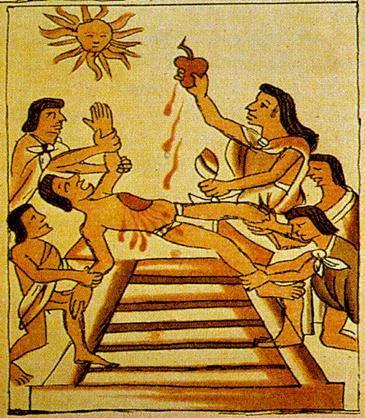
Clip_image004 What is it about topics like incest, bestiality, necrophilia and cannibalism that urges us to pick up pitchforks and torches? A more important question, however, is whether these topics automatically or necessarily should elicit outrage enough for us to target those who perform these acts. I think not.

Considering the purely descriptive side, there has been some interesting but controversial research into our moral psychology and intuitions.

Jonathan Haidt famously provided the following example in a study.

Julie and Mark are brother and sister. They are travelling together in France on summer vacation from college. One night they are staying alone in a cabin near the beach. They decide that it would be interesting and fun if they tried making love. At the very least, it would be a new experience for each of them. Julie was already taking birth control pills, but Mark uses a condom too, just to be safe. They both enjoy making love, but they decide never to do it again. They keep that night as a special secret, which makes them feel even closer to each other. What do you think about that? Was it ok for them to make love?

Haidt, in an interview, explained the responses of subjects reaching ‘moral dumbfounding’:

People almost always start out by saying it’s wrong. Then they start to give reasons. The most common reasons involve genetic abnormalities or that it will somehow damage their relationship. But we say in the story that they use two forms of birth control, and we say in the story that they keep that night as a special secret and that it makes them even closer. So people seem to want to disregard certain facts about the story. When the experimenter points out these facts and says “Oh, well, sure, if they were going to have kids, that would cause problems, but they are using birth control, so would you say that it’s OK?” And people never say “Ooooh, right, I forgot about the birth control. So then it is OK.” Instead, they say, “Oh, yeah. Huh. Well, OK, let me think.”

Read more »