
Category: Recommended Reading
The Vulnerable Spectator: Alfonso Cuarón’s Roma
Amelie Hastie at Film Quarterly:
 If the experience of my viewing of the film was gently yet insistently altered over the space of two hours, upon its end I experienced a kind of revelation. As I stared at the final image—a still shot of the exterior staircase that Cleo has climbed, itself a return to the opening scene—a thought occurred to me: It is as if I have just seen cinema for the first time.
This idea came to me involuntarily, immediately followed by a sense of internal embarrassment over such unexpected pretentiousness. Yet as I left the crowded theater and walked down the street, slowly approaching the park in front of me, I could not shake this idea; again and again, with a sense that I could not even control it, I repeated it in my head. I wondered, too, if this sensation might have been what it felt like to see Rome, Open City (Roma città aperta, Roberto Rossellini, 1945) or The Rules of the Game (La règle du jeu, Jean Renoir, 1939) when they first appeared on-screen.3 Its black-and-white stock and historical setting give Cuarón’s film the sense of belonging to another time, but it wasn’t just that which struck me. Roma has the breadth of these films, and at the same time, the intimacy of everyday (or sometimes singular) experience in the midst of political tumult.
more here.
Why are establishment Dems afraid of the ‘hard left’?
Paul Rosenberg in Alternet:
 In my interview last week with political scientist Rachel Bitecofer, who predicted a 42-seat “blue wave” four months in advance, she also discussed the groundbreaking campaigns of Stacey Abrams and Beto O’Rourke, even though neither was elected. Neera Tanden, president of the Center for American Progress, offered a curious response on Twitter: “Stacey Abrams and Beto ran liberal campaigns, not hard left campaigns.” As Bitecofer replied, “I don’t advocate hard left campaigns, that’s not what my research argues.” She later added that “my thesis IS the Beto/Abrams turnout model, not something else.” Ideology wasn’t the issue she focused on — mobilizing base voters was. Tanden’s response is both curious and troubling because literally no one argues for “hard left” campaigns. As retired intelligence analyst James Scaminaci tweeted in the ensuing conversation: “Hard Left” is Marxists, Marxist-Leninist, Trotskyists, Leninists, Stalinists, Maoists, Spartacus League, Guevaras. Bernie, AOC, DSA, Warren, FDR ain’t “hard left.” If you use “HL,” you are grossly misinformed about left-wing politics. You might have missed the Cold War.”
In short, “hard left” is a bogeyman term so far as American politics is concerned — one meant to put Democrats constantly on the defensive, either cowering or fighting with each other. It recalls the worst days of McCarthyism. Which is why I responded: Repeating right-wing frames is a no-no. It’s as simple as that. Tanden’s hardly the only one to do this, but she’s the president of the Center for American Progress, and closely associated with the leadership of the Democratic Party. CAP’s Think Progress blog has caught right-wingers using this attack phrase for years — like this entry, noting Newt Gingrich using it to smear legendary PBS journalist Bill Moyers. Tanden should know better. Not in spite of being a close ally and longtime supporter of Hillary Clinton, but because of it. After all, the right-wing media has used the “hard left” label to attack Clinton since August 1992, when the American Spectator ran a tone-setting attack story: “The Lady Macbeth of Little Rock: Hillary Clinton’s hard-left past and present.”
More here.
Researchers probe microbiome-cancer treatment link
Nathan Collins in Phys.Org:
 For ages, the best ways to treat cancer were surgery, radiation and chemotherapy, but in the last decade doctors have been working to harness patients’ own immune systems to fight cancer. One result is called chimeric antigen receptor T-cell therapy—CAR T for short—in which doctors remove T cells, which are central to the body’s immune response to disease, and modify them so they’re better prepared to attack cancer cells. CAR T has now been used to treat previously intractable cancers, including certain lymphomas that are the focus of the new study. Yet the treatment only works 30 to 40 percent of the time, said Andrew Rezvani, an assistant professor of medicine who is collaborating on the project. The rest of the time, CAR T’s effectiveness fades away over time or fails altogether.
No one is exactly sure why that happens, but over the last decade or so there have been tantalizing clues that the microbiome plays a role. For example, researchers recently discovered that tumors grow at different rates in laboratory micepurchased from different suppliers, but only when the mice are housed separately. Housed together, the differences go away, suggesting a transmissible factor affects cancer progression. Add to that the fact that mice eat each other’s feces and it starts to look a lot like something in their guts has an impact on cancer, Bhatt said. To see whether the effect that’s been deduced in mice may also affect cancer progression in people, Bhatt, Rezvani and Tessa Andermann, an assistant professor of medicine at the University of North Carolina, are piggybacking onto two upcoming CAR T clinical trials at Stanford run by David Miklos, an associate professor of medicine, and Crystal Mackall, a professor of pediatrics and of medicine. With help from a Stanford ChEM-H seed grant, they’ll analyze blood samples and gather and analyze stool samples from about 100 people with a particularly hard-to-treat blood cancer, diffuse large cell B-cell lymphoma.
More here.
Wednesday Poem
Toast
There was a woman in Ithaca
who cried softly all night
in the next room and helpless
I fell in love with her under the blanket
of snow that settled on all the roofs
of the town, filling up
every dark depression.
Next morning
in the motel coffee shop
I studied all the made-up faces
of women. Was it the middle-aged blond
who kidded the waitress
or the young brunette lifting
her cup like a toast?
Love, whoever you are,
your courage was my companion
for many cold towns
after the betrayal of Ithaca,
and when I order coffee
in a strange place, still
I say, lifting, this is for you.
by Leonard Nathan
from A Book of Luminous Things
Harcourt Publishing, 1996
Wilkie Collins and The First Detective Novel
Jane Hu at Bookforum:
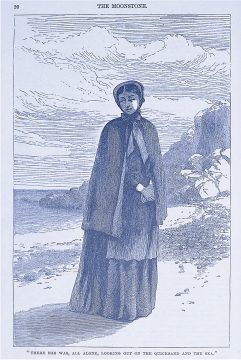 Like Collins’s earlier The Woman in White, The Moonstone employs a range of sensational plot twists and is narrated by an array of competing voices that variously draw on the reader’s sympathies and skepticism. But where The Woman in White relied on the investigative chops of an art teacher to unravel its mystery, The Moonstone introduces, for the first time in the British novel, the figure of the police investigator: Sergeant Cuff, the character who would set the standard for the new genre of the detective story. Archetypally whimsical and dandyish, Cuff sports a white cravat and a fondness for roses. “One of these days (please God) I shall retire from catching thieves,” he says early on, “and try my hand at growing roses.” Arriving on the scene of the crime, Cuff proceeds to meticulously reconstruct the diamond robbery. His search involves—what else—a close examination of everybody’s closets, “from her ladyship downwards.” No detail is too small to attract his attention, no aspect of domestic life too insignifi cant. Under the impersonal gaze of the detective, no one is beyond suspicion. At one point, Cuff even suspects Rachel of stealing the diamond—from herself. (She didn’t, but what a plot twist that would have been.)
more here.
Tuesday, August 27, 2019
Salman Rushdie’s Quichotte Is a Fantastical Dream Within a Dream
Nicholas Mancusi in Time:
 Quichotte, the Booker Prize long-listed 14th novel from Salman Rushdie, is pitched as a “Don Quixote for the modern age,” but the book–a brilliant, funny, world-encompassing wonder–is a far more ambitious exercise than mere homage.
The titular character (pronounced Key-shot) was born under a different name, in a city also under a different name: Bombay, now Mumbai. The Indian-immigrant traveling salesman of pharmaceuticals, aging, addled into holy foolishness by a lifetime of TV worship, and recently laid off, bestows the name Quichotte upon himself as a nod to Cervantes’ famous knight, or rather, as a nod to a French opera which was “loosely based” on the book. (“It seems you’re a little loosely based yourself,” Quichotte tells himself, aware that he might be cracking up a bit.)
Under his nom de plume, he embarks on a picaresque mission across America to win over the heart of one Salma R, a beautiful celebrity in New York City whom he knows only through the TV screen. For a squire to ride beside him in his Chevy Cruze, he conjures into being a son, named Sancho.
More here.
Mathematicians and neuroscientists have created the first anatomically accurate model that explains how vision is possible
Kevin Hartnett in Quanta:
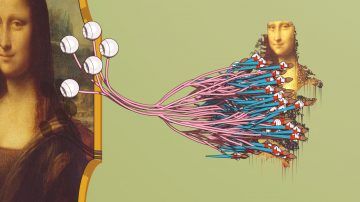 This is the great mystery of human vision: Vivid pictures of the world appear before our mind’s eye, yet the brain’s visual system receives very little information from the world itself. Much of what we “see” we conjure in our heads.
“A lot of the things you think you see you’re actually making up,” said Lai-Sang Young, a mathematician at New York University. “You don’t actually see them.”
Yet the brain must be doing a pretty good job of inventing the visual world, since we don’t routinely bump into doors. Unfortunately, studying anatomy alone doesn’t reveal how the brain makes these images up any more than staring at a car engine would allow you to decipher the laws of thermodynamics.
New research suggests mathematics is the key. For the past few years, Young has been engaged in an unlikely collaboration with her NYU colleagues Robert Shapley, a neuroscientist, and Logan Chariker, a mathematician. They’re creating a single mathematical model that unites years of biological experiments and explains how the brain produces elaborate visual reproductions of the world based on scant visual information.
More here.
Sean Carroll’s Mindscape Podcast: Quassim Cassam on Intellectual Vices and What to Do About Them
Sean Carroll in Preposterous Universe:
 All of us have been wrong about things from time to time. But sometimes it was a simple, forgivable mistake, while other times we really should have been correct. Properties that systematically prevent us from being correct, and for which we can legitimately be blamed, are “intellectual vices.” Examples might include closed-mindedness, wishful thinking, overconfidence, selective attention, and so on. Quassim Cassam is a philosopher who studies knowledge in various forms, and who has recently written a book Vices of the Mind: From the Intellectual to the Political. We talk about the nature of intellectual vices, how they manifest in people and in organizations, and what we can possibly do to correct them in ourselves.
More here.
The Anthropocene challenges liberalism’s vision of permanent progress
Geoff Mann in the Boston Review:
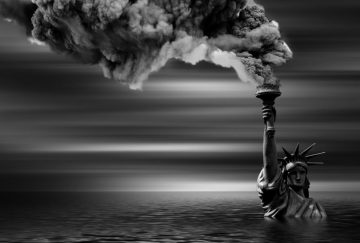 Though earth scientists have yet to agree on the “golden spike” that marks its end, we have been told that the Holocene, the geological time-period from the last glacial period until now, is over. We live in a new era: the Anthropocene, an age in which humanity’s geological impacts are shaping not just the trajectory of life on the planet, but the future of the planet itself.
But while social science has embraced the Anthropocene, questions concerning its causes, dating, and political and scientific implications are currently subject to energetic—even fiery—debate. Most widely recognized is the problem that the “Anthropocene” attributes to “humanity” as a whole responsibility for catastrophic interference in the Earth system when, in fact, the largely destructive transformation named by the “Anthropocene” is the result of a relative minority of humanity. If accelerating climate change, biodiversity loss, and nuclear radiation are among its signal indicators, it is clear that it is the direct result of the political-economic organization of the Earth’s richest peoples and regions. This is the reason Jason Moore and others have argued instead for the uglier but more accurate term Capitalocene.
More here.
Pico Iyer: What ping-pong taught me about life
Tomorrow We Travel
Alisa Koyrakh at The New England Review:
 I need to know more about Terezin, but I am afraid to go there. It’s only a fifty-minute train ride from Prague. Instead, I search for diaries and I find Gonda Redlich’s, translated from Hebrew into English by the late historian Saul S. Friedman. Gonda is a twenty-six-year-old who headed the children’s department at Terezin for three years and wrote regularly until his deportation to Auschwitz. I read at the office until it closes at eleven. I walk straight home, past roaming groups of drunken tourists, and continue to read in bed.
The diary is filled with torment over making sure the children have enough space, heat, food, medicine. He appoints counselors for the children’s barracks, sets up schools, and worries about a lack of good role models. He hopes to move to Israel after the war. He’s learning Hebrew and Arabic in his spare time. According to the translator, Gonda writes his entries in Hebrew as practice; his language is formal and stilted.
more here.
A Sober Look at Charles Bukowski’s Alcoholism
Jason Diamond at Poetry Magazine:
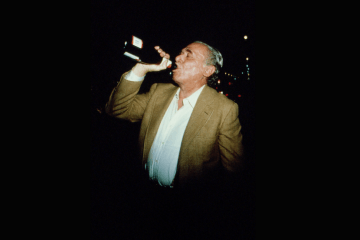 Stepping into Cole’s, one of the oldest restaurant-bars in Los Angeles, and the self-professed inventor of the French Dip sandwich, feels like stepping back in time to 1908, when the saloon first opened. It’s dimly lit inside, there are old wood-paneled walls, and a long bar greets you upon entry. On a quiet afternoon, you eat your sandwich, maybe have a drink or two, and then chances are you’ll eventually hit the restroom. If you’re in the men’s room, you might notice a bronze plaque bolted to the wall near the stalls: “CHARLES BUKOWSKI PISSED HERE.” People love to take pictures of it. On Instagram, it’s nearly as popular as shots of the sandwich that made Cole’s famous. In 2019, Bukowski’s dissolute work and lifestyle—not to mention his well-documented womanizing and racism—would create firestorms were he alive today. Why does he still appeal to so many people?
more here.
Tuesday Poem
Picking up Rocks
daughter of a palestinian that i am,
………………………………when i see a bloc of young people holding the street
it seems i was born with a rock in my hand
………………………………against a line of police in battle gear—
and i’ve found the world expects that’s who i am.
………………………………i look down and find a rock in my hand.
i have been trying to put that rock down,
………………………………i have tried to put it down every night
tried to set it down in stone mornings quarried—
………………………………out of fear, nausea, and despair
but every afternoon the daily news puts it there
………………………………that weight rolling along
on the shoulders of everyone i know,
………………………………everyone on this train ride home and falling sometimes
so i keep picking up rocks and putting down stones
………………………………in the shape of sanctuary,
one day maybe I’ll have enough for a foundation
………………………………where we can lay on shoulders a poultice of care
where we can pray, if that is possible anymore,
………………………………or grieve, if we can remember what either are for
tonight my mourning is for baltimore:
………………………………a friend out there, a woman I respect, says:
things are pretty bad right now, sis.
………………………………what can we do but pick up pieces?
and you, if you do, should say a prayer of stone.
by Rasha Abdulhadi
from Split This Rock
Sunday, August 25, 2019
Book review: Because Internet, by Gretchen McCulloch
Stan Carey in Sentence First:
 Language is always changing, and on a macro level some of the most radical changes have resulted from technology. Writing is the prime example. Millennia after its development, telephony reshaped our communication; mere decades later, computers arrived, became networked, and here I am, typing something for you to read on your PC or phone, however many miles away.
The internet’s effects on our use of language are still being unpacked. We are in the midst of a dizzying surge in interconnectivity, and it can be hard to step back and understand just what is happening to language in the early 21st century. Why are full stops often omitted now? What exactly are emoji doing? Why do people lol if they’re not laughing? With memes, can you even?
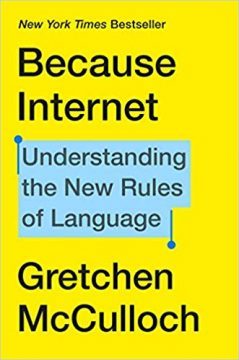
Because Internet: Understanding the New Rules of Language is a new book by linguist Gretchen McCulloch that sets out to demystify some of the strange shifts going on in language right now. It provides a friendly yet substantial snapshot of linguistic trends and phenomena online, and it explains with clarity and ebullience what underpins them – socially, psychologically, technologically, linguistically.
More here.
Universal emotions are the deep engine of human consciousness and the basis of our profound affinity with other animals
Stephen T Asma in Aeon:
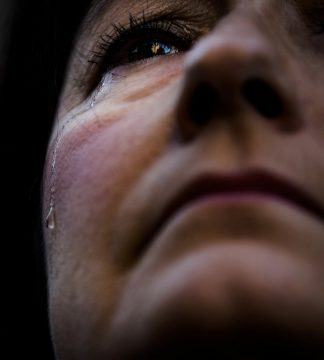 Charles Darwin closed his On the Origin of Species (1870) with a provocative promise that ‘light will be thrown on the origin of man and his history’. In his later books The Descent of Man (1871) and The Expression of Emotions in Man and Animals (1872), Darwin shed some of that promised light, especially on the evolved emotional and cognitive capacities that humans shared with other mammals. In one scandalous passage, he demonstrated that four ‘defining’ characteristics of Homo sapiens – tool use, language, aesthetic sensitivity and religion – are all present, if rudimentary, in nonhuman animals. Even morality, he argued, arose through natural selection. Altruistic self-sacrifice might not give the individual a survival advantage, but, he wrote:
There can be no doubt that a tribe including many members who, from possessing in a high degree the spirit of patriotism, fidelity, obedience, courage, and sympathy, were always ready to aid one another, and to sacrifice themselves for the common good, would be victorious over most other tribes; and this would be natural selection.
Yet Darwin’s revolutionary understanding of the evolved nature of human emotions has been neglected since. When scientists turned again to the mind a century later, the computer was the model that both sparked the cognitive sciences revolution and served as its exclusive investigative tool. The computational model of the mind has been very powerful, but it has no way (and no need) to capture the biological ingredient of motivational feeling-states, and has been unconcerned with the evolved substrate to such processes.
More here.
Terrorism and the Crisis of Deliberative Democracy
Scott Atran in Psychology Today:
 The spread of substate and transnational forms of terrorism that target ordinary civilians for mass murder tears at the social and political consensus in our country and across the world. The aim is to create the void that will usher in a new world, with no room for innocents on the other side, or in the “Gray Zone” between that includes most of humanity.
For 21-year-old Patrick Crusius, who killed 22 people and wounded 24 in El Paso earlier this month, terminating the brown invasion of Hispanics that soils White America to the advantage of the Democratic Party requires mass civilian deaths to save civilization—a mission that ISIS shares, albeit with a different, if equally exclusive, end in mind.
The values of liberal and open democracy increasingly appear to be losing ground to those of narrow, xenophobic ethno-nationalisms and radical religious ideologies. These seemingly opposed movements, our research team at Artis International and the Centre for the Resolution of Intractable Conflict at Oxford University has found, in fact tacitly collaborate to undermine free and open societies today, much like Fascists and Communists did back in the 1920s and 30s.
Reasons To Be Cheerful: A Talk by David Byrne
It was legal teams—not politicians—that ultimately held the tobacco industry to account. Their next target? Perpetrators of climate change
Mitch Anderson at Reasons to be Cheerful:
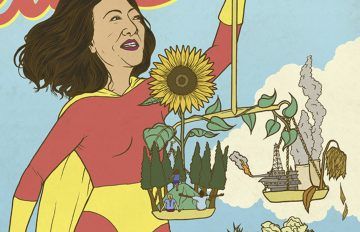 Lawyers are one of America’s most distrusted professions, bringing up the rear behind even bankers and local politicians. But what if lawyers end up saving the world?
Scientists have been warning for years that mounting carbon emissions are dangerously destabilizing our climate. Efforts to tackle this urgent challenge through the political process have so far come up far short of the action needed to avoid some very bad outcomes.
Can litigation succeed where politics has so far failed?
We’ve actually been here before. Several decades ago it also seemed the tobacco industry was an invincible foe to public health. Over the course of decades, however, a series of long-shot lawsuits finally enfeebled this previously unassailable political lobby. Civil litigation against cigarette manufacturers began in the 1950s, but did not bear fruit until 40 years later in a series of court victories that culminated in the $206 billion Master Settlement Agreement with 46 U.S. states.
Terms of this judgment included halting advertising smoking to children, funding anti-smoking campaigns with industry money and dissolving three of the biggest tobacco industry organizations.
More here.
Nancy Reddin Kienholz (1943 – 2019)