
Jamil Zaki in the Washington Post:
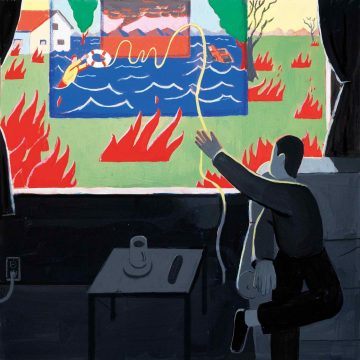 About 70 percent of Americans believe that the climate is changing, most acknowledge that this change reflects human activity, and more than two-thirds think it will harm future generations. Unless we dramatically alter our way of life, swaths of the planet will become hostile or uninhabitable later this century — spinning out ecological, epidemiological and social disasters like eddies from a current. And yet most Americans would support energy-conserving policies only if they cost households less than $200 per year — woefully short of the investment required to keep warming under catastrophic rates. This inaction is breathtakingly immoral.
It’s also puzzling. Why would we mortgage our future — and that of our children, and their children — rather than temper our addiction to fossil fuels? Knowing what we know, why is it so hard to change our ways?
More here.
 Greta Thunberg, the Swedish teenager who inspired the now-global movement, has become a primary target. On Wednesday, the 16-year-old arrived in New York after completing her voyage across the Atlantic aboard an environmentally friendly yacht. She faced a barrage of attacks on the way. “Freak yachting accidents do happen in August,”
  In the weeks I spent listening to Malcolm Gladwell’s podcast, I learned that lobsters have serotonin, that Elvis Presley suffered from parapraxis and that Mr. Gladwell adheres to a firm life rule that he drink only five liquids: water, tea, red wine, espresso and milk. On the afternoon I met the author and journalist, I had just listened to an episode in which he interviews an intimidating guest. His audio recorder malfunctions, and he has to sprint to Staples to get a replacement. “I was embarrassed,” Mr. Gladwell confides in the podcast. “I worried that he would think I was pathetic.” It sounded mortifying. And yet when I sat down to interview Mr. Gladwell, at the kitchen table of his Manhattan apartment, I went ahead and trusted my own recorder.
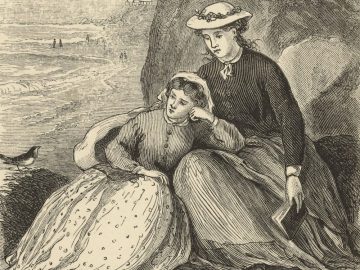 People who have studied anything about Little Women know that the novel is based, roughly, on Louisa’s family, a clan of thinkers, artists, and transcendentalists who rubbed elbows with some of the premier minds of their time: Ralph Waldo Emerson, Henry David Thoreau, Margaret Fuller.
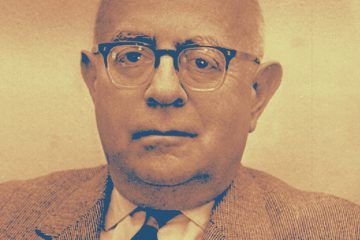 Perhaps Adorno’s greatest legacy for philosophers lies in the two books that most absorbed his scholarly attention in the 1960s and overlapped with the courses he was teaching: Negative Dialectics (1966) and Aesthetic Theory, published posthumously in 1970. Together with a volume he had planned on moral philosophy but did not live to write, these are the books Adorno himself wanted to have “weighed in the balance”. Both are complex and uncompromising summations of Adorno’s philosophy; the first focused on questions about experience, knowledge, history and metaphysics, and the second addressing aesthetics, beauty, art and society.
 Michael Kazin and Atossa Araxia Abrahamian in Dissent:
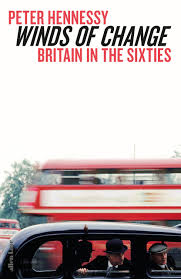 It is entirely characteristic of Hennessy to leave space in this seismic account for the free play of individual quirks. The Soviet leader
  Lenore Palladino in Boston Review:
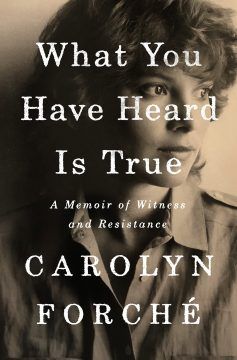 Suzy Hansen in The Nation:
 Leigh Claire La Berge in the LA Review of Books:
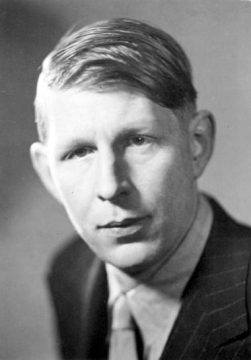 AJP Taylor, in his famous account in The Origins of the Second World War(1961), claimed that a second world war “was implicit since the moment when the first world war ended”. It became explicit at exactly 4.30am on Friday 1 September 1939, when the German panzer divisions that had been gathering on the Polish border began their advance. The front page headline of the New York Times that day tapped out the news in telegraphese: GERMAN ARMY ATTACKS POLAND; CITIES BOMBED, PORT BLOCKADED; DANZIG IS ACCEPTED INTO REICH. On 3 September the British prime minister
  The car crash brought it all into focus. For the short-story writer Etgar Keret, a new collection usually takes shape in response to some overwhelming event in his life. He’ll be writing his three- or four-page tales, saving them to folders on his computer that he occasionally loses, then boom, something happens that ties them all together. This time it was a literal boom. Two years ago, he was on his way from Connecticut to Boston when his driver, speeding to get to the next reading, hit another car on the highway. The windshield shattered, the airbags exploded, and the car filled with the smell of fuel. Keret had broken two ribs. “I was waiting for the whole shebang, for all my life to pass before my eyes,” he said. “Lots of thoughts entered my head. That I’d had a good life, but I was a little bit sad that it was short. I was hoping that my wife would get remarried. And I was thinking to myself that I should have switched to a new agent because it will really be more difficult for my wife to work with my current agent. Practical and tiny issues.”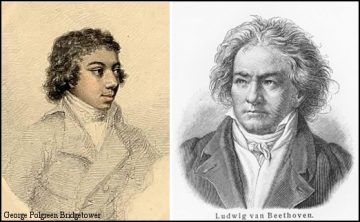
 The city of Bihać in
 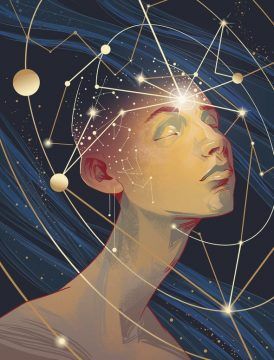 Physics seems to be one of the only domains of human life where truth is clear-cut. The laws of physics describe hard reality. They are grounded in mathematical rigor and experimental proof. They give answers, not endless muddle. There is not one physics for you and one physics for me but a single physics for everyone and everywhere. Physics often seems weird, but that’s a good sign—it is not beholden to preconceptions. In a world that can seem claustrophobic, where the same debates go round in circles, physics injects some genuine novelty into life and jolts us out of the ruts we fall into.
 After I was elected prime minister of Pakistan last August, one of my foremost priorities was to work for lasting and just peace in South Asia. India and Pakistan, despite our difficult history, confront similar challenges of poverty, unemployment and climate change, especially the threat of melting glaciers and scarcity of water for hundreds of millions of our citizens.
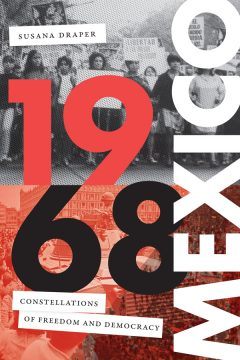 On October 2, 1968, Mexican police fired on unarmed student protesters in the Plaza de las Tres Culturas of Tlatelolco, in the historical center of Mexico City. While the state initially reported twenty-six dead, witnesses and independent investigators have estimated that two to four hundred people were killed. Many more were injured and imprisoned. Ten days after the massacre, president Gustavo Díaz Ordaz inaugurated the Olympic Games that were meant to showcase Mexico’s burgeoning modernity on the global stage, something the increasingly conspicuous mass protests had threatened to disrupt. The games themselves were used as a stage for political dissent when, on October 16, Tommie Smith and John Carlos gave a Black Power salute as the Star-Spangled Banner played at their medal ceremony, an iconic gesture linking Mexico’s student movement to another site in the global constellation of protests that year, the American civil rights movement. The Tlatelolco massacre and its impunity, closely followed by the symbolic performance before the international community of the legitimacy of the authoritarian rule of the PRI (Partido Revolucionario Institucional) by means of the Olympics, dealt a devastating blow to the mass movement in the streets. But the collective political and aesthetic projects that had begun in the laboratory of the Mexican student movement continued to evolve.